The Metaloid series has always worn its inspirations proudly—retro run-and-gun action, colourful sci-fi worlds, fast-paced platforming, and tight shooting mechanics. Metaloid: Origin embraces that spirit more confidently than ever before, delivering a slick, energetic, and deeply satisfying blast-fest that refines the series’ formula without overcomplicating it.
Fans of classic 16-bit shooters, from Mega Man X to Gunstar Heroes, will immediately feel at home. But Metaloid: Origin isn’t just a nostalgic throwback—it’s a modernised, polished entry that combines punchy gunplay, fluid mobility, and vibrant stage design into one of the series’ best releases to date.
It’s a game that understands what made retro action games beloved: precise control, readable chaos, and constant escalation. And in nearly every respect, Metaloid: Origin succeeds.
A Prequel with Purpose, Style, and Energy
As the title hints, Metaloid: Origin is a prequel to the events of Metaloid: Reactor, diving deeper into the early conflict between the Metaloid androids and the mechanised invasion forces threatening their planet.
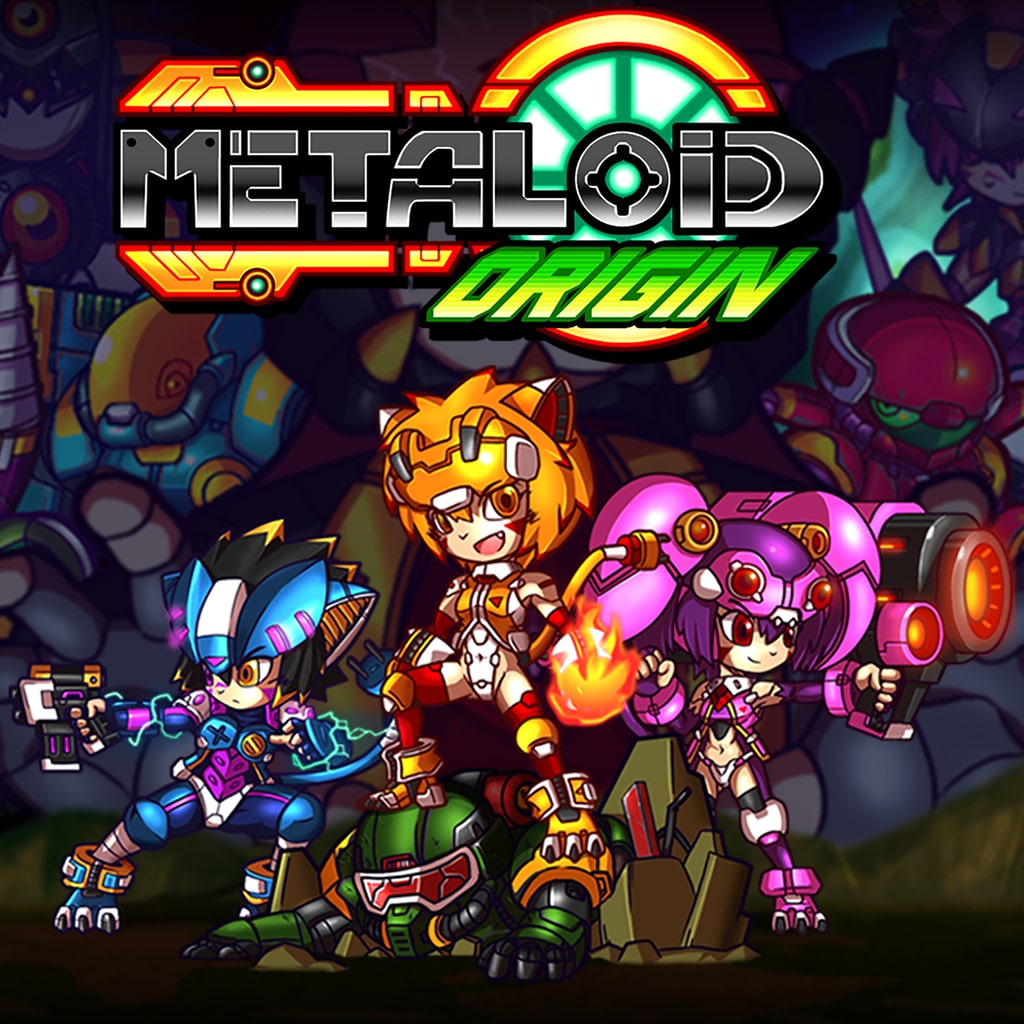
The story is simple—purposefully so. You choose between three playable androids, each with their own weapons and traversal abilities, and embark on a mission to repel a technologically empowered army occupying key regions worldwide.
The narrative unfolds through brief dialogue sequences, mission intros, and environmental storytelling. It never steals the spotlight from gameplay, but it gives just enough flavour to establish stakes and immerse players in the world’s metallic, neon-lit atmosphere.
Gameplay: A Tight, Satisfying Run-and-Gun Core
Where Metaloid: Origin truly shines is in its gameplay loop. Every aspect—from movement to shooting to enemy patterns—feels meticulously tuned.
Three Playable Heroes, Three Distinct Playstyles
Each android offers a different approach to combat, effectively creating three semi-unique campaigns:
- Axa – Balanced blaster-type with strong mobility; perfect for newcomers.
- Erma – Heavy weapons specialist with explosive firepower; trades speed for damage.
- Neon – Agile close-range specialist with high DPS but lower survivability.
These differences aren’t superficial. Levels play noticeably differently depending on your choice, giving the game excellent replay value.
Movement and Controls: Smooth, Responsive, and Skill-Based
Movement options include:
- double jumping
- sliding
- wall-climbing segments
- directional mid-air firing
- quick-dodge bursts (character-dependent)
Controls feel incredibly responsive. Tight movement is essential in a game where precision platforming and enemy swarms often collide, and Metaloid: Origin gets this absolutely right. You rarely blame the game for mistakes—your failures and victories feel earned.
Gunplay: Fast, Punchy, and Constantly Evolving
Combat is chaotic in the best possible way. Enemies come fast and often, requiring:
- rapid reactions
- knowledge of firing patterns
- effective weapon switching
- environmental awareness
Each character has a unique upgrade tree, allowing you to unlock:
- elemental weapon variants
- charge shots
- explosive ordnance
- turret drones
- shields
- movement buffs
Upgrades feel meaningful without making characters overpowered.
Stage Design: Classic Platforming with Modern Flair
Metaloid: Origin features a wide variety of handcrafted levels, each introducing new hazards, enemy types, and platforming sequences.
Level Variety Is Excellent
Expect stages such as:
- Molten Forgeworks, with conveyor belts, lava geysers, and collapsing platforms
- Electro Citadel, a neon metropolis full of laser grids and electric traps
- Jungle Canopy Complex, featuring aerial combat and vine-swing traversal
- Frozen Dig-Sites, where icy platforms challenge momentum control
- Orbital Core, a gravity-flipping gauntlet leading into the game’s climax
Levels escalate smoothly in difficulty, balancing challenge with readability. Every stage twists familiar mechanics just enough to keep players alert.
Enemy Variety and Placement Are Top-Tier
Each region introduces:
- themed drones
- elite android hunters
- turret nests
- shielded ground units
- aerial scouts
- mechanised beasts
Enemy placement is crafted to create rhythm—sections of intense firefights followed by brief breathers or precision platforming segments.
Boss Battles: Spectacle Meets Skill
Boss fights are a major highlight. They blend telegraphed patterns, screen-filling attacks, and platforming challenges reminiscent of classic 90s action games.
Boss design is superb:
- patterns escalate logically
- attacks are avoidable but punishing
- arenas are dynamic, often shifting mid-fight
- each boss embodies its zone’s aesthetic and mechanics
These fights strike a balance between chaos and control—challenging, but fair.
Presentation: Retro Charm with Modern Polish
Visually, Metaloid: Origin embraces a vibrant pixel-art style that feels inspired, not derivative. The colour palette pops, animations are fluid, and environmental effects—sparks, particle bursts, parallax scrolling—are used tastefully without overwhelming clarity.
Enemy designs strike a great balance between cute and intimidating, and each zone has its own strong visual identity.
Sound and Music
The soundtrack blends:
- synthwave
- chiptune
- high-energy electronic beats
It perfectly matches the pace of gameplay. Sound effects—blaster shots, mechanical whirs, explosions—are crisp and satisfying.
Voice clips for characters add charm without becoming repetitive.
Progression and Replay Value
Between unique characters, branching upgrade paths, and score-chasing incentives, Metaloid: Origin has strong replay value. Collectible resources—scattered throughout levels or dropped by mini-bosses—encourage exploration without feeling grindy.
Difficulty modes scale intelligently, with higher settings introducing faster enemies, new miniboss variants, and more complex patterns—not merely inflated stats.
Where Metaloid: Origin Falls Short
Even as a polished run-and-gun experience, it has minor drawbacks:
1. Occasional Difficulty Spikes
A couple of midgame bosses are noticeably tougher than surrounding levels, especially for beginners.
2. Shorter First Playthrough
A skilled player can complete a run in 3–5 hours, though replay value is high.
3. Limited Narrative Depth
Story beats are engaging but kept minimal. Players seeking lore-heavy worldbuilding may want more.
4. Some Character Abilities Feel Underused
One or two upgrade paths offer flashy abilities that don’t significantly impact gameplay.
None of these issues undermine the core experience.
Verdict: A Fast, Polished, and Joyfully Retro Action Triumph
Metaloid: Origin is everything a modern retro-inspired action game should be—mechanically sharp, visually striking, and endlessly rewarding. It respects its inspirations while offering its own identity through diverse characters, inventive level design, and energetic pacing.
For fans of run-and-gun shooters, this is an easy recommendation.
For newcomers, it’s an accessible but challenging gateway into the genre.