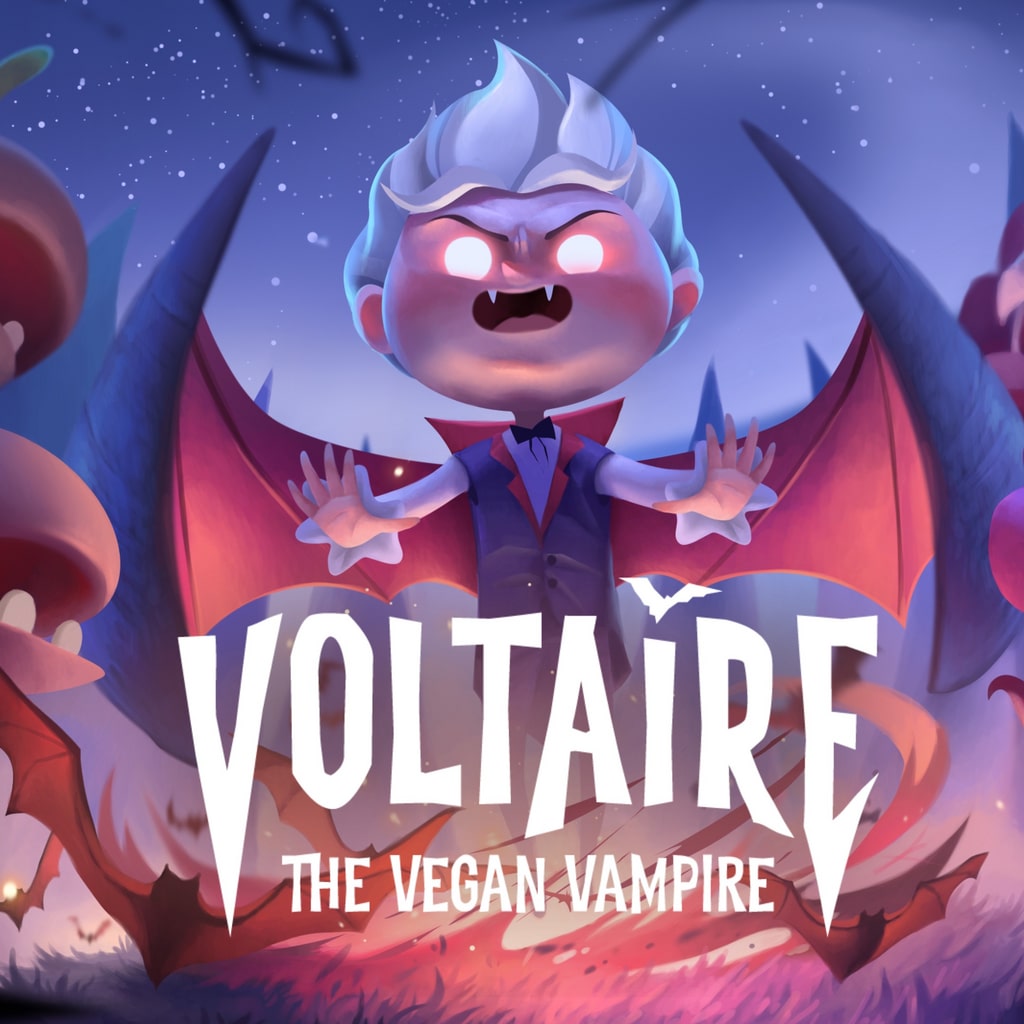
There are plenty of vampires in video games, but very few would willingly trade a warm neck and a mouthful of blood for a plate of freshly grown vegetables. Voltaire: The Vegan Vampire takes this wonderfully ridiculous idea and builds an entire adventure around it, casting players as the rebellious youngest son of Count Dracula, a vampire who has decided the traditional family diet simply isn’t for him. Voltaire’s decision to embrace a plant-based lifestyle, however, is more than a passing phase. It is a declaration of independence, a challenge to centuries of vampiric tradition, and, most importantly, a direct insult to a father who has little patience for his son’s unconventional ways.
Set in the wonderfully gloomy world of Transylvania, the game follows Voltaire as he attempts to prove that a vampire can thrive without drinking blood. With the help of his eccentric uncles, Frank and Stein, he escapes Dracula’s watchful eye and sets out to establish a farm of his own. Unfortunately, his father isn’t prepared to let this dietary rebellion go unchallenged, sending waves of ghoulish minions and increasingly dangerous creatures to sabotage the young vampire’s efforts. What follows is a curious blend of farming, action, tower defence and roguelite progression, all wrapped in a world that feels as though it has stepped out of a particularly mischievous gothic storybook.
The premise is silly in the best possible way, and the game clearly understands that its appeal lies in embracing the absurdity rather than taking itself too seriously. Voltaire’s struggle to become the world’s first vegan vampire gives the adventure an identity that immediately separates it from more conventional fantasy games. There is a genuine sense of affection behind its humour, and the characters, setting and visual design all contribute to an experience that feels delightfully peculiar. It is the sort of game that invites you to smile at its premise before gradually drawing you into the surprisingly demanding work of keeping a rebellious vampire alive.
Farming by Day, Fighting by Night
The central gameplay loop is built around a simple yet effective division between daylight and darkness. During the day, Voltaire tends his farm, plants magical seeds, gathers resources and expands his territory, gradually laying the foundations of his new lifestyle. Crops are more than a means of keeping the young vampire fed; they also contribute to his development and provide useful benefits that can make the coming battles more manageable. There is something satisfying about watching a neglected patch of Transylvanian soil develop into a productive little homestead, particularly when every successful harvest feels like another small victory against Dracula’s disapproval.
Farming is not simply a relaxing diversion between bouts of combat, though. Every decision has a purpose, whether choosing which crops to cultivate, deciding how to use available resources, or preparing the farm to withstand the next assault. Magical seeds introduce an element of experimentation, encouraging players to think about how their crops can contribute to both survival and defence. As the farm expands, the surrounding territory becomes an increasingly important part of the adventure, opening up new opportunities while also exposing Voltaire to greater dangers.
When night falls, the peaceful rhythm of the farm gives way to a far more frantic experience. Dracula’s minions descend upon the crops, determined to destroy the young vampire’s hard-earned progress and force him back towards his family’s traditional diet. Voltaire must defend his land using a combination of combat abilities, defensive plants and carefully considered positioning. The shift from tending vegetables to fighting off supernatural attackers gives the game a distinctive rhythm, and the contrast between its two phases is one of its most appealing features.
The nighttime encounters bring a welcome dose of urgency to what might otherwise have been a relatively gentle farming adventure. Enemy waves demand attention, and allowing the farm to become overwhelmed can have consequences for the resources and progress that Voltaire has worked so hard to establish. The defensive element encourages players to consider their surroundings rather than simply charging into every encounter, although the action can become hectic as the number of enemies increases. When everything comes together, successfully protecting a flourishing farm against a horde of monsters is genuinely enjoyable.
A Taste of Roguelite Progression
Beneath its charming presentation, Voltaire: The Vegan Vampire has a substantial roguelite structure. Each attempt offers opportunities to gather resources, unlock new abilities, discover different seeds, and develop Voltaire into a more capable fighter and farmer. Progression is closely tied to experimentation, with new tools and mutations gradually broadening the range of strategies available. The prospect of returning to the farm with a better understanding of its systems gives unsuccessful attempts a sense of purpose, helping to soften the frustration of losing progress.
Voltaire can evolve into more powerful vampiric forms as he embraces his unusual diet, unlocking abilities that change how he approaches combat and survival. These developments provide a welcome sense of growth, particularly when a new power makes a previously difficult encounter more manageable. The game also encourages players to complete bounties for Frank and Stein, offering additional objectives and rewards that feed into the broader progression system. These tasks help give the adventure a little more direction, ensuring there is usually something to work towards beyond simply surviving the next night.
The roguelite structure is a natural fit for the game’s central theme. Voltaire is learning to survive in a world built around a lifestyle he has rejected, and each attempt gives him another opportunity to refine his approach. There is a pleasing sense of persistence in that idea, with failure becoming part of the process rather than a definitive end to his ambitions. However, the repetition inherent in roguelite design can become noticeable over longer sessions, especially when players find themselves revisiting familiar routines without enough new challenges to keep the experience feeling fresh.
A Beautifully Macabre World
One of the game’s greatest strengths is its distinctive visual identity. Voltaire: The Vegan Vampire embraces a hand-drawn gothic aesthetic that balances Transylvania’s eerie atmosphere with a colourful, almost cartoon-like sense of mischief. Its world is populated by strange creatures, peculiar characters and supernatural oddities, yet the overall presentation rarely feels genuinely oppressive. Instead, it finds a comfortable middle ground between spooky and adorable, creating an atmosphere that is both inviting and suitably unconventional.
The art direction is wonderfully expressive, helping the characters and environments feel full of personality. Voltaire himself is an appealing central figure, and his rebellious outlook is reflected in the game’s playful approach to vampire mythology. The contrast between the familiar gothic imagery of castles, monsters and dark forests and the cheerful business of growing vegetables gives the world much of its charm. It is a setting that feels carefully designed around the game’s identity, rather than a conventional farming game with a few vampire decorations added for effect.
The humour also complements the visual style. The idea of Dracula becoming increasingly frustrated by his son’s commitment to vegetables is an entertaining foundation for the story, while Frank and Stein provide an appropriately eccentric source of support. The writing doesn’t need to deliver a complicated narrative to make the premise work, and its lighter approach suits the game’s playful personality. For players who enjoy unusual indie adventures with a little gothic flavour, the world is likely to be one of the most memorable aspects of the experience.
When the Night Becomes a Grind
For all its creativity, the game’s central loop has its shortcomings. The division between farming and defending the farm is initially engaging, but repetition can become hard to ignore as the adventure progresses. Planting crops, gathering resources and preparing for another night gradually feel familiar, and the experience does not always introduce enough variation to prevent the routine from becoming predictable. The game’s charm can carry it a long way, but even the most amusing vampire needs something new to sink his teeth into from time to time.
Combat can also feel a little imprecise. The action has moments of genuine excitement, particularly when players are surrounded by enemies and must make quick decisions to protect their crops, but the controls can sometimes feel floaty. This can make encounters less satisfying than they should be, especially when success depends on accurate movement and timely reactions. The difficulty can also become uneven in the later stages, with sudden increases in challenge disrupting the otherwise steady sense of progression. These balance issues can make certain encounters feel more frustrating than rewarding, particularly when players have invested considerable time in building up their farm.
That said, the game’s different systems do offer room for strategic thinking. Choosing the right crops, improving Voltaire’s abilities and making sensible use of resources can all have a meaningful impact on survival. Players who enjoy working out how separate mechanics interact may find plenty to appreciate in the way farming and combat feed into one another. The challenge is that the game does not always make this relationship feel as smooth or as rewarding as it could, and some of its more repetitive stretches can dull the excitement that its premise initially inspires.
A Rebellious Little Adventure
What makes Voltaire: The Vegan Vampire worth spending time with is its willingness to take an unusual idea and commit to it wholeheartedly. The combination of farming, tower defence and roguelite progression is inventive, and the gothic presentation gives the experience a strong identity. There is a real sense of satisfaction in gradually expanding Voltaire’s homestead, discovering new abilities and watching the young vampire become increasingly able to stand up to his father’s forces. Its best moments arrive when all these elements work together, making the farm feel worth protecting and each successful night feel like a genuine achievement.
It is not, however, a game that will appeal equally to everyone. Players looking for a deep farming simulation may find the combat interruptions too frequent, while those expecting a relentlessly action-packed roguelite may find the daytime routine a little too gentle. The repetitive nature of the gameplay and occasional control frustrations also prevent it from reaching the heights its premise suggests. A greater variety of encounters, more consistent balancing and tighter combat would have helped the adventure maintain its momentum over longer sessions.
Nevertheless, there is an undeniable warmth to Voltaire’s peculiar rebellion. The game has a personality that many larger productions struggle to achieve, and its hand-drawn world is a pleasure to spend time in, even when the underlying gameplay begins to feel familiar. Its sense of humour, charming characters and unusual premise give it a memorable identity, while its mixture of farming and combat provides enough variety to make the journey enjoyable. It may not completely overcome the limitations of its repetitive structure, but there is plenty here for players who appreciate imaginative indie games with a little personality.
Verdict
Voltaire: The Vegan Vampire is a charming and inventive blend of farming simulation, roguelite progression and nighttime tower defence, built around a premise that is as amusing as it is unusual. Its hand-drawn gothic artwork, playful humour and satisfying sense of farm development make Transylvania a memorable place to explore, while the gradual expansion of Voltaire’s abilities provides a worthwhile sense of progression. The shift between peaceful cultivation and frantic monster defence gives the game its own distinctive rhythm, even if that rhythm becomes somewhat repetitive over time.
Its floaty combat and occasional difficulty spikes prevent it from being the fully polished experience it could have been, and the gameplay loop would benefit from more variety as the hours pass. Even so, there is a great deal of heart behind this peculiar little adventure, and its central idea is carried with enough charm to make its shortcomings easier to forgive. Voltaire may not convince every vampire to abandon blood for vegetables, but he certainly makes a persuasive case for giving this quirky gothic roguelite a chance.