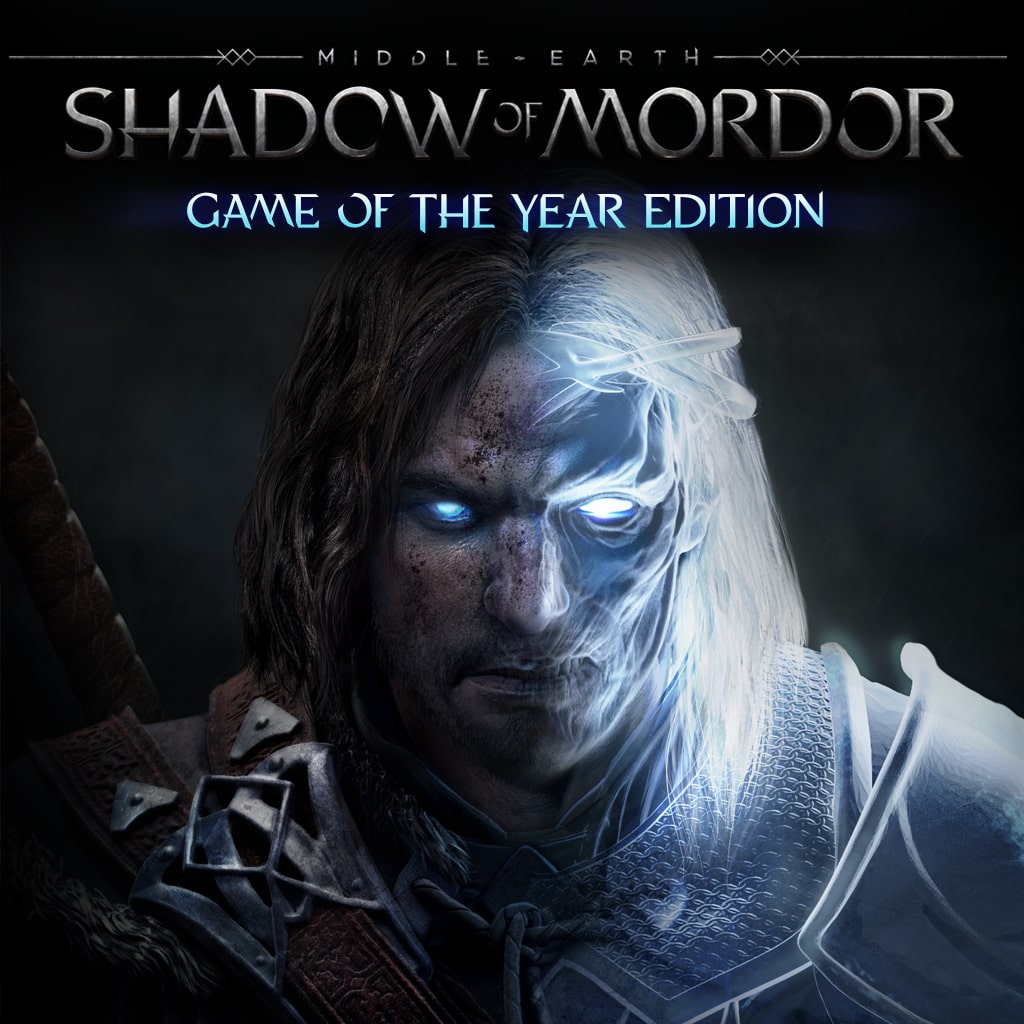
Some games arrive with impressive graphics, enormous worlds and enough features to fill an entire press release, yet somehow leave very little behind once the credits roll. Middle-earth: Shadow of Mordor was different. When Monolith Productions released it in 2014, it introduced an idea that fundamentally changed how an open world could treat its enemies, creating Orcs that could remember you, hate you, grow stronger because of you, and occasionally become the reason you wanted revenge in the first place.
That idea was the Nemesis System, and it remains the beating heart of Middle-earth: Shadow of Mordor Game of the Year Edition. More than a decade after its original release, the award-winning action RPG now makes its Nintendo debut on Switch 2, bringing Talion’s brutal journey through Mordor to a new audience. Given how influential the game became, it is fascinating to experience it again in a form that can be played both on the television and in handheld mode.
The Game of the Year Edition also arrives as the complete package, including the original campaign and the additional Season Pass content. That means The Lord of the Hunt, The Bright Lord, the Guardians of the Flaming Eye Warband mission, and additional Warband missions, Runes and skins are all included. There is plenty here for anyone discovering Talion’s story for the first time, while returning players have a good excuse to step back into Mordor and rediscover the system that made this game so special.
A Ranger’s Revenge
You play as Talion, a Ranger of Gondor stationed at the Black Gate of Mordor. Talion’s world is destroyed in an instant when he loses his friends, his family and his own life, but death does not quite have the final word. A mysterious Wraith binds himself to Talion, resurrecting him and setting the Ranger on a path of vengeance against the Orcs responsible for his suffering.
The premise immediately gives the adventure a darker, more personal tone than many Middle-earth games. Talion is not simply another hero wandering through Mordor because somebody has asked him to save the world. He has lost everything, and his initial motivation is brutally straightforward: find those responsible and make them pay. The mystery surrounding the Wraith then gradually expands the story beyond simple revenge, leading Talion towards questions about the Rings of Power, Celebrimbor and the wider history of Middle-earth.
The story exists in an interesting space between The Hobbit and The Lord of the Rings, allowing Monolith to explore a period with plenty of room for its own characters and conflicts. It does not simply attempt to recreate the films, either. Instead, it creates its own interpretation of Mordor, blending familiar Tolkien influences with an original tale about vengeance, identity and redemption.
The Nemesis System Changed Everything
It is impossible to discuss Shadow of Mordor without mentioning the Nemesis System, which is the reason the game still feels distinctive. Orc captains are generated with their own names, appearances, personalities, strengths and weaknesses, and their relationship with Talion can shift depending on what happens during the game. An Orc who defeats you can become more powerful, while one who survives an encounter may remember you the next time you meet.
That simple concept creates wonderfully unpredictable stories. You might fight an Orc who seems insignificant, only for him to kill you and return later as a more powerful captain who remembers exactly how he defeated you. Alternatively, you might discover a particular weakness, exploit it and eventually dominate that enemy, turning a former rival into one of your own captains. Suddenly, the game has created a personal history between two characters without needing a lengthy cutscene to explain it.
This is what makes the system so clever. The game does not need to tell you that an Orc is your nemesis because the relationship develops naturally through play. You remember the Orc who killed you at the worst possible moment, the one who kept escaping when you thought you had him cornered, and perhaps even the one who became a useful ally after several brutal encounters. These are stories that belong to your particular playthrough, something scripted games struggle to replicate. Even now, the Nemesis System feels remarkably fresh.
Becoming the Master of Mordor
Talion is not powerless, either. The Wraith grants abilities that let him dominate enemies, unleash devastating attacks and gradually become a far more formidable force. Combat blends swordplay, archery and stealth, creating a system that rewards aggression while still giving players plenty of opportunities to approach encounters tactically.
Combat has a satisfying rhythm once it clicks. Talion can chain attacks, counter incoming blows and move quickly between enemies, creating fights that can become wonderfully chaotic when surrounded. The Wraith’s abilities add another layer, allowing Talion to exploit his supernatural connection and turn his enemies’ abilities against them.
There is also a pleasing sense of progression as new skills and abilities are unlocked. Early in the game, encounters can feel dangerous and occasionally overwhelming, but Talion gradually develops into the sort of warrior who can walk into a camp filled with Orcs and make everyone regret being there. That transformation is one of the most enjoyable aspects of the campaign because it lets you feel the character becoming more powerful without completely removing the need for strategy.
Mordor Feels Alive
The open world itself may not feel as technically spectacular as more modern adventures, but it remains effective because the Nemesis System gives it purpose. Mordor is not simply a collection of large areas connected by objectives. It is a place where enemies constantly move through their own hierarchy, pursue their own ambitions, and react to what you do.
That makes exploration surprisingly unpredictable. You can set out to complete a particular objective and suddenly find yourself in a completely different confrontation because an Orc captain has appeared nearby. Perhaps he is an enemy you have encountered before; perhaps he has a grudge against one of your allies; or perhaps he is simply another obstacle standing between Talion and his objective.
This creates a wonderful sense that Mordor is doing something even when you are not following the story. The world does not feel entirely static, and the relationships between Orcs give the environment a personality that would otherwise be missing. It is one of the clearest examples of how good systems design can sometimes make a world feel more alive than sheer graphical detail ever could.
The Game of the Year Edition
The Game of the Year Edition is considerably more than a simple repackaging of the original game. The included Season Pass content adds two substantial story experiences, additional Warband missions, and new Runes and character skins, giving players plenty of reasons to continue their journey after completing the main campaign.
The Lord of the Hunt expands the adventure by focusing on the wild beasts of Mordor and providing new challenges and rewards. It is a welcome change of emphasis, as the creatures of Mordor can otherwise feel secondary to the Orc hierarchy, and the expansion gives them a greater role in the adventure.
The Bright Lord is arguably the more substantial addition, as it allows players to experience the story from Celebrimbor’s perspective. Taking control of the great Elven Lord of the Second Age offers a different take on combat and introduces the opportunity to wield the One Ring. It adds another fascinating layer to the wider story while giving fans of the lore something considerably more substantial to sink their teeth into.
The Guardians of the Flaming Eye Warband mission and the additional Warband content then provide more opportunities to test Talion’s abilities and hunt down Sauron’s forces. With the bonus Runes and skins, the package becomes a remarkably generous collection of content.
Mordor in Your Hands
The Nintendo Switch 2 version faces a difficult task because Shadow of Mordor is not a small game. It features a substantial open world, large groups of enemies, complex enemy hierarchies, and a combat system that can become extremely busy when things go wrong. Bringing all of that to a Nintendo platform while preserving the essential experience is therefore no small achievement.
The benefit of the Switch 2 is obvious in handheld mode. Shadow of Mordor is perfectly suited to short sessions because individual encounters can be completed relatively quickly, but the game is also dangerously good at turning a ten-minute session into an hour. Being able to continue Talion’s journey away from the television makes the adventure feel surprisingly natural on Nintendo’s hardware.
Visually, this is not a ground-up modernisation of the original game. The presentation remains faithful to its original generation rather than attempting to compete with the latest current-generation open-world titles. That is not necessarily a problem, because the art direction, atmosphere, and distinctive character designs continue to carry the experience, while the Switch 2 hardware allows the game to retain a smooth and enjoyable feel across portable and docked play.
A Game That Still Matters
Playing Shadow of Mordor again also makes it easier to appreciate how influential it became. The open-world action genre has produced countless games since 2014, yet relatively few have created a system as memorable as the Nemesis System. The idea that an ordinary enemy could become a recurring character because of something that happened during your playthrough remains one of those concepts that sounds simple until you see how effectively it works.
More importantly, the system encourages you to become emotionally invested in things that normally would not matter. You remember an Orc because he embarrassed you. You remember another because he saved you. You might even remember one because you spent half an hour trying to defeat him, only for another enemy to appear at precisely the wrong moment and ruin everything. Those moments are the soul of Shadow of Mordor. They are also why the game still feels like more than a historical curiosity.
Verdict
Middle-earth: Shadow of Mordor Game of the Year Edition remains a remarkably enjoyable action RPG, and bringing it to the Nintendo Switch 2 gives the game a new audience without compromising the system that made it special. Talion’s story of revenge and redemption provides an engaging foundation, while the combination of swordplay, stealth, archery and Wraith abilities makes the moment-to-moment combat consistently satisfying.
The Nemesis System is still the star, however. More than a decade later, there is something wonderfully compelling about watching an ordinary Orc become a personal enemy after defeating you, then meeting him again later, stronger, angrier and very aware of who you are. It creates stories that feel personal precisely because the game did not completely script them.
The Game of the Year Edition also offers an excellent amount of content, with The Bright Lord, Lord of the Hunt, additional Warband missions, bonus Runes and skins all included. The presentation understandably shows its age in places, and players expecting a major modern graphical overhaul will not find one here. But the underlying design remains strong enough that the years have done surprisingly little damage.
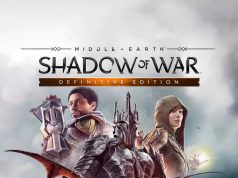
There is also something fitting about experiencing Shadow of Mordor and Shadow of War on Switch 2 together. The two games form an interesting pair, with the first introducing the Nemesis System and the second expanding it into a much larger war. Playing them in sequence makes it easier to appreciate how much the original established.
Ultimately, Shadow of Mordor is remembered for the right reason. It did not simply give players another open world to explore. It created enemies worth remembering, and in doing so, it made the world remember you. That remains a remarkable achievement.