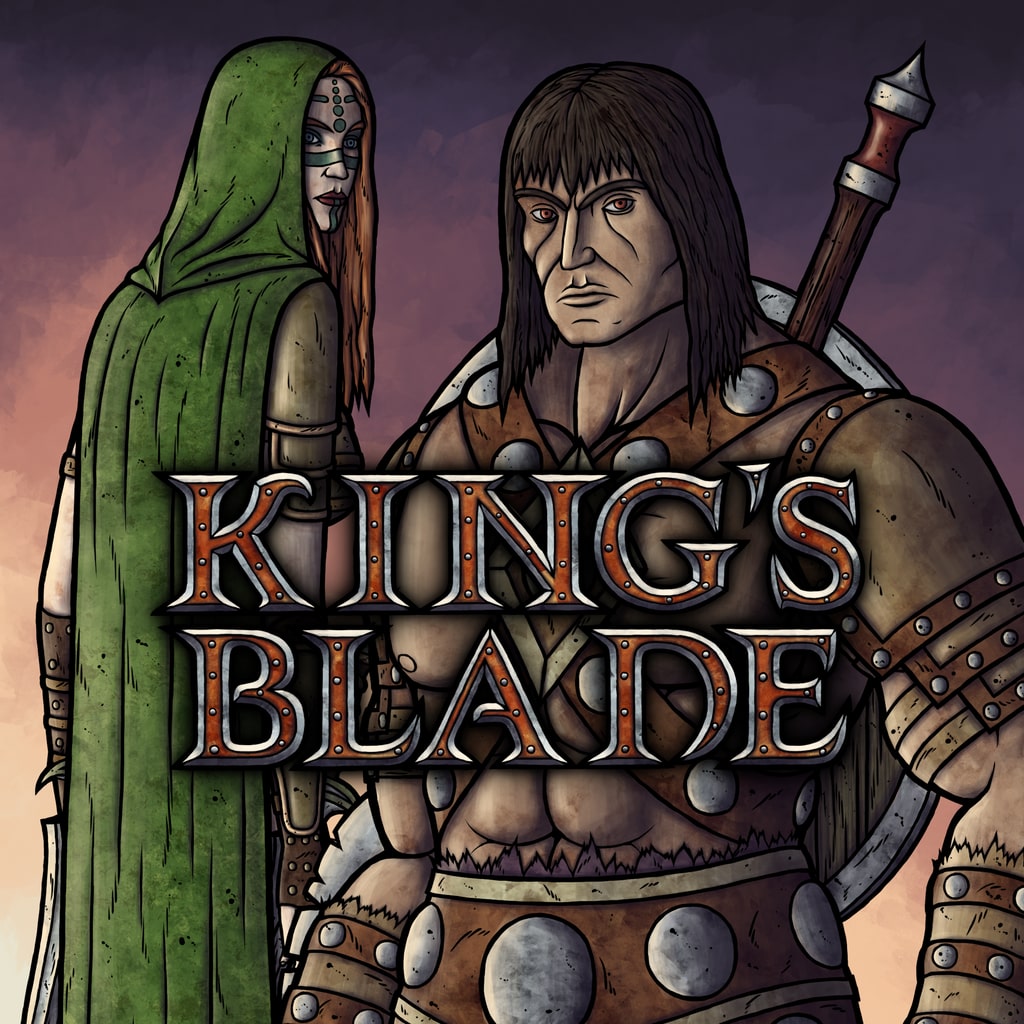
There is a particular kind of joy that comes from a good old-fashioned arcade beat ’em up. You walk from left to right, something horrible runs towards you, you hit it until it stops moving, and then you do it all over again. It is a formula that has been around for decades, but when it is done properly, there is something wonderfully satisfying about it. King’s Blade understands that appeal, dusts off the old sword, sharpens it considerably, and sends you marching into battle with six heroes and an awful lot of enemies to introduce to the business end of a weapon.
Developed and published by Alexey Suslin, King’s Blade is an unapologetically old-school side-scrolling brawler inspired by classics such as Golden Axe and the sword-and-sorcery adventures that helped define the genre. The setting is suitably grim, with the brutal Barganian Empire spreading misery across the land and the King’s Blade warriors tasked with fighting their way towards the enemy capital. It is the sort of premise that does not need a complicated explanation. There is an evil empire, there are heroes, there are hordes of enemies, and somebody needs to start punching.
What makes King’s Blade more interesting is that beneath its traditional arcade exterior sits a combat system that demands considerably more thought than simply hammering the attack button. Positioning matters, stamina matters, and knowing when to attack is often just as important as knowing how. That gives the game a pleasing sense of weight and makes its battles feel like something more than a nostalgic trip.
Six Heroes, Six Ways To Fight
The six playable heroes are one of the game’s biggest strengths. Rather than offering a handful of characters who feel like slightly different versions of the same warrior, King’s Blade gives you genuinely distinct ways to approach its battles.
Some heroes are built around brute force, happily wading into groups and absorbing punishment while delivering enormous blows. Others are quicker and more agile, relying on rapid combinations and movement to stay out of trouble. Then there are the characters who bring magic into the equation, offering ranged attacks and elemental abilities that can completely change how you approach an encounter.
This variety gives you a good reason to experiment. You might find yourself falling in love with one character because their fighting style clicks immediately, only to discover that another hero makes a particular level considerably easier. It also works well when playing with friends, because a group of four very different warriors charging into battle can create some gloriously chaotic moments.
Button Mashing Will Get You Killed
If there is one thing King’s Blade wants you to understand, it is that blindly hammering buttons will not save you. The game’s vertical positioning system is particularly important because enemies must be lined up properly before your attacks connect.
That might sound simple, but it completely changes the rhythm of combat. In many classic beat ’em ups, you can get away with throwing out attacks constantly and hoping something hits. Here, swinging at the wrong angle can leave you wide open, allowing enemies to punish you as you recover.
Once the system starts to click, however, there is a satisfying rhythm to it. You move into position, land a combination, back away from an incoming attack, and then step back in when an opening appears. It gives the fighting a deliberate quality that works surprisingly well alongside the game’s otherwise chaotic arcade presentation.
When The Screen Gets Crowded
And believe me, the screen gets crowded. King’s Blade is not shy about throwing enemies at you, and encounters can quickly turn into wonderfully messy brawls. Warriors rush towards you from the front, while other enemies hang back. Cultists provide support, and nastier creatures attempt to disrupt your carefully planned assault.
Enemy variety is important in a game like this, because simply increasing the number of enemies would become boring very quickly. Thankfully, King’s Blade gives different opponents different roles, forcing you to think about who needs to be dealt with first. Backline support enemies can become particularly irritating if you allow them to sit safely behind the main wave, so sometimes the best strategy is to ignore the obvious threat and go straight for the annoying one.
It creates those little moments of tactical decision-making that keep the combat interesting. You are still playing a beat ’em up, but there is more going on than simply hitting whatever happens to be closest.
Magic, Weapons And Big Explosions
The combat becomes considerably more entertaining when you start making use of everything the environment offers. Weapons and useful items are scattered throughout the stages, allowing you to pick up objects and turn the surroundings into part of your arsenal.
Boulders, spears and other environmental weapons can make a real difference when a particularly nasty group of enemies appears. Then there are the special attacks and powerful ultimate abilities, exactly the sort of thing you want to unleash when the screen is completely covered in angry soldiers.
There is a lovely arcade satisfaction in saving an ultimate attack until the moment when everything looks hopeless, then pressing the button and watching a huge chunk of the enemy army disappear. It is not subtle, but King’s Blade is not trying to be subtle. Sometimes you simply need a giant magical explosion to solve your problems.
Ride Into Battle
One of the more entertaining additions is the ability to ride elemental beasts in certain stages. It is the sort of feature that feels perfectly at home in this setting, because sword-and-sorcery games have always understood that if something is already ridiculous, putting a warrior on the back of a giant magical creature will probably make it better.
These sections also provide a welcome change of pace. After spending time carefully positioning yourself and managing groups of enemies on foot, suddenly having a powerful creature beneath you gives the action a different energy. It is another example of King’s Blade knowing exactly what sort of game it wants to be.
There is no shortage of spectacle either. Between beast-riding, special attacks, environmental weapons and huge groups of enemies, the game regularly delivers wonderfully exaggerated arcade moments when the screen looks like absolute chaos and somehow you are still standing.
Twelve Stages Of Trouble
The campaign takes you through twelve levels, each offering another chance for the game to throw something unpleasant your way. The environments have a suitably grim fantasy look, with crumbling stone structures, dark forests, torchlit areas and battlefields that seem to have seen far too much violence.
The pixel art is particularly effective. It does not hide behind modern visual effects or chase photorealism. Instead, it embraces chunky character sprites, strong animation and plenty of grimy detail, creating something that feels like it could have been pulled straight from an arcade cabinet that somehow survived several decades in a dark corner of a pub.
There is also a surprising amount of animation in the environments. Torches flicker, foreground objects move, and enemies have enough visual personality to make even the more common opponents memorable. The grotesque designs help too, particularly when the more unpleasant creatures start appearing.
Bring Some Friends
Beat ’em ups have always been better with friends, and King’s Blade understands that perfectly. Local co-op supports up to four players, letting you fill the screen with warriors and turn an already chaotic game into something considerably more ridiculous.
There is also an option to bring AI-controlled fighters into your team. This is genuinely useful, as it means you are not forced to play alone simply because you do not have three friends sitting beside you with controllers in hand. The AI companions can attack enemies, draw attention away from you, and help during particularly difficult encounters.
Playing with friends naturally adds another layer of fun. One player can focus on tougher enemies while another deals with support characters, and suddenly the deliberate combat system becomes a frantic dance between four people trying not to get in each other’s way. There will almost certainly be moments when somebody launches an enemy directly into another player’s attack, and that is exactly the sort of accidental nonsense that makes co-op beat ’em ups so memorable.
Secrets Worth Searching For
The levels also contain useful items and hidden bonuses that encourage you to explore rather than simply rush towards the exit. Health items, elemental scrolls and weapon upgrades can make a significant difference, especially when you know a difficult boss encounter lies ahead.
This is where the arcade roots show again. You are constantly weighing up risk and reward. Do you take the time to search the area for something useful, or do you push forward before another wave of enemies arrives?
The answer is not always obvious, and that is a good thing. Exploring can make later encounters easier, but spending too long wandering around can leave you exposed. It gives the levels a little more personality than a simple corridor filled with enemies.
Grim, Gritty And Gloriously Old School
The presentation fits the game’s personality beautifully. The pixel art is dark without becoming muddy, and the environments have enough detail to make the fantasy world feel substantial. The combination of crumbling stone, flickering firelight and grotesque creatures creates exactly the sort of pulpy sword-and-sorcery atmosphere the game is aiming for.
The soundtrack complements it nicely. Heavy impacts, digitised battle cries and the constant clash of weapons provide the expected arcade punch, while the music adds tribal drums and chiptune elements to create something suitably aggressive.
It is not a soundtrack likely to have you sitting down and listening to it away from the game, but it does its job extremely well. When the fighting starts, the audio makes every hit feel important, and that is exactly what a good brawler needs.
A Little Too Old School
There are moments when King’s Blade perhaps takes its arcade influences a little too seriously. The checkpoint system can be unforgiving, particularly in longer stages, where a mistake near the end can mean repeating a substantial section.
That old-school difficulty will appeal to some players, especially those who grew up with arcade brawlers where continuing was never guaranteed. For others, it may occasionally feel unnecessarily punishing, especially when you have already demonstrated that you understand the mechanics.
A little more flexibility would not have hurt. The game does not need to become easy, but allowing more opportunities to save progress would make the experience more welcoming without taking away its challenge. Even so, there is something strangely satisfying about finally overcoming a section that has been giving you grief for the last few attempts.
Final Verdict
King’s Blade is a proper love letter to the golden age of arcade beat ’em ups. It understands what made those games special, but it does not simply copy the formula and call it a day. The six heroes offer genuinely distinct approaches to combat, the vertical positioning system gives every fight a little more thought, and the combination of magic, environmental weapons and beast-riding provides plenty of opportunities for glorious chaos.
The difficulty can occasionally feel a little harsh, especially when strict checkpoints force you to replay large sections of a stage. Yet that frustration is balanced by the satisfaction of finally getting through a difficult encounter and reaching the next checkpoint. It is a game that expects you to learn its rhythm rather than simply mashing your way through it.
Most importantly, King’s Blade has personality. It is grim, violent, slightly ridiculous and completely committed to its sword-and-sorcery arcade fantasy. Whether you are playing alone with AI companions or filling the screen with three friends, there is a satisfying simplicity to charging into battle, finding your rhythm and watching a horde of Barganian soldiers realise they have picked the wrong day to invade.
It may not reinvent the beat ’em up, but it does not need to. Sometimes you just want a sword, a few mates, a screen full of enemies and a really good excuse to shout at the television.