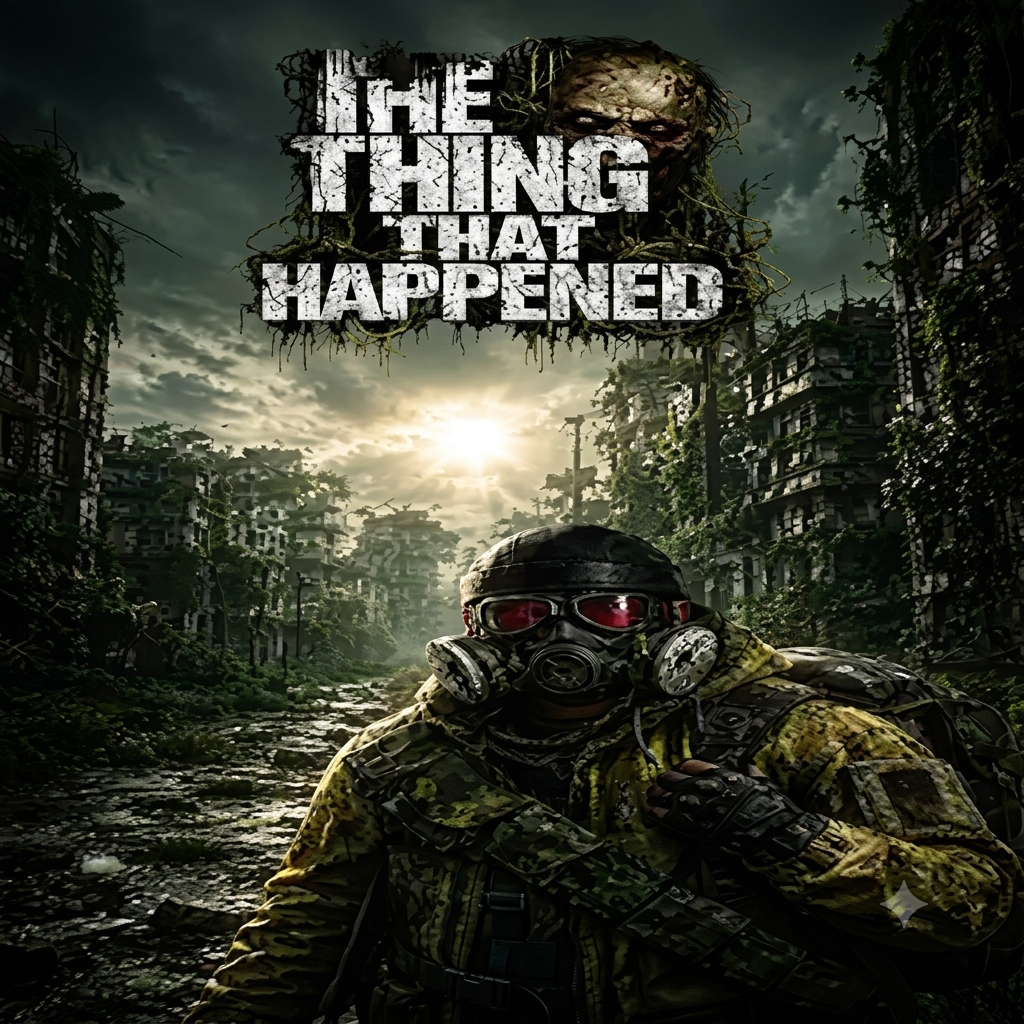
There is something endlessly fascinating about post-apocalyptic worlds in games. The idea of stepping into the remains of a civilisation, wandering through abandoned streets, and piecing together what happened before everything collapsed has always carried a certain emotional weight. The Thing That Happened embraces that familiar survival fantasy with a clear appreciation for the genre’s foundations, placing players in the battered remains of Jericho, a once-thriving city now reduced to a lonely landscape of ruined buildings, wild vegetation, and forgotten memories. Developed by the indie duo Mario Murkl and Zoltán Árva, this ambitious Unreal Engine 5 project is a reminder that passion and determination can shine through even when a game’s smaller budget becomes visible.
Taking control of Marcus Draven, players arrive in Jericho after days of struggling through a dangerous new world. Food is scarce, supplies are limited, and every abandoned building could contain either a valuable resource or an unexpected threat. The city itself becomes a character, with its collapsed structures and empty streets telling a silent story of loss and survival. While the narrative may not always match the emotional depth of the genre’s biggest names, there is a genuine sense of isolation running through every step of Marcus’s journey.
What makes The Thing That Happened interesting is that it does not hide its indie roots. This is a game created by a two-person team, and that context matters when assessing its achievements and shortcomings. The developers have clearly aimed high, creating an open-world survival adventure with shooting, crafting, melee combat, exploration, and progression systems that would challenge even much larger teams. The result is an imperfect but earnest experience that occasionally struggles under the weight of its own ambitions.
Exploring The Ruins Of Jericho
The world of Jericho is the heart of The Thing That Happened. From the moment Marcus enters the abandoned city, an unmistakable atmosphere of decay lingers. Crumbling buildings line overgrown streets, as nature reclaims human spaces, and the silence creates a constant sense that something terrible happened here. The environment effectively sparks curiosity, encouraging players to investigate abandoned locations in search of supplies and clues.
Exploration is a major part of the experience, with players scavenging for essential resources needed to survive. Searching through forgotten areas is not simply about finding ammunition or useful equipment, but about maintaining enough supplies to keep moving forward. Food, materials, and crafting components all become important parts of the survival loop, forcing players to think carefully about what they carry and what they leave behind.
The Unreal Engine 5.2 helps Jericho achieve some impressive moments. Lighting effects, environmental detail, and atmospheric presentation occasionally create scenes that genuinely capture the loneliness of a world after civilisation has fallen. Sunlight breaking through damaged buildings or vegetation covering forgotten streets can provide striking visuals, especially considering the game’s small development team.
However, the project’s limitations are also evident. Some areas lack the polish and refinement of larger open-world productions, and certain assets and animations can feel inconsistent. The developers have openly acknowledged using marketplace and external assets, which is common across the industry, particularly among smaller teams. The challenge is ensuring those elements blend naturally, and there are moments when The Thing That Happened struggles to create a completely seamless world.
Survival Through Combat And Crafting
Survival in The Thing That Happened is not just about wandering through ruins. Marcus must defend himself against hostile forces using a combination of firearms, melee abilities, and crafted equipment. Combat offers a mix of ranged encounters and close-quarters battles, allowing players to develop their preferred approach to threats.
The inclusion of weapon attachments adds an extra layer of customisation. Players can improve their firearms and adapt their equipment to the challenges ahead. This system encourages experimentation and gives scavenged resources a greater purpose beyond simply filling an inventory. Finding the right attachment or upgrade can make the difference between surviving an encounter and being overwhelmed.
The melee combat system also aims to provide more depth through its skill tree. Rather than simply relying on basic attacks, players can invest in close-combat abilities to create a more specialised survival style. This gives Marcus a stronger sense of progression and makes upgrades feel meaningful throughout the journey.
That said, combat is one area where the game’s smaller scale becomes most apparent. Animations can sometimes feel rough, enemy encounters lack the variety and complexity of more polished survival adventures, and combat occasionally struggles to deliver the impact it is aiming for. There are moments when fights feel satisfying, particularly when preparation and upgrades pay off, but there are also encounters that reveal the rough edges beneath the surface.
Ambition Beyond Its Budget
One of the most striking aspects of The Thing That Happened is the sheer ambition behind it. Creating an open-world survival game is already a major undertaking, but doing so with only two developers is an enormous challenge. That the game exists at all is an achievement, especially given the breadth of systems included.
The combination of exploration, crafting, combat upgrades, and survival mechanics shows the developers had a clear vision. There is an understanding of what makes this genre appealing: the tension of searching abandoned locations, the satisfaction of improving your equipment, and the feeling of slowly growing stronger in a hostile environment.
Unfortunately, ambition can also become a burden. Some systems feel underdeveloped, and the overall experience lacks the polish that would help these mechanics truly stand out. The foundation is there, but certain elements would have benefited from more development time and refinement.
Still, there is something admirable about The Thing That Happened. It feels like a project made by people who genuinely love survival games rather than a product designed purely around market trends. The rough edges are impossible to ignore, but so is the passion behind the experience.
Final Verdict
The Thing That Happened is an ambitious indie survival adventure that transcends its limitations. It creates an atmospheric post-apocalyptic setting, offers a solid foundation of exploration and crafting, and provides enough combat customisation to keep players invested. It may not match the technical polish or depth of larger survival games, but there is a genuine sense of determination behind every part of the experience.
For players who enjoy discovering smaller indie projects and appreciate the effort required to build a game of this scale, The Thing That Happened is worth exploring. It is not a flawless survival epic, but it offers moments of atmosphere, discovery, and tension that show what a dedicated team can achieve. Jericho may be a broken city, but within its ruins lies a reminder that survival is often about persistence rather than perfection.