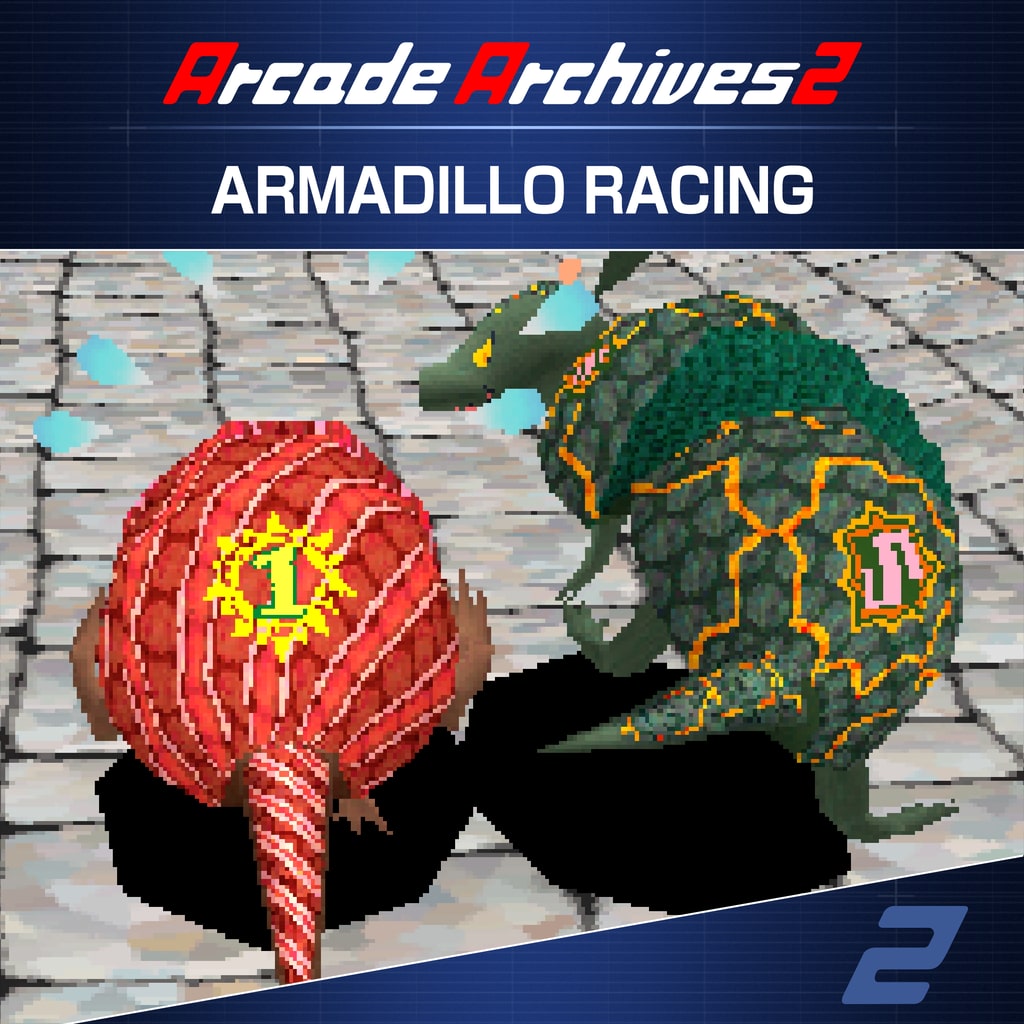
Arcade history is full of strange ideas that somehow worked. Long before realism became the driving force behind racing games, arcades were packed with colourful cabinets unafraid to be a little ridiculous. Racing armadillos instead of sports cars? That sounds like the sort of concept that would never make it past a brainstorming session today, yet Namco turned exactly that into ARMADILLO RACING in 1997. It was playful, energetic, and wonderfully odd, embracing the kind of creativity that defined many Japanese arcade games in the late nineties.
Thanks to HAMSTER’s Arcade Archives 2 line, this overlooked curiosity has been given another chance to find an audience. More than a simple re-release, Arcade Archives 2 ARMADILLO RACING packages the original game with modern conveniences, improved performance, and a handful of welcome new modes that make revisiting this forgotten racer easier than ever. While its age is impossible to ignore, there’s something refreshingly honest about its design. It doesn’t pretend to be deeper than it is. It simply wants you to roll as fast as possible, avoid disaster, and cross the finish line first.
A Race Unlike Any Other
The first thing that stands out is how unusual ARMADILLO RACING remains nearly three decades after its arcade debut. Rather than climbing behind the wheel of a flashy supercar, players control a brightly coloured armadillo that curls into a ball as it gathers speed. Momentum becomes everything, creating a racing system unlike almost anything else in the genre.
Acceleration isn’t simply a matter of holding a trigger. Building speed requires smooth, careful navigation of each course’s hazards. Losing momentum can be costly, making every corner, obstacle, and bump feel surprisingly important. The result is a racing game that rewards rhythm more than aggression.
There are two primary course styles to tackle. Obstacle courses throw all manner of environmental hazards in your path, asking players to think quickly while preserving precious speed. Sprint courses, meanwhile, strip things back to pure racing, placing greater emphasis on precision and racing lines. The balance between the two keeps the experience varied, ensuring the gameplay rarely becomes repetitive despite its relatively straightforward mechanics.
Winning races also unlocks quirky bonus games that perfectly capture the personality of late-nineties arcade design. These little diversions may not add substantial longevity, but they inject plenty of charm and reward skilled play with something beyond another podium finish.
Simple Gameplay with Surprisingly Good Flow
Modern racing games often overwhelm players with tuning systems, upgrade trees, progression mechanics, and endless currencies. ARMADILLO RACING couldn’t be more different. Within moments, you’re already competing, learning through experience rather than lengthy tutorials.
That simplicity becomes one of the game’s greatest strengths. Every race feels immediately accessible, allowing players to focus entirely on mastering the unique handling rather than wrestling with complicated systems. There’s a purity to its design that’s increasingly rare in today’s market.
The controls feel responsive throughout, though mastering momentum takes practice. It’s easy to see why this worked so well in arcades, where games needed to communicate their mechanics within seconds. Every mistake feels like your own, and every successful run delivers genuine satisfaction as you glide through hazards without sacrificing speed.
Its shorter race lengths also work in its favour. Individual events rarely overstay their welcome, encouraging just one more attempt to shave a few seconds off your best time or finally secure first place.
Arcade Archives 2 Delivers More Than Preservation
HAMSTER has built an impressive reputation for faithfully preserving arcade classics, and Arcade Archives 2 continues that tradition while introducing meaningful improvements.
Time Attack Mode is perhaps the most significant addition. Rather than chasing high scores, players race against the clock to complete the game as quickly as possible. It shifts the focus entirely towards efficiency and perfect execution, offering experienced players another compelling reason to revisit every course.
Traditional Original Mode, Hi Score Mode, and Caravan Mode also return, providing several ways to approach the game depending on personal preference. Online leaderboards further extend the competitive appeal, allowing dedicated players to compare their performances with competitors across the globe.
Quality-of-life improvements remain excellent throughout. Save states allow players to suspend progress whenever necessary, and rewind functionality softens some of the harsher frustrations associated with older arcade games. Display filters recreate the appearance of classic CRT monitors for those seeking an authentic presentation.
Variable Refresh Rate support may sound like a small technical feature, but it contributes to smoother gameplay and helps preserve the responsiveness that arcade racers demand. It’s another example of HAMSTER paying attention to details that many players may never consciously notice but will certainly appreciate.
Faithful Presentation with Vintage Charm
Visually, ARMADILLO RACING is unmistakably a product of 1997. Built on Namco’s impressive System Super 22 arcade hardware, it retains that distinctive late-arcade aesthetic, blending chunky polygonal environments with vibrant colours and exaggerated animation.
While nobody is going to mistake it for a modern racer, the presentation has a timeless charm that many contemporary games struggle to replicate. The armadillos themselves are full of personality, and the colourful tracks maintain a cheerful atmosphere that perfectly complements the light-hearted gameplay.
Performance on PlayStation 5 is rock-solid throughout. Frame pacing remains smooth, loading times are practically non-existent, and the emulation feels exceptionally polished. Most importantly, nothing gets in the way of preserving the feel of the original cabinet.
The soundtrack follows a similarly upbeat direction, delivering cheerful arcade melodies that suit the game’s playful tone. Sound effects remain satisfyingly exaggerated, reinforcing the cartoon-like nature of every collision, bounce, and finish-line celebration.
Showing Its Age
For all its charm, ARMADILLO RACING inevitably shows its age in places. The available content feels modest by modern standards, with relatively few tracks and limited long-term progression beyond chasing better times and higher leaderboard positions.
Players expecting deep career modes or extensive unlock systems may find themselves exhausting the core experience fairly quickly. This remains very much an arcade game at heart, designed for repeated short sessions rather than dozens of hours of continuous progression.
The unusual momentum mechanics may also divide opinion. While they define the game’s identity, they require patience before everything clicks. Some players may initially find the handling awkward, especially if approaching it with expectations shaped by more traditional racers.
None of these issues significantly diminish what ARMADILLO RACING sets out to achieve, but they do reinforce that this is a lovingly preserved slice of arcade history rather than a modern reinvention.
Final Verdict
Arcade Archives 2 ARMADILLO RACING reminds us why preserving gaming history matters. Hidden among the giants of the late nineties were countless creative experiments that deserved more attention than they received. This is one of them. Beneath its delightfully absurd premise lies a surprisingly satisfying racer built on momentum, precision, and pure arcade fun.
HAMSTER has once again delivered an excellent restoration that respects the original while introducing thoughtful modern features that enhance accessibility without compromising authenticity. Time Attack Mode, online leaderboards, rewind functionality, VRR support, and extensive display options make this one of the strongest versions of the game ever released.
It won’t replace your favourite modern racer, nor does it aim to. Instead, it offers something increasingly rare: uncomplicated arcade entertainment, packed with personality. For retro enthusiasts, Namco fans, or anyone curious about one of the stranger corners of arcade history, ARMADILLO RACING is well worth a spin.