Train simulators occupy a fascinating corner of gaming. At their best, they transform routine transport into something strangely compelling. There is a certain satisfaction in managing schedules, monitoring signals, stopping with precision, and feeling responsible for hundreds of virtual passengers on their daily commute. Even slower-paced railway experiences can become surprisingly absorbing when enough attention is paid to authenticity and atmosphere.
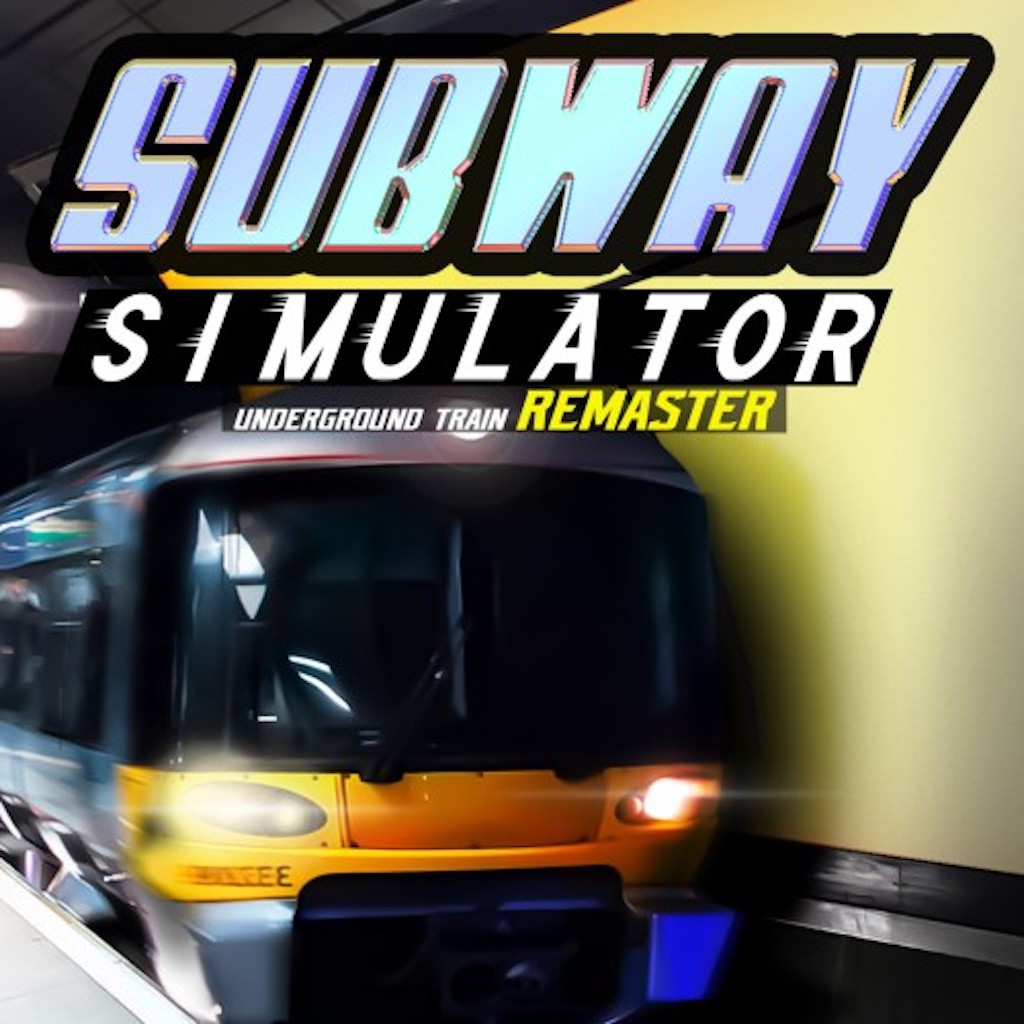
Subway Simulator – Underground Train REMASTER arrives on Nintendo Switch, hoping to tap into that appeal. Developed and published by Midnight Games, this updated version promises enhanced stations, improved routes, upgraded visuals, and a more immersive underground experience. On paper, it sounds like the sort of release that could appeal to transport enthusiasts seeking a portable rail simulation.
Unfortunately, while the game succeeds in delivering the basic act of driving a subway train, it struggles to provide much beyond that. The result is a simulation that functions adequately but rarely feels engaging, leaving players with a ride that is technically operational yet surprisingly difficult to become invested in.
Driving from A to B
At its core, Subway Simulator – Underground Train REMASTER revolves around a simple gameplay loop. Select one of five trains, choose a route across one of four cities, and begin transporting passengers between stations. Your primary responsibilities include accelerating, braking, stopping accurately at platforms, and opening or closing the doors.
There is an undeniable appeal to simplicity. Many successful simulator games begin with straightforward mechanics before gradually introducing additional layers of complexity. Here, however, that evolution never really arrives. What you experience on your first journey is remarkably similar to what you will be doing several hours later.
Most of your attention is spent monitoring speed limits and ensuring your train stops within designated platform zones. Exceed the speed limit and penalties are applied. Miss your stopping point and more points are deducted. While these systems create some level of engagement, they never develop into anything particularly meaningful.
There are no complicated signalling systems to learn, no equipment malfunctions to manage, and no operational emergencies to overcome. As a result, driving often feels less like operating a subway network and more like following a basic checklist.
A Career Without Momentum
Progression takes the form of a level structure and unlockable content. Completing routes earns points that can be used to unlock additional cities and cosmetic options for your trains. The game presents this as a sense of advancement, but the reality is less exciting.
New levels do not introduce meaningful gameplay variations. Instead, they largely extend route lengths and tighten performance requirements. While this technically increases difficulty, it does not add depth.
Many of the best simulation games create a feeling of mastery over time. You start small, learn the systems, unlock responsibilities, and eventually become an expert. Subway Simulator – Underground Train REMASTER never manages to create that journey. The learning curve is almost completely flat. Within the first hour, most players will have seen virtually every mechanic the game offers. What follows is simply more of the same.
The Underground World
The remaster branding suggests a substantial visual overhaul, and there are moments when improvements are noticeable. Train models feature cleaner textures and sharper detailing than one might expect from a budget release. The lighting inside stations occasionally creates attractive reflections on the trains’ metallic surfaces. These moments, however, are fleeting.
The stations themselves feel strangely lifeless. Passengers stand motionless on platforms, lacking the natural movement and behaviour that would help sell the illusion of a functioning transit system. Instead of feeling like busy transport hubs, many stations resemble static display sets waiting for activity that never arrives.
The issue becomes even more apparent once the train departs. Much of the game takes place in repetitive tunnels that quickly blend together. Since subway systems spend significant time underground, environmental variety is essential for maintaining visual interest. Here, that variety is largely absent.
After a handful of routes, the scenery begins to feel interchangeable. One tunnel looks much like the next, creating long stretches with very little to capture the player’s attention.
Sound Without Atmosphere
Audio is another area where the game misses an opportunity to create immersion. The sounds of the train itself are serviceable. Brakes engage with reasonable weight, doors slide open with satisfying mechanical noises, and the wheels produce a steady rhythm as they travel along the tracks. These elements provide a basic sense of authenticity.
Beyond that, however, the soundscape feels remarkably sparse. Stations lack the bustle and chatter one expects from public transport networks. There are few memorable ambient effects, and the overall atmosphere often feels oddly empty. Rather than transporting players into a living subway system, the audio design frequently reinforces the sensation of operating in an artificial environment. For a genre that thrives on immersion, this absence of environmental character is difficult to ignore.
Smooth Performance, Limited Ambition
One area where the game deserves credit is technical stability. Throughout testing, Subway Simulator – Underground Train REMASTER performed reliably on the Nintendo Switch. Frame rates remained consistent, loading times were manageable, and major technical issues were largely absent. The controls were responsive enough to handle the game’s straightforward requirements, and the interface remained easy to navigate. The problem is not that the game runs poorly. The problem is that it never aims particularly high in the first place.
Performance stability is certainly welcome, but smooth execution alone cannot compensate for a lack of compelling content. A train may arrive exactly on schedule, but if the destination is uninteresting, the journey still feels disappointing.
A Simulation Missing Its Soul
What ultimately hurts Subway Simulator – Underground Train REMASTER most is not any single flaw. It is the overwhelming sense that the experience lacks personality.
Great simulator games often make ordinary activities feel fascinating. They create stories through systems, encourage mastery, and immerse players in believable worlds. Whether you are managing a farm, flying an aircraft, or driving a train, there should be a sense that your actions matter within a larger framework. Here, that framework never fully materialises.
The routes feel disconnected. The progression lacks purpose. The world remains static. Even the cities themselves never develop a distinct identity. What remains is a collection of train journeys that function correctly but rarely leave a lasting impression.
There is a foundation here that could support something far more interesting. With deeper operational systems, more dynamic stations, stronger presentation, and a greater sense of progression, the concept could become genuinely engaging. In its current form, however, it feels like a stripped-down version of a much better simulation that never arrived.
Final Verdict
Subway Simulator – Underground Train REMASTER delivers exactly what its title promises: you drive subway trains along underground routes. The problem is that it offers very little beyond that basic premise.
While the game runs smoothly and occasionally showcases decent visual improvements, it lacks the depth, atmosphere, and progression needed to keep players invested for the long haul. The repetitive routes, lifeless stations, and shallow mechanics make every journey feel remarkably similar.
For dedicated train enthusiasts, there may be some short-lived enjoyment in mastering its simple systems. For everyone else, this is likely to be a ride that is forgotten shortly after reaching its final stop.