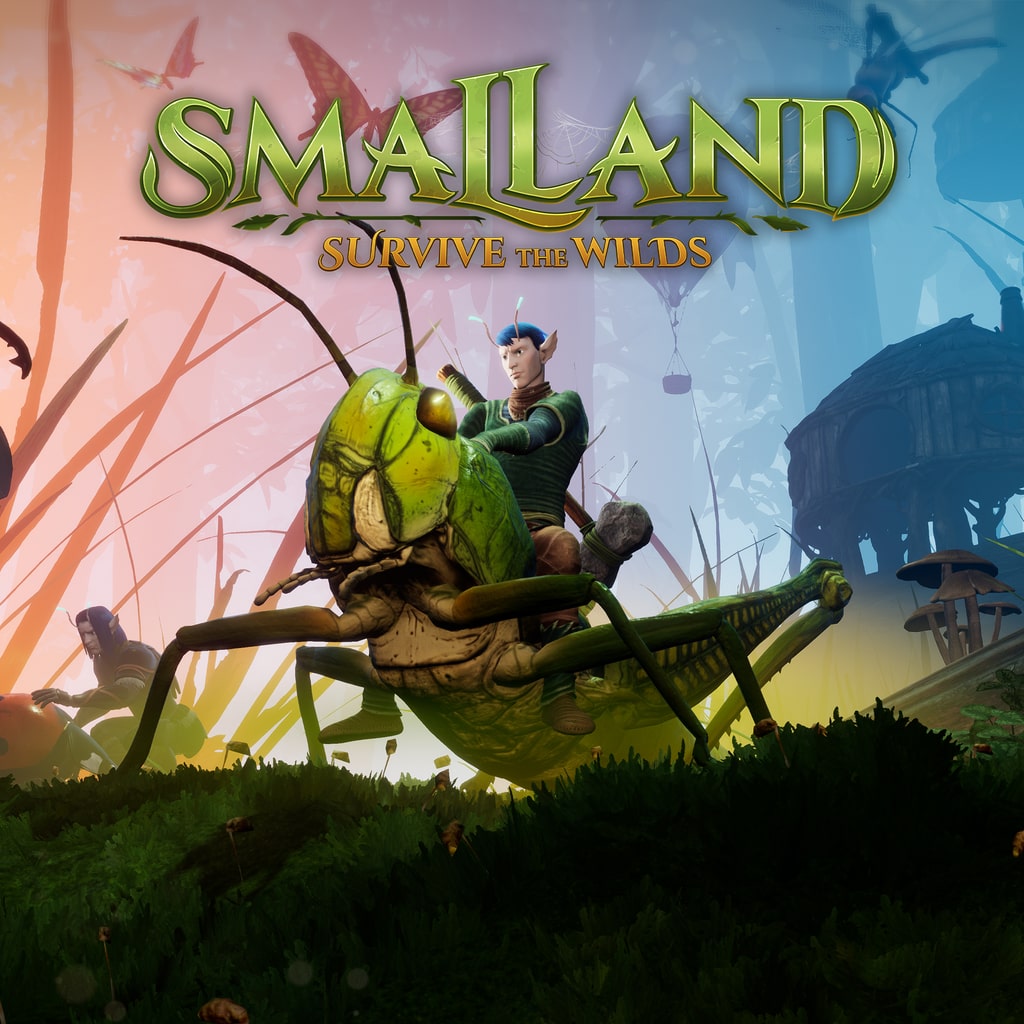
There is something quietly magical about seeing the ordinary become extraordinary. As children, many of us imagined what it might feel like to shrink beneath the grass, turning gardens into jungles and puddles into oceans. A beetle became a monster. A bird overhead looked like a dragon. The world felt enormous because, in our imagination, we were small enough to disappear into it. That sense of scale is exactly what Smalland: Survive the Wilds captures so brilliantly.
Developed and published by Merge Games, Smalland has steadily grown into one of the most distinctive survival games on the market. Following its original 2024 release, the newly expanded 2026 version for PlayStation 5 and Xbox Series X/S feels less like a simple update and more like the game finally becoming the fully realised adventure it always wanted to be. With the arrival of the “Tides of Change” expansion, improved performance, refined combat, and a mountain of quality-of-life improvements, this tiny world now feels massive in all the right ways.
A Beautifully Dangerous Backyard
The premise immediately stands out from the crowded survival genre. Humanity is gone. The giants have vanished. What remains are the Smallfolk, tiny humanoid survivors emerging from underground to reclaim the dangerous wilderness above.
At first glance, the world feels familiar. Grass sways in the breeze. Rain drips from leaves. Ruins lie half-buried in dirt and moss. Then perspective takes hold. A spider suddenly towers like a nightmare creature. A shallow stream becomes a deadly river. A storm feels apocalyptic. Smalland constantly reminds you how fragile you are.
That scale creates an atmosphere many survival games struggle to achieve. Titles like Grounded lean into humour and playful adventure. Smalland opts for something moodier and more grounded. The environments are beautiful, yet they carry an undercurrent of danger at all times. A peaceful walk through tall grass can turn to panic the moment you hear wings buzzing overhead.
The world itself feels alive in ways that go beyond visual design. Wind rattles branches. Rain hammers the ground with terrifying force. Fog rolls through forests like something hunting you. Dynamic weather is not merely cosmetic here. A heavy storm genuinely becomes a survival threat when you are only inches tall. That constant vulnerability gives every expedition weight.
Survival That Respects Your Time
The survival loop will feel familiar to genre veterans. You gather fibre, wood, resin, stone, and insect parts to build tools, armour, weapons, and shelter. Hunger and hydration must be managed. Better gear enables safer exploration and deadlier encounters.
What separates Smalland from many of its peers is its pacing. The game understands the importance of momentum. Progress rarely feels painfully grindy. Crafting recipes are reasonable. Exploration naturally rewards curiosity. Even when gathering resources, there is usually something interesting nearby, whether it is a hidden cave, a nest of hostile creatures, or an NPC questline that expands the lore of the Smallfolk.
The Great Tree mechanic remains one of the smartest systems in any survival game released in recent years. Rather than forcing players to constantly rebuild from scratch when changing servers or travelling vast distances, you can establish a persistent treetop settlement that essentially moves with you. It is a brilliant compromise between permanence and freedom.
Building itself is flexible and satisfying. You can create humble woodland camps or sprawling elevated fortresses suspended above the forest canopy. There is enough structural variety to encourage creativity without becoming overwhelming. Watching your small wooden shelter gradually evolve into a thriving settlement gives the game a rewarding sense of ownership.
Mounted Exploration Changes Everything
The creature taming system is where Smalland truly spreads its wings. Taming mounts fundamentally transforms how the world feels. Early on, travel can feel intimidating and slow as you cautiously navigate hostile terrain on foot. Then suddenly you are sprinting across fields atop a grasshopper or soaring through the skies on the back of a dragonfly.
The first time you take flight is unforgettable. Seeing the world from above completely alters your relationship with the environment. Areas that once felt impossibly distant become connected in exciting new ways. Traversal becomes less about survival and more about adventure.
Each mount has practical strengths too. Some specialise in climbing difficult terrain, while others excel in speed or combat support. This adds another layer of progression beyond simply crafting stronger armour.
The aerial combat improvements introduced in 2026 are also noticeable. Flying enemies no longer feel awkward or imprecise to fight. Battles in the air now have a cleaner rhythm, making ranged and mobility-focused builds far more enjoyable.
Combat That Demands Patience
Combat in Smalland sits somewhere between traditional survival action and light Souls-inspired encounters. You cannot simply mash attacks and expect victory. Stamina management matters. Dodging matters. Reading enemy behaviour matters. Larger creatures hit hard enough to punish careless mistakes.
This works particularly well because enemies feel appropriately threatening given your size. Fighting a beetle or spider carries genuine tension. Even common wildlife can become deadly if approached recklessly.
The armour system encourages experimentation, too. Different insect-based gear sets offer various resistances and perks. Some favour mobility and gliding, while others emphasise defence or environmental protection.
Combat is not perfect. Hit detection occasionally feels inconsistent during chaotic fights involving multiple creatures, and melee encounters can become messy in tight spaces. However, the overall experience remains engaging because every battle feels physical and dangerous. Victory always feels earned.
A World Better Shared
While Smalland is fully enjoyable solo, multiplayer dramatically enhances the experience. Playing with friends naturally creates memorable moments. One player scouts ahead, mounted on a dragonfly, while another gathers resources below. Someone accidentally angers a massive spider, and chaos erupts. A sudden storm traps the group inside a half-finished shelter as everyone desperately crafts supplies to survive the night. The game thrives in these unscripted moments.
The cooperative structure works well because players can specialise organically. Builders focus on settlements. Explorers chart new territory. Hunters gather rare materials. Nobody feels unnecessary.
Importantly, multiplayer never destroys the atmosphere. Some survival games lose tension when played cooperatively. Smalland still maintains its sense of wonder and vulnerability, even with a group. If anything, the world feels even larger when experienced alongside others.
The Sound of a Tiny World
One of the game’s most underrated strengths is its sound design. Nature sounds are subtly amplified to reinforce scale. The buzz of insect wings sounds thunderous. Rainfall crashes like artillery against leaves. Footsteps crunch loudly through dirt and bark.
The soundtrack wisely stays restrained for much of the experience, allowing environmental audio to dominate. When music swells during exploration or combat, it feels purposeful rather than intrusive.
Visually, the game remains consistently impressive on the PlayStation 5. Lighting filters beautifully through dense foliage. Water reflections shimmer realistically. Creature designs strike an effective balance between realism and fantasy. Most importantly, the world feels handcrafted rather than procedurally soulless. Every biome has personality.
Final Verdict
Smalland: Survive the Wilds succeeds because it understands something many survival games forget. Survival alone is not enough. Players need wonder, too. This world feels dangerous, yet enchanting. Every expedition brings discovery. Every towering blade of grass reminds you how small you are within this beautifully hostile ecosystem. The combination of atmospheric exploration, rewarding progression, excellent traversal systems, and satisfying cooperative play creates an experience that feels genuinely memorable rather than simply addictive. The updated 2026 version finally pushes Smalland into must-play territory for survival fans.
It may not have the blockbuster polish of the genre’s biggest names, and occasional combat frustrations still crop up from time to time, but the heart of the experience shines brightly through every storm, every climb, and every desperate nighttime sprint through the undergrowth. Sometimes the best adventures are the ones that make you feel tiny.