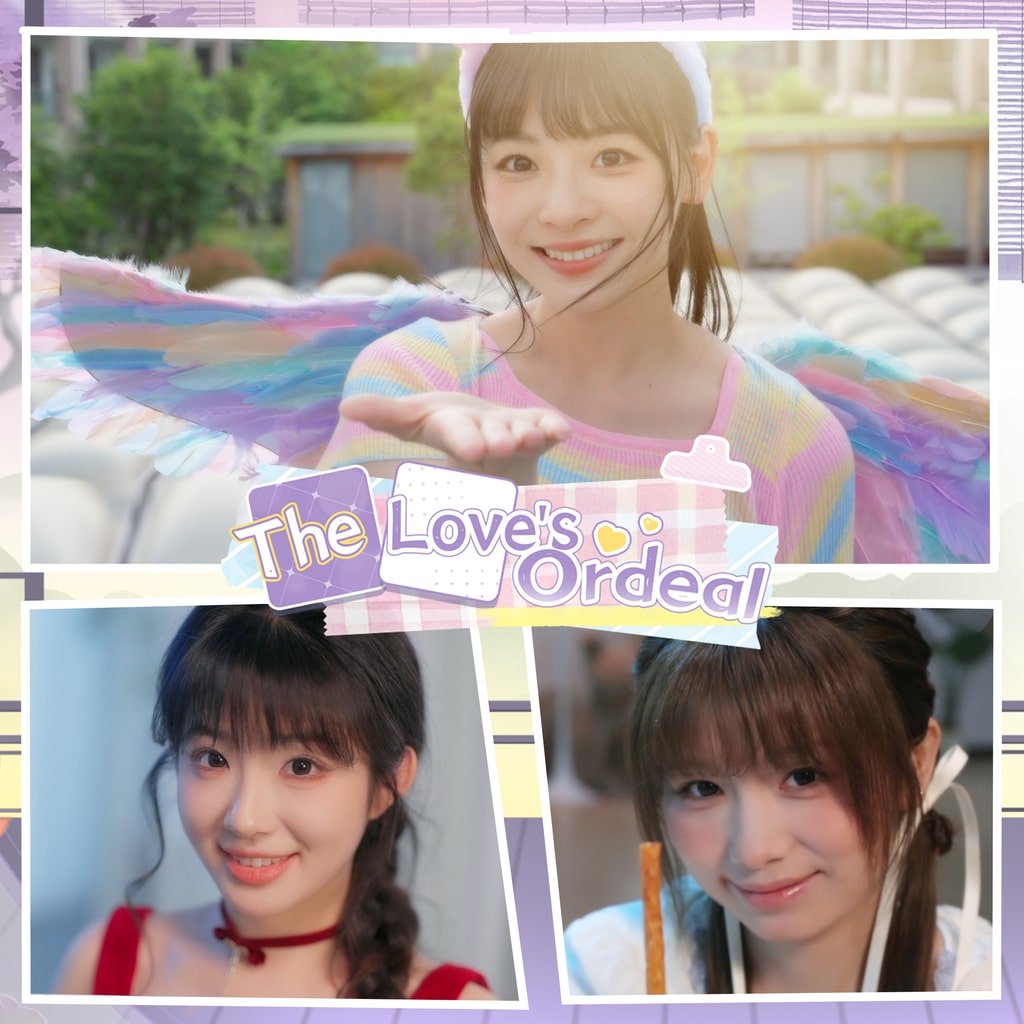
There has been a noticeable rise in live-action interactive games over the past few years. Some lean into crime thrillers, others chase romance, while a growing number rely on shock value or endless branching paths to mask fairly thin storytelling. The Love’s Ordeal takes a different road entirely. It takes the FMV formula and wraps it in Chinese mythology, cultivation fantasy, spirituality, temptation, and self-reflection. The result feels surprisingly fresh.
Set within the mystical world of Xianxia folklore, you play as Nengchi, a gifted cultivator standing at the threshold of immortality. After spending his life avoiding earthly distractions and perfecting his discipline, he finds himself unable to progress any further. To overcome this final spiritual barrier, he enters the Eden of Yao, a place inhabited by alluring spirits, dangerous temptresses, and supernatural beings designed to challenge everything he believes.
What follows is not an action epic or fantasy adventure in the traditional sense. Instead, The Love’s Ordeal becomes a test of character, restraint, and emotional intelligence.
Story & Narrative
The greatest strength of The Love’s Ordeal lies in its narrative ambition. This is a game built around choices, but unlike many FMV experiences where decisions merely redirect you to slightly altered scenes, choices here carry genuine weight.
The game reportedly contains over a hundred branching paths, and it genuinely feels that way. Conversations can suddenly shift direction, relationships evolve unexpectedly, and seemingly harmless moments may end entire storylines or dramatically alter Nengchi’s spiritual journey.
What makes this work is the quality of the writing. Each woman Nengchi encounters represents more than a simple romance route. They embody temptation in different forms. One hides danger beneath innocence. Another masks pain beneath confidence. The Yao Queen herself becomes less a villain and more an embodiment of desire and power.
The game constantly asks whether temptation is inherently evil or merely human. That philosophical layer elevates the entire experience. Beneath the flirtation and fantasy aesthetics lies a story about identity, purpose, and the struggle between duty and emotion. Some paths end in tragedy. Others offer bittersweet reflection. A few genuinely surprised me.
Presentation & Atmosphere
Live-action games live or die by their performances, and thankfully The Love’s Ordeal largely succeeds here. The cast brings sincerity to material that could easily have become melodramatic. The supernatural setting demands emotional flexibility, as scenes often shift from playful banter to spiritual introspection or sudden danger. Most actors handle these transitions well.
The first-person presentation also deserves praise. Seeing events through Nengchi’s eyes creates an intimacy that third-person FMV titles sometimes struggle to achieve. Characters speak directly to you, react to your silence, and occasionally invade your personal space in ways that feel intentionally uncomfortable. This reinforces the idea that you are being tested.
Visually, the production values are impressive. Costumes, sets, and lighting create a convincing fantasy world rooted in traditional Chinese aesthetics. Flowing robes, lantern-lit interiors, ornate architecture, and mystical environments help establish a distinctive identity.
There are moments when budget limitations show through, especially during transitions or simpler set pieces, but overall the presentation feels polished.
The soundtrack deserves mention too. Rather than dominating scenes, it quietly supports them with traditional instrumentation and ambient melodies that strengthen the atmosphere.
Gameplay & Choice Systems
Mechanically, The Love’s Ordeal remains straightforward, but there is more depth than expected. Beyond dialogue choices, players manage spiritual progression and navigate branching narrative systems tied to Nengchi’s cultivation journey. Maintaining focus while balancing emotional connections adds an interesting layer that separates the game from more conventional FMV romance experiences.
The PS5 version also significantly improves usability. Choice tracking is clear, save systems are intuitive, and replaying branches is much less painful than it could have been. Given the sheer number of outcomes available, these quality-of-life additions matter. Replays become essential because no single run reveals everything. Entire character arcs remain hidden behind specific decisions. Certain endings require careful navigation and genuine awareness of previous choices.
The downside is pacing. Some routes feel slower than others, and repeated replays occasionally reveal structural repetition beneath the complexity. Certain conversations revisit familiar themes a little too often, especially in the early sections. Still, because the narrative branches so aggressively, the game rarely feels static for long.
Themes & Identity
What stayed with me most was The Love’s Ordeal’s continued commitment to its cultural identity. Too often, fantasy games flatten mythology into generic archetypes. Here, the cultivation setting feels meaningful. Spiritual advancement, meditation, inner balance, and temptation all connect naturally with the gameplay and story.
The game trusts players to engage with these ideas rather than simplifying them. That confidence gives the experience personality. It also helps that the game avoids reducing every interaction to straightforward romance. Attraction exists, certainly, but many scenes focus more on understanding, deception, compassion, or emotional vulnerability. At times, it feels closer to interactive theatre than to a dating simulation.
Final Verdict
The Love’s Ordeal will not appeal to everyone. Players expecting constant action or fast-paced gameplay may struggle with its deliberate pacing and dialogue-heavy structure. For those willing to embrace it, though, there is something genuinely distinctive here.
It takes the live-action formula and filters it through mythology, spirituality, and emotional storytelling. The branching narrative feels meaningful, the performances carry weight, and the Xianxia setting gives the entire experience an identity few games share. Most importantly, it understands that temptation is more interesting when it stems from emotion rather than spectacle.
The Love’s Ordeal is not a game about fighting monsters. It is about resisting them, understanding them, and sometimes realising they were reflections of yourself all along.