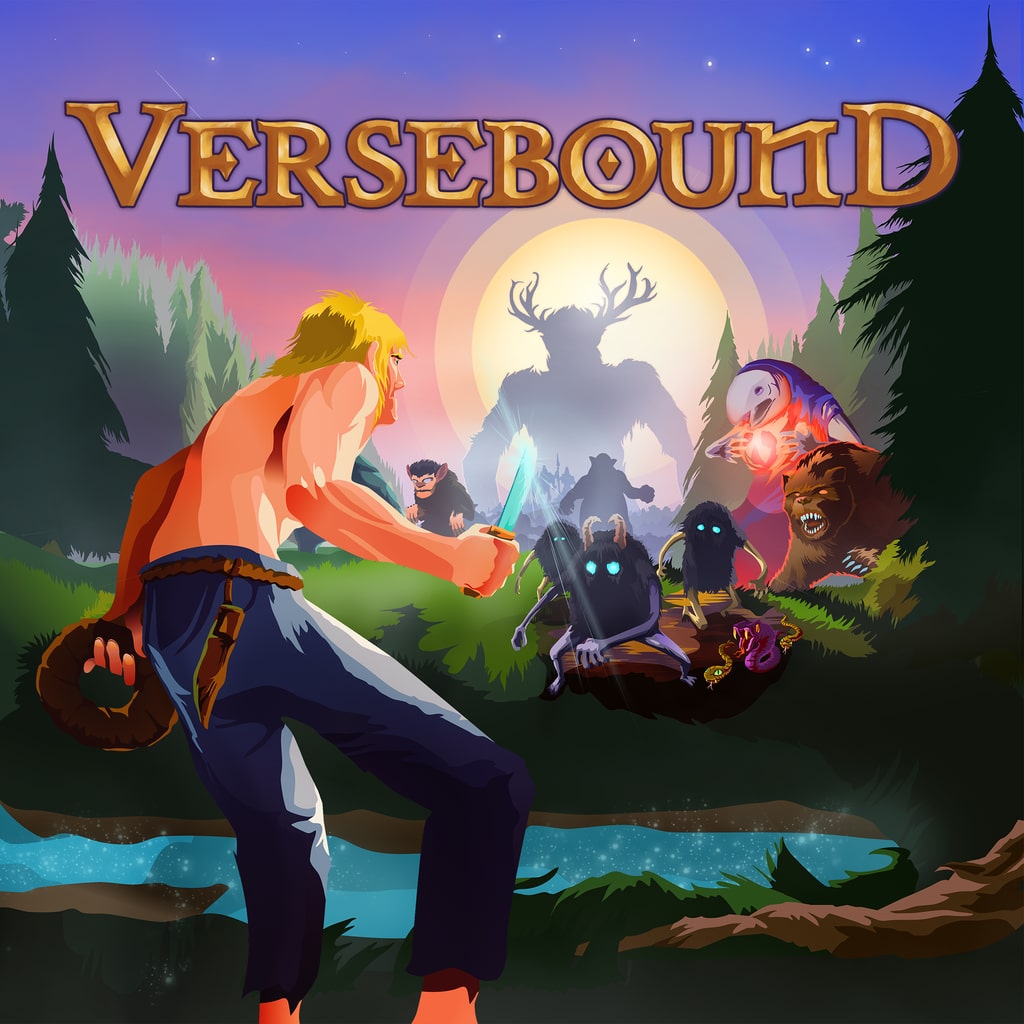
There is something immediately striking about Versebound before you even swing a weapon. It is not the enemy hordes or the ritual circles etched into frozen earth. It is the atmosphere. The game carries itself with the heavy stillness of an old folk tale told beside a dying fire, where every story ends in sacrifice and every triumph costs something.
In a genre overflowing with colourful excess and endless power fantasies, Versebound deliberately moves in the opposite direction. It does not want to make you feel invincible. It wants you to feel small. Vulnerable. Mortal. That choice gives the game an identity few survivors-likes can claim.
Developed by Conifer Digital, Versebound blends roguelike progression with bullet-hell combat, filtering the entire experience through the bleak beauty of Finno-Karelian mythology. The result is a game that feels ancient and modern all at once, equally inspired by arcade action and centuries-old oral storytelling. Remarkably, it works.
Blood, Poetry, and Ritual
At its core, Versebound follows a familiar structure. You enter hostile regions, survive escalating waves of enemies, gather upgrades, and eventually face towering boss encounters that push your build and reflexes to the limit. What separates it from countless genre cousins is the intention behind every mechanic.
Your abilities are not simply upgrades. They are poems, rituals, artefacts, and fragments of folklore woven directly into combat. One moment you are summoning spectral blades through ancient verses. The next you are igniting runic storms while desperately rolling away from malformed spirits clawing across the battlefield.
Even the menus feel steeped in mythology. There is very little clean sci-fi abstraction here. Everything feels weathered, ceremonial, and old.
The game’s progression loop leans heavily into preparation and experimentation. Weapons drastically alter playstyles, and artefacts can completely reshape a run if you find the right combinations. Some builds encourage aggressive melee combat that keeps you dangerously close to enemies. Others turn you into a cautious spellcaster dancing along the edges of chaos.
The flexibility is impressive, though Versebound never lets those builds become entirely comfortable. Survival always feels uncertain. Even powerful runs carry tension because enemies remain aggressive and bosses hit with punishing force. That sense of danger gives the combat real weight.
A Different Kind of Survivors-Like
Most games in this genre eventually become visual fireworks displays in which your character melts entire screens without effort. Versebound resists that temptation.
Instead of flooding the screen with absurd spectacle, Conifer Digital focuses on pressure and endurance. Enemies move with purpose. Maps feel hostile rather than disposable. Resources matter. Positioning matters. Timing matters. Combat has a grounded physicality that feels refreshing.
That slower, harsher rhythm will not appeal to everyone. Players expecting immediate empowerment may find the opening hours frustratingly restrained. Early progression can feel unforgiving, especially before stronger artefacts and poems become available.
But the game’s pacing serves its atmosphere beautifully. You are not conquering Kalevala. You are surviving it. And when you finally overcome one of its brutal encounters, the satisfaction lands harder because the game never handed you dominance for free.
Bosses Worth Fearing
The standout moments are unquestionably the boss fights. Versebound understands something many roguelikes forget: bosses should feel memorable, not merely larger than standard enemies. Here, they feel mythic.
Battling the embodiments of Life and Death becomes less about raw damage output and more about endurance, movement, and adaptation. These encounters unfold like grim ceremonies, set to pounding dungeon synth tracks that make every dodge feel desperate and dramatic.
Some bosses tower over the battlefield with grotesque elegance. Others move with terrifying speed, forcing you into frantic repositioning as projectiles carve patterns across the arena. The difficulty can spike sharply, but it rarely feels unfair. Defeat usually stems from panic, greed, or poor preparation rather than random chance.
There is an old-school mentality running through these encounters that feels increasingly rare. The game expects patience. It expects learning. It expects failure. And honestly, that commitment makes the victories unforgettable.
Kalevala Brought to Life
The mythology woven into Versebound is not mere decoration. It informs almost everything. The game draws on Finnish folklore and the Kalevala, integrating verses, symbols, and mythological concepts directly into its world-building. You feel that authenticity constantly, whether through environmental storytelling, item descriptions, or fragmented narrative sequences between runs.
There is melancholy everywhere. Characters speak as if carrying inherited grief. Landscapes feel abandoned by hope. Even moments of beauty often carry an undercurrent of sadness.
The writing favours mood and implication over exposition-heavy storytelling. You piece together fragments of a dying world through small interactions and repeated failures. That ambiguity occasionally leaves emotional threads underdeveloped, but it also strengthens the mythic tone. Not every mystery needs explaining.
Soundtrack of the Forgotten
The soundtrack deserves enormous praise. Versebound’s dungeon synth score is phenomenal, capturing the precise emotional space the game aims for. It feels cold, ceremonial, and strangely hypnotic. Pulsing basslines and echoing melodies turn ordinary combat into something ritualistic.
There are moments when the music alone carries entire encounters. Combined with the game’s muted visual palette and flickering environmental effects, the soundtrack creates a mood that lingers long after you stop playing. It is immersive without becoming overwhelming, atmospheric without fading into the background. Very few indie roguelikes sound this distinct.
Rough Edges Beneath the Atmosphere
For all its strengths, Versebound is not entirely seamless. The early-game grind can feel repetitive until more meaningful build variety opens up. Some runs drag slightly due to conservative pacing, especially when weaker weapons fail to generate momentum. A few balancing inconsistencies also emerge later on, with certain artifact combinations dramatically outperforming others.
Visually, the art direction is striking, but readability occasionally suffers in larger encounters. Enemy projectiles can blend into darker environments, creating moments of confusion in already chaotic fights.
There is also a certain emotional distance to the progression structure. While the mythology is fascinating, the characters themselves sometimes feel more symbolic than deeply personal. The world resonates strongly. The individuals within it less so. Still, these issues rarely derail the overall experience.
Final Verdict
Versebound succeeds because it understands the power of tone. It transforms a crowded genre into something mournful, mythic, and strangely intimate. Every run feels less like a power trip and more like a desperate struggle against forces older and larger than oneself.
Its combat is demanding, its atmosphere exceptional, and its boss encounters genuinely thrilling. Combined with its reverence for Finno-Karelian mythology and its haunting dungeon synth soundtrack, the result is one of the most distinctive survival-likes in recent memory.
It may frustrate players seeking instant gratification, and its slower progression occasionally tests patience, but those willing to embrace its rhythm will discover something special beneath the frost and blood.