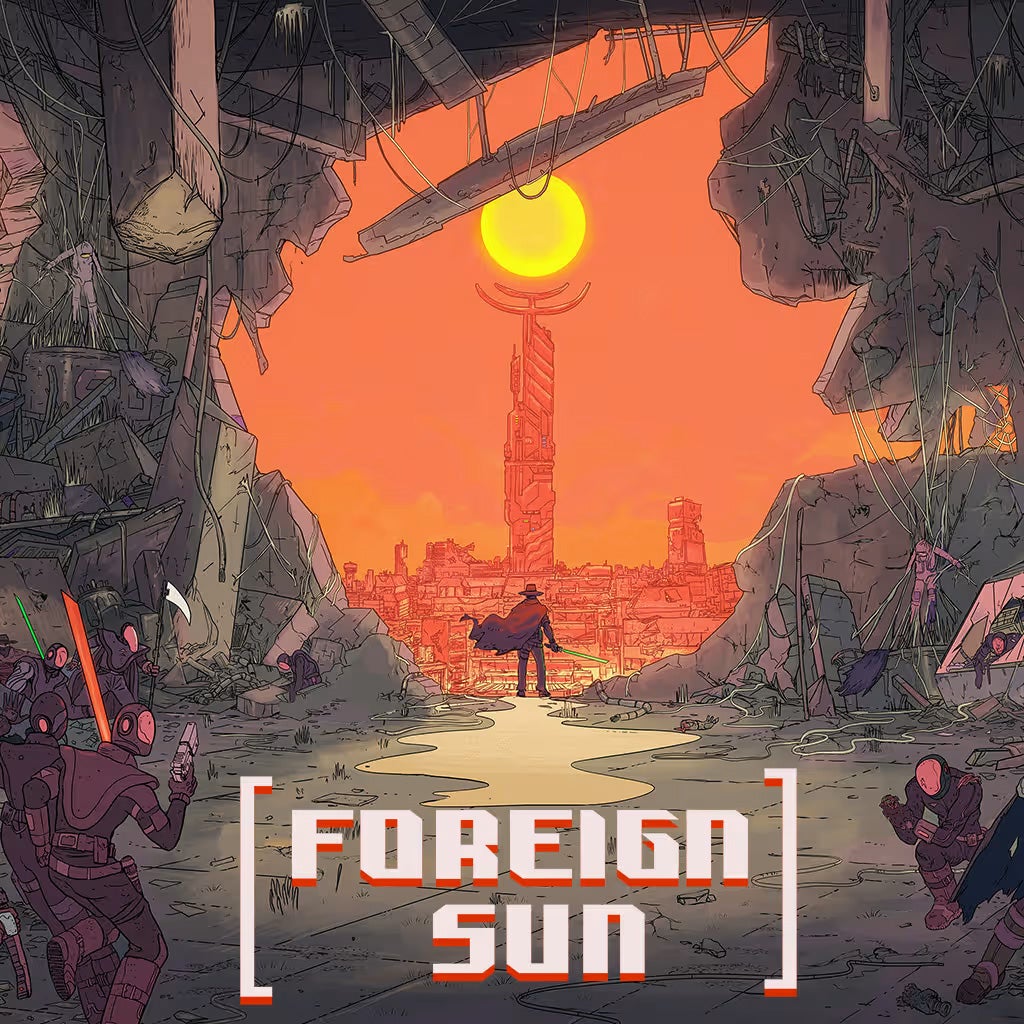
Developed and published by Final Scene dev, with Nintendo Switch publishing handled by Brian Farina, Foreign Sun was released in April 2026 as a 2D soulslike Metroidvania that pushes beyond genre conventions in a few meaningful ways.
Set within a vast, interconnected city slowly sinking into ruin, the game centres on your journey towards the Eternal Lighthouse, a distant structure that looms as both a goal and a mystery. Along the way, you encounter multiple factions, each operating under its own logic and offering opportunities that are rarely clean or consequence-free.
This is not a world that waits for you. It shifts, reacts, and in some cases deteriorates based on your decisions. That sense of instability is not just narrative flavour. It is woven directly into how you explore, fight, and survive.
Gameplay
At a glance, Foreign Sun fits comfortably within the Metroidvania framework. You explore a layered map, unlock new traversal abilities, and revisit earlier areas with expanded tools. But that structure is only the surface.
The real hook lies in how progression is tied to identity. Rather than simply finding keys or abilities in isolation, you gain access to new routes and interactions by aligning with different factions. Clothing, equipment and even behaviour influence how the world responds to you.
You might enter a hostile district as an outsider and be attacked on sight. Return later, dressed in the colours of a recognised faction, and suddenly doors open, dialogue shifts, and pathways reveal themselves. It transforms exploration from a mechanical checklist into something more fluid and reactive.
Combat follows a similarly deliberate philosophy. It is precise, often punishing, and built around timing rather than aggression. Posture breaking, parrying and positioning define encounters, and success comes less from raw damage output and more from understanding enemy behaviour.
There is weight behind every action. Attacks commit you. Mistakes linger. Enemies, whether human or something less recognisable, demand attention rather than brute force. It is a system that rewards patience, though it asks a lot in return.
Abilities expand your options in meaningful ways. Some grant new forms of traversal, others reshape combat approaches, and a few blur the line between the two. The most interesting among them come with trade-offs. Power is rarely given freely. Altering your form or gaining access to forbidden techniques often carries consequences that ripple outward, affecting how the world perceives you or how future encounters unfold.
World and Atmosphere
The city itself is the game’s greatest achievement. Foreign Sun presents a setting that feels less like a backdrop and more like a living system in decline. Streets flood, structures collapse, and entire sections of the map can shift depending on your choices. It is not always dramatic. Sometimes it is subtle. A character disappears. A faction loses influence. A previously safe route becomes hostile. This sense of change reinforces the idea that your actions matter, even when the game does not explicitly tell you how.
Visually, the pixel art is moody and restrained. It avoids excess detail in favour of atmosphere, using lighting and colour to define mood rather than spectacle. The result is a world that feels cohesive, even when it is fragmented.
Sound design plays a critical role here as well. Ambient noise, distant echoes, and the absence of music in key moments all contribute to a feeling of unease. It is not loud or overwhelming. It is quiet in a way that makes every sound feel significant.
Narrative and Choice
While many games in this genre treat story as a secondary layer, Foreign Sun places it at the centre of the experience. Your relationship with factions is not static. You can shift allegiances, betray allies, or try to balance competing interests, though balance rarely lasts. Each decision alters how characters respond, how events unfold, and, in some cases, which parts of the world remain accessible.
There is no clear “correct” path. Outcomes are shaped by behaviour rather than by predefined morality. Helping one group may destabilise another. Choosing power may cost you trust. Choosing restraint may limit your options later.
It creates a narrative that feels personal, even when it is fragmented. You are not uncovering a fixed story. You are shaping one, often without realising the full consequences until much later.
Friction and Challenge
Foreign Sun is not an easy game to settle into. Its combat demands precision, and its systems are not always clearly explained. The early hours can feel overwhelming, especially as the game introduces faction mechanics, ability trade-offs, and environmental changes with little guidance.
Navigation can also be disorienting. The world is interconnected, but not always intuitive. Without clear markers, progress can stall as you search for the next viable path.
Yet much of this friction feels intentional. The game wants you to feel uncertain. It wants exploration to carry risk and for understanding to come gradually rather than immediately.
Still, this approach will not suit everyone. Players seeking clarity and direction may find the experience more frustrating than rewarding.
Final Verdict
Foreign Sun is a dense, thoughtful evolution of the Metroidvania formula, placing player choice and world reactivity at its centre. It is not always accessible, and it does not try to be. Its systems require time, its world demands attention, and its narrative reveals itself slowly. But for those willing to engage with it fully, the reward is a game that feels genuinely responsive to your presence.
There is a quiet confidence in how it unfolds, a sense that every system is working towards the same goal of making the world feel unstable, reactive, and real. It may frustrate as often as it fascinates, but it rarely feels empty.