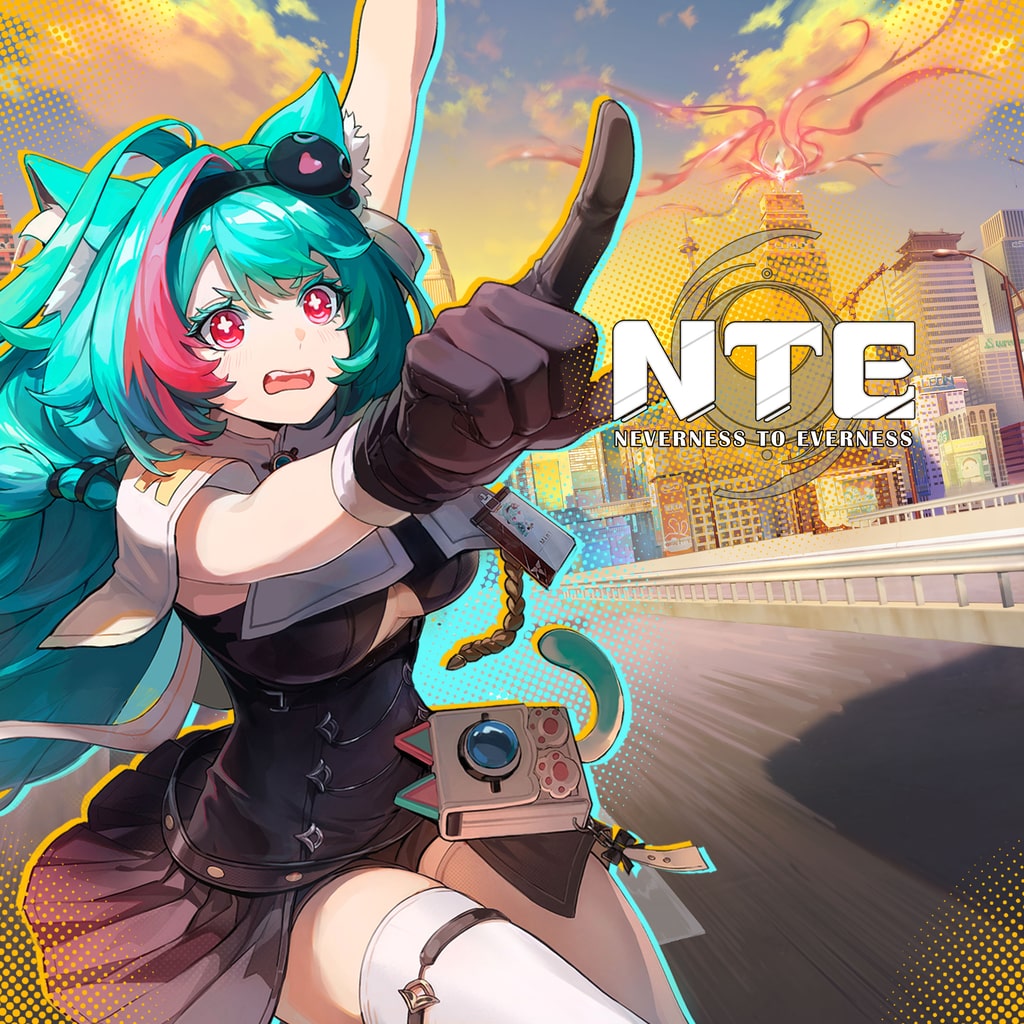
Developed by Hotta Studio and published by Perfect World Games, NTE: Neverness to Everness launched globally on April 29, 2026, following an initial release in China. Built in Unreal Engine 5, it drops players into Hethereau, a sprawling neon metropolis where the supernatural is not hidden behind closed doors but woven into everyday life.
You play as an unlicensed Anomaly Hunter, operating from a run-down antique shop called Eibon. From there, you take on commissions, investigate strange occurrences, and slowly uncover the tangled relationships between humans, spirits, and the bureaucratic machinery that seeks to regulate them all. At first glance, it sounds like familiar territory for an open-world RPG. But NTE is not interested in staying familiar for long.
A City That Refuses to Sit Still
Hethereau is the real argument for why this game exists. It is dense in a way that feels almost confrontational. Not just visually dense, but socially dense. Every street corner seems to have its own micro-drama unfolding. A commuter cleans his suit with a snap of his fingers, using Esper abilities. A bureaucratic queue for “Oddities” snakes around a glowing office building. Elsewhere, a full-blown chase involving a mythic creature spills through traffic as if it belongs there.
The game constantly reminds you that this is not a world built for convenience. It is a world built for observation. Even the in-game news broadcast reinforces this. One moment you are hearing about a haunted pawnshop that only appears on full moons. The next, a love-struck otter-like character is trying to confess before a farewell departure. It sounds chaotic on paper, but in practice it creates a tone that sits somewhere between urban fantasy and surreal slice of life. The result is a city that feels less like a backdrop and more like an argument about what a city even is.
Combat and Anomalies
Beneath the atmosphere, NTE remains a combat-driven RPG. The Anomaly system introduces supernatural enemies ranging from distorted urban legends to reality-bending entities. Combat is fast, reactive, and heavily reliant on movement. Characters can swap mid-fight, chaining abilities that bend gravity, manipulate space, or trigger elemental synergies.
When it clicks, it is chaotic in the best possible way. Encounters feel less like traditional fights and more like controlled explosions of movement and colour. You are constantly repositioning, dodging, and rethinking your approach mid-exchange.
There is a clear sense of spectacle here that Hotta Studio prioritises. Every ability feels designed to be seen as much as used. It is loud, expressive combat that occasionally teeters on sensory overload but rarely feels dull.
The “Esper” system is where things become most interesting. It pushes characters into highly specific roles while still allowing enough flexibility to encourage experimentation. Some builds focus on raw elemental damage, while others focus on mobility or control. The real satisfaction comes from chaining these systems together until combat stops feeling like input and starts feeling like rhythm.
Life Between the Chaos
What separates NTE from more traditional action RPGs is everything it does between battles. This is where the game leans into its lifestyle-simulation layer. You can customise vehicles, buy property, decorate homes, and move through the city at your own pace. Side activities are scattered everywhere, from casual social interactions to fully realised minigames such as fishing and tile-based games reminiscent of Mahjong.
The Ghost Train system deserves special mention. It allows players to traverse “Anomaly space” instantly, folding distance in a way that fits the game’s supernatural logic. It is a small detail, but it reinforces the idea that travel itself is part of the fantasy.
Even the social systems are framed differently. Characters are added as “Bagel” friends, a naming quirk that suits the game’s slightly off-centre tone. It is whimsical without being fully comedic, strange without tipping into parody.
These systems can feel overwhelming at first. There is a lot happening, and the game does not always explain itself clearly. But once the rhythm settles, it becomes clear that NTE is not trying to be efficient. It is trying to be lived in.
Presentation and Performance
Visually, Hethereau is impressive, though demanding. Neon lighting, dense crowds, and reflective surfaces create a constant sense of motion, even when nothing is happening. The Unreal Engine 5 foundation gives everything a sharpness that occasionally borders on excessive, yet it suits the game’s sensory identity.
Performance, however, is inconsistent across platforms. High-end systems handle it well, but mid-range setups may struggle with stability during busy city scenes or large combat encounters. On consoles, optimisation is solid but not flawless.
The audio design carries much of the atmosphere. City ambience, overlapping dialogue, and shifting musical cues all contribute to the feeling that the world continues whether you engage with it or not.
Final Verdict
NTE: Neverness to Everness is not trying to be a streamlined open-world RPG. It is trying to be a place. A noisy, unstable, often overwhelming place that insists on existing beyond your objectives.
That ambition is both its greatest strength and its biggest complication. The city of Hethereau is one of the most detailed and reactive urban spaces in recent memory, but the density of systems, mechanics, and monetisation layers can make it hard to settle in.
Still, when it works, it does so in a way that feels almost rare for the genre. Combat becomes expressive, exploration becomes curiosity-driven, and downtime becomes part of the narrative rather than a break from it. It is not a game that asks to be completed. It is a game that asks to be inhabited.