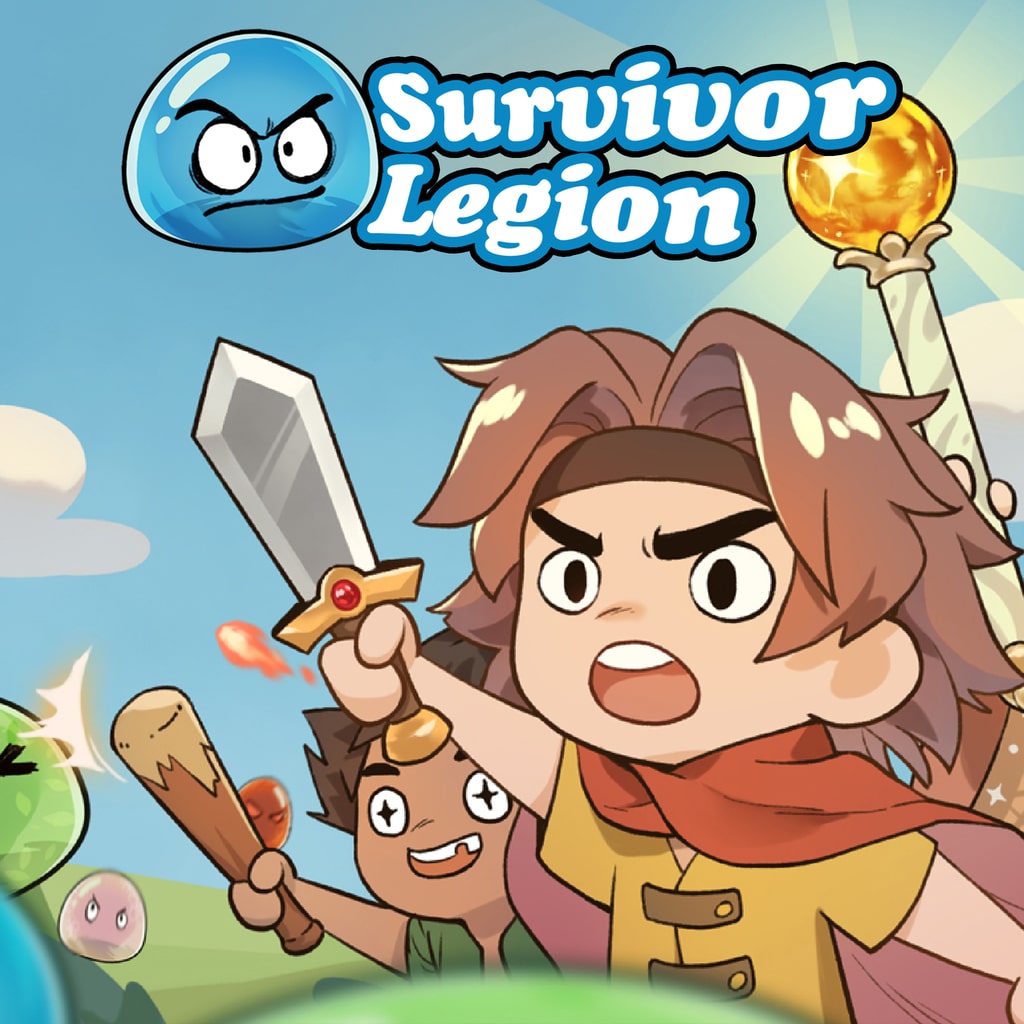
Survivor Legion begins with a simple but surprisingly effective shift in perspective. Instead of dropping you into the now-familiar role of a solitary survivor fending off endless waves, it hands you a group and tells you to lead. That one decision changes everything.
Where most games in the genre are about individual movement and incremental power, Survivor Legion becomes a game about coordination. You are not just dodging incoming threats. You are thinking about spacing, formation, and how multiple abilities interact in real time. The battlefield still fills with enemies, projectiles, and experience gems, but your relationship to that chaos feels fundamentally different.
It is less about survival as endurance, and more about survival as orchestration.
The Formation System That Holds It Together
The defining feature of Survivor Legion is its formation system, and it is not just a gimmick. It is the backbone of the entire experience.
At any moment, you can shift your squad between different formations. Tight defensive clusters reduce exposure and allow for concentrated damage. Wider spreads increase mobility and coverage, letting you sweep through enemy waves more efficiently. Other formations sit somewhere in between, each one offering a trade-off that becomes increasingly important as enemy density ramps up.
What makes this system work is how naturally it integrates into moment-to-moment play. You are constantly adjusting, often without consciously realising it. A sudden surge of enemies pushes you into a defensive cluster. A brief opening encourages you to spread out and gather resources. It creates a rhythm that feels both reactive and deliberate.
It also adds a layer of tension that many survivor-style games lack. Poor positioning is not just a minor mistake. It can collapse your entire squad.
A Roster Built for Synergy
Each hero in your squad brings their own abilities, attack patterns, and passive effects. Some specialise in crowd control, others in sustained damage, and a few exist purely to support the rest of the team. The interplay between these roles is where Survivor Legion finds much of its depth.
Building a team is not just about picking strong characters. It is about how those characters complement each other. A high-damage unit might shine in isolation, but without support or proper positioning, they can quickly become a liability.
The game encourages experimentation through its upgrade system. As you level up during a run, you are offered choices that can enhance individual heroes or strengthen the squad as a whole. Over time, these decisions stack into builds that feel distinct and, occasionally, delightfully overpowered.
There is a satisfying moment in many runs where everything clicks. Abilities align, formations stabilise, and your squad begins to carve through enemies with a kind of controlled efficiency that feels earned.
Familiar Loop, New Perspective
At a structural level, Survivor Legion follows the familiar loop established by the genre. You defeat enemies, collect experience, level up, and gradually become stronger until the screen is filled with both opportunity and danger.
What sets it apart is how that loop feels in practice. Managing a squad introduces a subtle but constant layer of decision-making that elevates the experience beyond simple movement and passive upgrades.
You are still chasing that power curve, still building toward a point where your team can dominate the battlefield. But the journey there feels more active, more intentional. You are not just reacting to the game. You are shaping how your squad engages with it.
Chaos That Stays Readable
One of the challenges with any game in this genre is maintaining clarity as the screen fills with enemies and effects. Survivor Legion handles this surprisingly well.
Despite the increased number of player-controlled units, the game remains readable. Visual effects are distinct without being overwhelming, and enemy patterns are clear enough that you can make informed decisions even in the middle of heavy action.
There are moments where the chaos borders on excessive, particularly in later stages, but it rarely crosses into frustration. The game understands that clarity is essential when you are managing multiple moving parts at once.
Progression That Rewards Commitment
Outside of individual runs, Survivor Legion offers a steady progression system that encourages long-term investment. Unlocking new heroes, upgrading existing ones, and experimenting with different team compositions gives the game a strong sense of forward momentum.
Each new unlock feels meaningful because it expands your strategic options. A new hero is not just another tool. It is a new variable in your squad’s dynamic, one that can reshape how you approach future runs.
There is a quiet satisfaction in revisiting earlier stages with a stronger, more refined team. What once felt overwhelming becomes manageable, even trivial, as your understanding of the game deepens.
Where It Struggles to Evolve
For all its strengths, Survivor Legion does not completely escape the limitations of its genre. The core loop, while engaging, can begin to feel repetitive after extended play. Even with varied team compositions, the overall structure remains familiar.
Enemy variety, while serviceable, does not always evolve in ways that significantly change your approach. You are still dealing with waves, still managing space, still chasing upgrades. The difference lies in how you do it, not what you are doing. For some players, that will be enough. For others, it may feel like a missed opportunity to push the concept even further.
Final Verdict
Survivor Legion succeeds because it understands exactly where to innovate and where to stay familiar. By shifting the focus from individual survival to squad management, it creates a fresh take on a well-established formula without losing the addictive qualities that define the genre.
Its formation system adds meaningful depth, its character synergies encourage experimentation, and its moment-to-moment gameplay strikes a strong balance between chaos and control. While it does not completely escape repetition, it offers enough variation and strategic nuance to remain engaging over time. This is a game about leadership under pressure, about finding order in chaos, and about building something stronger than the sum of its parts.