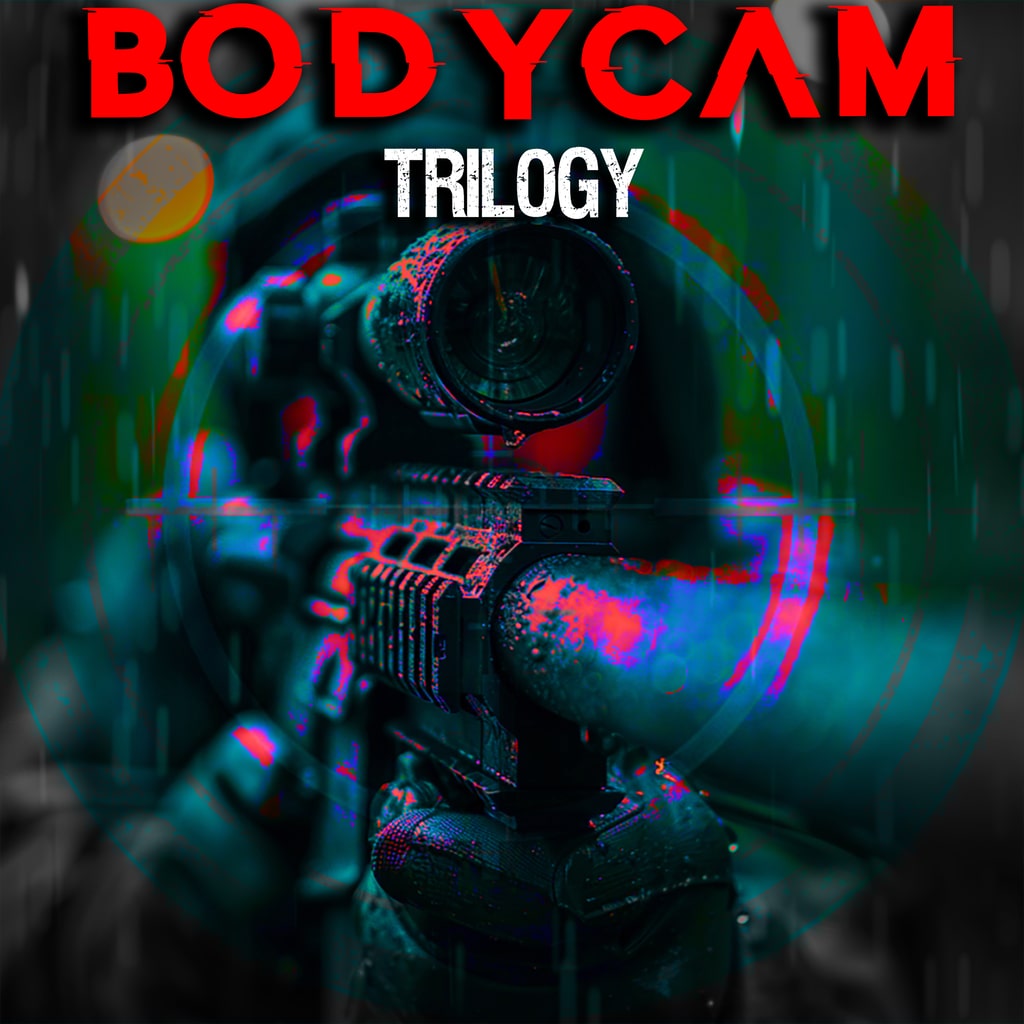
There is a very specific visual language that modern shooters have been chasing in recent years: the “found footage” or bodycam aesthetic. It is a style built on instability, distortion, and the illusion of raw, unedited reality. Bodycam Trilogy, developed and published by Sabec, attempts to package that idea into a single console bundle.
Released on April 17, 2026, for PlayStation 5 and Xbox Series X|S, this compilation brings together three first-person shooters: BodyCam GangZone, BodyCam Zombie Waves, and BodyCam: Tactical Freelancer. Each game uses the same visual framing device: you are not simply playing through events; you are recording them through a body-worn camera.
On paper, it is an appealing concept. In execution, it is a mixed but occasionally compelling set of experiences, ranging from chaotic arcade shooting to more structured tactical missions.
The Core Concept: You Are the Camera
All three games in the trilogy are unified by their presentation. The bodycam perspective is not merely aesthetic dressing but the central identity of the experience. Visual distortion, lens warping, camera shake, and compression artefacts are constantly present.
This creates a sense of immediacy. Environments feel unstable, firefights feel unpredictable, and visibility is often deliberately compromised. The intention is clearly to simulate raw tactical footage rather than polished military simulation.
At its best, this approach creates tension. At its worst, it reduces clarity to the point that combat readability suffers.
The trilogy lives or dies on how well this balance is maintained across its three distinct experiences.
BodyCam GangZone
The first entry, BodyCam GangZone, places players in an undercover tactical role within gang-controlled urban districts. Missions centre on pushing through hostile zones, surviving waves of gunfire, and returning to a vehicle to resupply before advancing further.
Structurally, it feels closest to an arcade wave shooter wrapped in a tactical skin. Combat is fast, reactive, and often overwhelming. Enemies appear in large numbers, and encounters escalate quickly.
The bodycam presentation adds intensity but also creates visual confusion during heavy firefights. Identifying threats can sometimes feel more reactive than strategic.
Despite this, there is a certain raw energy to GangZone. It is the most chaotic of the three games, and that chaos occasionally works in its favour.
BodyCam Zombie Waves
The second entry, BodyCam Zombie Waves, shifts tone significantly. Here, the focus moves from tactical engagements to survival-horror encounters against undead hordes.
Set across multiple locations, including a decaying New York City, suburban neighbourhoods, and Eastern European slums, the game leans heavily on environmental variety. Each setting attempts to convey collapse and abandonment through visual storytelling.
Combat is simpler than in GangZone, focusing on shotguns and pistols against large groups of enemies. There is less tactical nuance and more emphasis on endurance and positioning.
A heavy-metal soundtrack drives the pacing, pushing encounters into more arcade-like territory. This contrasts interestingly with the bodycam aesthetic, which otherwise suggests realism and restraint.
The result is an energetic but inconsistent hybrid experience. At times it feels like a survival shooter; at others, it leans into stylised action spectacle.
BodyCam: Tactical Freelancer
The final entry, BodyCam: Tactical Freelancer, is the most structured and arguably the most refined of the trilogy. It places players in the role of a freelance operator working with SWAT units across multiple mission types, including hostage rescue, elimination operations, and secure area control.
This entry introduces the most mechanical depth, with weapon variety, attachment systems, and a light economic progression. Players earn money from missions and use it to expand their arsenal of 11 weapons.
Environments are more detailed, and mission design is more deliberate. Locations such as airports, shopping malls, and industrial complexes provide a clearer sense of tactical layout than the more chaotic designs of the other two games.
However, even here, the bodycam presentation sometimes conflicts with gameplay clarity. Precision encounters can be obscured by visual distortion, particularly in low-light or high-intensity situations.
Still, Tactical Freelancer stands as the most complete and structured experience in the bundle.
Visual Identity & Presentation
The defining feature of the trilogy is its unified visual style. Across all three games, the bodycam effect is persistent and aggressive. This includes motion blur, lens distortion, scan lines, compression artefacts, and constant camera shake.
When used effectively, it enhances immersion by making players feel embedded in chaotic situations. It reinforces the idea that these are not polished simulations but raw recordings of violent encounters.
However, the same effects frequently interfere with gameplay readability. Enemy identification, environmental awareness, and long-range engagement can all be affected by the visual noise.
This creates a tension between aesthetic intent and functional clarity that persists throughout the bundle.
Gameplay Consistency & Variety
While all three games share the same visual identity, their gameplay loops differ significantly. This variety helps prevent complete repetition, but it also highlights uneven design priorities.
GangZone is fast and chaotic.
Zombie Waves is an arcade survival game with horror elements.
Tactical Freelancer is the most structured and strategic.
This variation keeps the bundle from feeling entirely repetitive, but it also results in a lack of cohesive identity beyond the shared presentation layer.
Performance & Technical Execution
On PlayStation 5 and Xbox Series X|S, the trilogy runs with generally stable performance. Load times are reasonable, and frame rates are mostly consistent, even during high-intensity sequences.
However, the intentional visual distortion can occasionally mask performance dips or make it difficult to distinguish between design choices and technical limitations.
Strengths
The most successful aspect of Bodycam Trilogy is its commitment to aesthetic identity. The bodycam perspective is not a half-measure or an optional filter; it is fully integrated into the gameplay presentation.
When the design aligns with gameplay intensity, the result can be genuinely immersive. The chaotic nature of firefights, particularly in GangZone and Zombie Waves, benefits from the unpredictability the visual style creates.
Tactical Freelancer also provides a more grounded counterbalance, offering structured missions and progression systems that give the bundle some mechanical depth.
Weaknesses
The primary issue across all three games is readability. The same visual effects that create immersion also reduce clarity, particularly in fast-paced encounters.
There is also inconsistency in tone. The trilogy shifts between arcade chaos, survival horror, and tactical simulation without a unifying mechanical philosophy beyond its presentation.
This makes the bundle feel more like three separate experiments sharing an engine and visual filter than a cohesive trilogy.
Final Verdict
Bodycam Trilogy is an ambitious but uneven attempt to unify three distinct shooter experiences under a single immersive visual identity. Its bodycam presentation is distinctive and occasionally effective, but it often comes at the expense of gameplay clarity.
Each entry offers something slightly different: chaos, survival, and structure. However, none fully escape the limitations imposed by the unifying visual concept.
For players intrigued by experimental shooter presentation and willing to trade clarity for atmosphere, there is value here. For those seeking precision, consistency, and mechanical refinement, the experience may feel compromised.