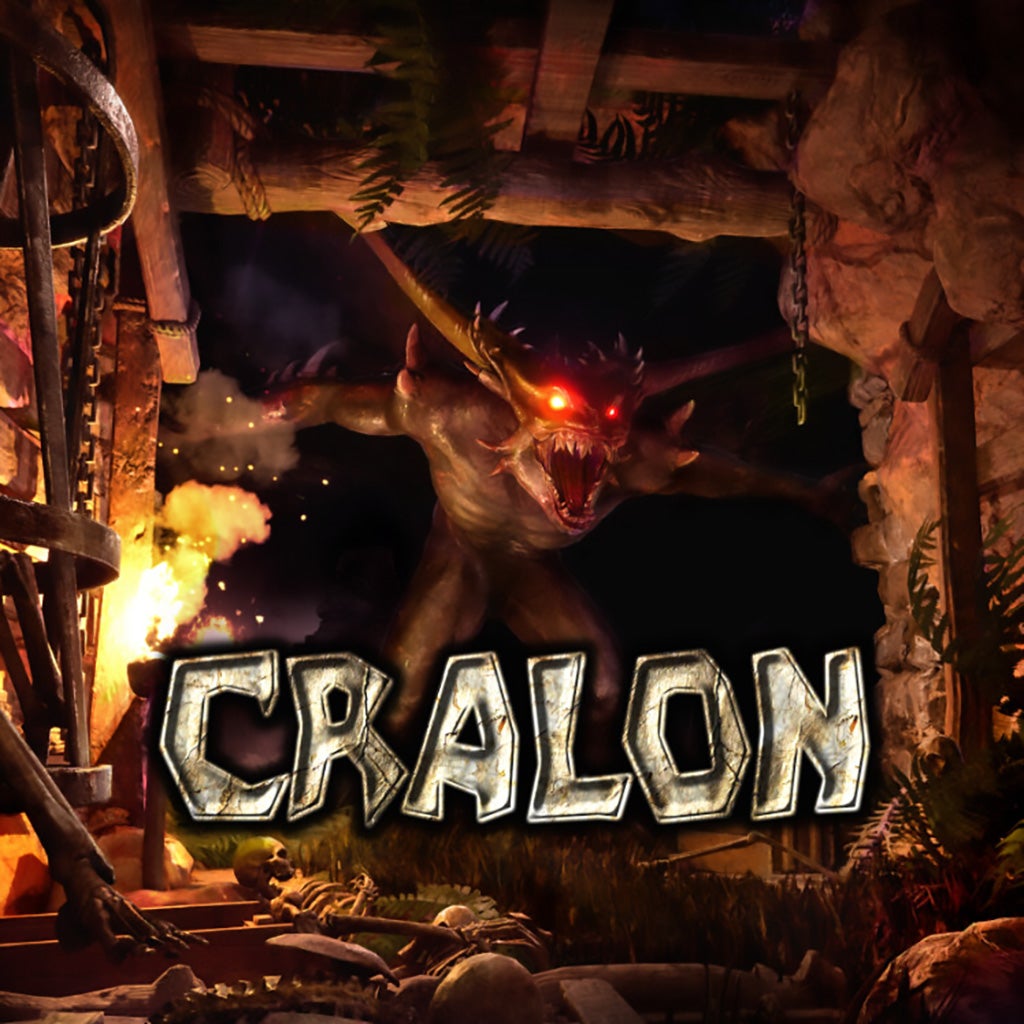
There is a particular confidence required to call your game an “old-school immersive sim” in 2026. It is a declaration of intent as much as a design philosophy, signalling a willingness to embrace systems-driven gameplay, environmental problem-solving, and player-led discovery over modern hand-holding. Cralon, developed and published by Pithead Studio, attempts exactly that.
Released on April 17, 2026, for PC, PlayStation 5, and Xbox Series X|S, with console versions arriving day-and-date alongside PC, Cralon positions itself as a dungeon-crawling immersive sim with RPG and adventure elements. The premise is simple but effective: you are trapped in a cursed mine while hunting a demon, and your only path forward is deeper into the darkness.
It is a game built on atmosphere, systems, and constraints rather than spectacle. Whether that design holds together over time depends entirely on how much patience the player brings into the depths.
Setting & Premise
The entire game unfolds within a cursed mine, a setting that immediately establishes tone and limits scope. There is no sprawling overworld, no shifting biomes, and no attempt to broaden the scope beyond the underground structure. Instead, Cralon commits fully to claustrophobia.
The mine itself is not merely a backdrop but a layered environment filled with secrets, hazards, and interconnected routes. Every tunnel feels like a decision point, and every chamber holds the possibility of either progress or punishment.
Narratively, the game follows a demon hunt gone wrong, leaving the protagonist trapped in an environment that grows increasingly hostile and surreal. The story is delivered sparingly, through environmental storytelling, scattered notes, and contextual discovery. Rather than guiding the player, it encourages interpretation.
This approach fits the immersive sim framework well, though it can mean that narrative clarity sometimes takes a backseat to exploration and survival.
Core Gameplay & Systems
At its core, Cralon is a systems-driven dungeon crawler. The emphasis is not on linear progression but on how players interact with the environment and the tools at their disposal.
Light, sound, and resource management play central roles. Darkness is not merely aesthetic; it is a mechanical threat. Navigating without adequate illumination increases risk, while sound can attract unwanted attention from lurking threats within the mine.
Combat exists, but it is not the dominant focus. Encounters are often dangerous, deliberate, and avoidable through alternative solutions. When combat does occur, it feels weighty and cautious rather than fast-paced or action-oriented.
The RPG elements are subtle but present. Equipment choices matter, and progression is tied to survival rather than power fantasy. There is a constant sense that you are not becoming stronger so much as slightly better equipped to delay failure.
Exploration & Level Design
The mine is the true centrepiece of Cralon. It is a semi-open, interconnected space where exploration is non-linear yet constrained. Players often loop back through previously visited areas, discovering new paths or hidden connections.
This structure rewards observation and memory. Not every path is immediately useful, and not every chamber serves an obvious purpose at first glance. Over time, familiarity with the environment becomes a tool in itself.
Environmental storytelling is strong. The mine feels lived-in, abandoned, and corrupted in equal measure. Signs of past activity linger in broken equipment, collapsed tunnels, and inexplicable anomalies that hint at deeper forces at work.
However, navigation can occasionally be disorienting. The intentional lack of guidance may appeal to immersive sim purists, but it can also lead to moments of uncertainty in which progress feels dependent on trial and error rather than deduction.
Puzzle Design & Problem Solving
Puzzles in Cralon are integrated into the environment rather than presented as separate challenges. They often involve manipulating space, managing resources, or interpreting environmental cues.
There is a strong emphasis on player agency. Solutions are rarely singular, and multiple approaches are often viable, depending on available tools and environmental conditions.
This flexibility is one of the game’s strengths. It encourages experimentation and rewards lateral thinking. However, it can also lead to uneven pacing, as some solutions feel intuitive while others require extended observation or backtracking.
Atmosphere & Presentation
Atmosphere is arguably the game’s greatest achievement. The mine is oppressive, detailed, and consistently unsettling without relying heavily on scripted horror moments. Instead, tension emerges organically from lighting, sound design, and spatial design.
Darkness is used effectively, both mechanically and emotionally. Limited visibility forces players to rely on sound cues and environmental memory, heightening tension during exploration.
Sound design is particularly strong. Echoes, distant movement, and environmental creaks all contribute to a sense that the mine is alive in ways that remain unexplained.
Visually, the game prioritises function over spectacle. Environments are detailed enough to support immersion without being overly stylised. This restraint works in its favour, reinforcing the grounded, claustrophobic tone.
Combat & Survival Pressure
Combat is deliberately restrained. Encounters are not meant to be frequent, but when they occur, they carry weight. The absence of excessive combat systems keeps tension high, as every confrontation feels consequential.
Survival elements are more prominent. Resource scarcity, environmental hazards, and limited visibility all contribute to a constant undercurrent of pressure.
This design ensures players remain cautious, though it may not appeal to those expecting more action-oriented gameplay.
Difficulty & Accessibility
Cralon is not a casual experience. It demands patience, attention, and a willingness to engage with systems without explicit guidance. There are few concessions to accessibility in terms of direction or assistance.
This aligns with its immersive sim identity, but it narrows its audience. Players unfamiliar with the genre may find its lack of guidance challenging, while genre veterans may appreciate its commitment to design principles.
Performance & Technical State
On PC, PlayStation 5, and Xbox Series X|S, the game runs with general stability, though occasional performance inconsistencies can occur in more complex environmental sections. These issues are not widespread but are noticeable enough to warrant mention.
Final Verdict
Cralon is a deliberate, atmospheric immersive sim that fully commits to its underground premise. It excels in environmental design, systemic interaction, and tension-driven exploration. The cursed mine is not merely a setting but a constant presence that shapes every decision.
However, its strict adherence to genre conventions also limits its accessibility. Navigation can be opaque, pacing uneven, and the lack of narrative clarity may not appeal to all players.
For those who appreciate methodical exploration, systemic gameplay, and atmospheric immersion, Cralon offers a compelling and often tense experience. For others, it may feel intentionally restrictive.