
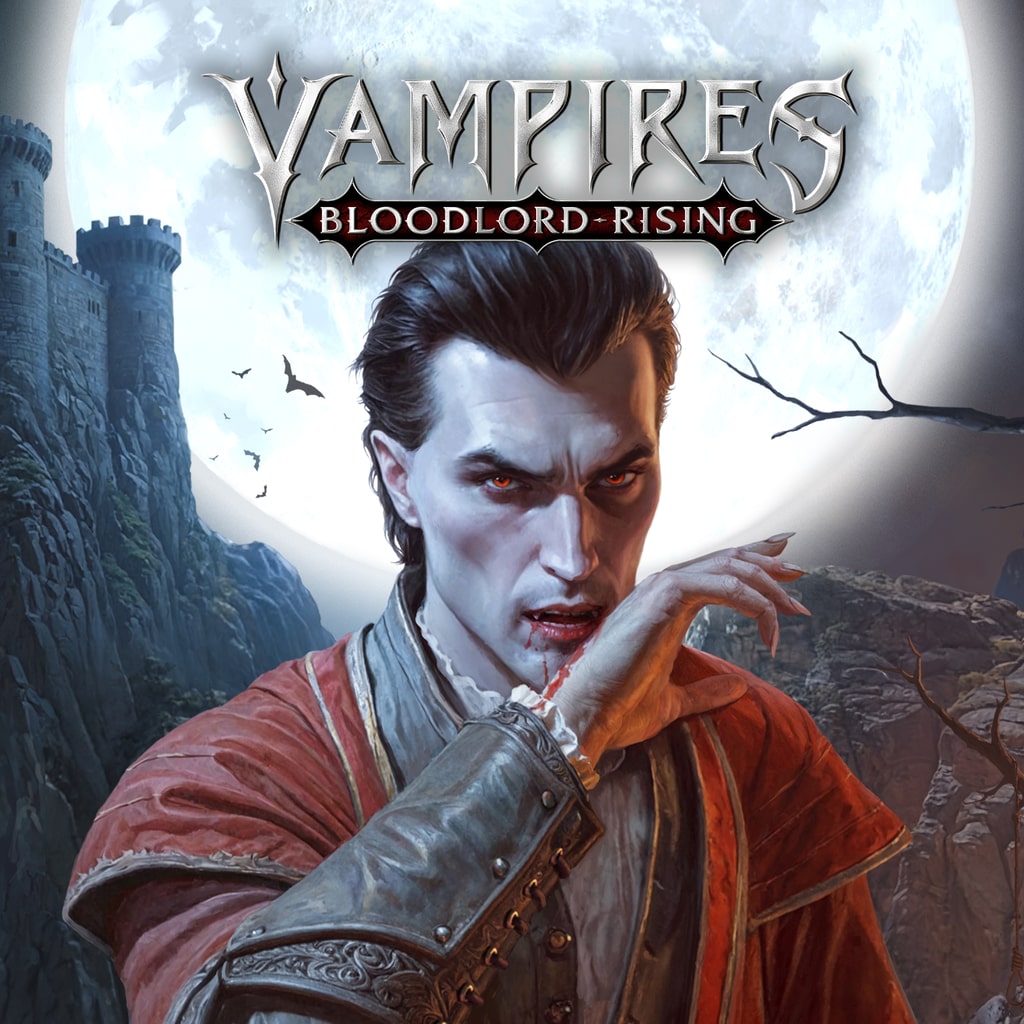
The vampire genre has spent years circling the same crypt, but Vampires: Bloodlord Rising finally kicks the coffin lid aside with confident, blood-slicked style. Developed by Mehuman Games and published by Toplitz Productions, this open-world action-RPG mixes survival systems, base building, and narrative role-play into something that feels familiar yet strikingly ambitious. The pitch of “a third-person, story-driven take on V Rising” is accurate, but it undersells just how distinct Sangavia becomes once you sink your fangs into it.
You play as Dragos, a newly turned vampire lord awakening in a fractured medieval land stalked by the Inquisition. The premise is simple gothic comfort food, but the execution carries surprising weight. Rather than the usual power fantasy, the opening hours emphasize weakness: your castle lies in ruins, your abilities are stunted, and even the sun feels like a personal vendetta. Progress is tied to the Castle Core, a pulsating heart that must be fed with blood to unlock regions and mechanics. It’s an elegant loop that binds exploration to home building in a way few RPGs manage.
A Kingdom Built Stone by Stone
Base building is the game’s beating artery. Castles aren’t decorative hubs but living machines that shape every system around them. You design towering halls, crypts, workshops, and throne rooms with a flexible editor that balances snap-to-grid ease with enough freedom for genuine creativity. Watching a skeletal ruin evolve into a spired monument to your ego is immensely satisfying, especially when the architecture directly improves gameplay—unlocking crafting tiers, servant quarters, and ritual chambers.
Thralls are the secret ingredient. Rather than faceless NPCs, villagers you enthrall become artisans, hunters, or guards with individual traits. A former blacksmith might craft superior blades, while a timid farmer could excel at gathering but panic during raids. Managing this undead workforce gives the fantasy texture; you’re not just a wandering monster, you’re an administrator of darkness. The system occasionally buckles under micromanagement, yet it adds personality where many survival games rely on soulless automation.
Sangavia, Beautiful and Cruel
The open world itself is a moody triumph. Sangavia blends Carpathian folklore with grim medieval realism—fog-choked forests, plague villages, candlelit monasteries. Exploration benefits from the game’s shapeshifting mechanics: transforming into a bat to glide across ravines or slipping into Hunter form to stalk prey feels tactile and empowering. Environmental storytelling is strong, with ruined chapels and mass graves hinting at histories the main plot only partially explains.
Combat leans toward deliberate, stamina-driven brawls rather than button mashing. Dragos can switch between Aristocrat and Hunter forms, each with distinct skill trees. Aristocrat favors mesmerism and blood magic; Hunter is claws, speed, and brutality. Encounters with the Inquisition are highlights—holy warriors wielding sun-imbued weapons that force you to think like a predator, using shadows and verticality. Boss fights occasionally spike in difficulty, but victories feel earned rather than scripted.
Blood, But Not Without Bruises
Not everything rises from the grave perfectly. The narrative, while atmospheric, sometimes loses momentum between major arcs. Characters outside your inner circle of thralls can feel like quest dispensers wrapped in excellent voice acting. Co-op for up to four players is joyous chaos, yet progression syncing isn’t always graceful; friends may find themselves spectators in another lord’s story.
Technical performance on launch-window builds shows minor stutter in dense towns, and pathfinding for servants can resemble a drunken funeral procession. These are fixable wounds, but they prevent the experience from achieving the effortless immersion it often flirts with. Crafting trees are also dense to the point of intimidation—new players might need a few in-game nights before the systems stop feeling like an ancient legal document written in blood.
A Vampire Fantasy With Teeth
Where Bloodlord Rising excels is in making vampirism feel like a lifestyle rather than a skin. Feeding isn’t a quick animation but a moral and mechanical choice: drain a peasant dry for power or take just enough to keep your reputation intact? The world reacts to excess, with villages growing fearful or the Inquisition tightening patrols. These consequences give role-playing real stakes.
The soundtrack deserves its own crypt. Choirs and mournful strings swell as you approach moonlit battlements, then fade into tense percussion during hunts. Combined with striking art direction, it sells the fantasy even when systems creak.
After dozens of hours, what lingers isn’t any single quest but the rhythm of ruling the night—returning from a bloody expedition to see your castle glowing, servants scurrying, the Core pulsing like a patient heart. Few games capture that seductive sense of dark stewardship.
Final Verdict
Vampires: Bloodlord Rising is one of the most confident vampire RPGs in years—a game that understands the genre beyond capes and fangs. Mehuman Games has woven survival mechanics, base building, and narrative choice into a cohesive dominion simulator where every system feeds another like veins into a heart. The Castle Core loop gives progression a mythic logic, while thrall management and shapeshifting provide role-play texture often missing from open-world sandboxes.
Its flaws—uneven storytelling, occasional technical hiccups, and co-op rough edges—are real but rarely fatal. More importantly, the game cultivates identity. Sangavia feels authored, not generated; being Dragos feels like a career, not a class selection. Combat demands respect, exploration rewards curiosity, and construction appeals to the inner tyrant decorator we all pretend not to have.
For players craving a darker, more narrative-minded cousin to V Rising, this is a banquet rather than a snack. It invites you to imagine what kind of monster you wish to be, then hands you the mortar and blood to build that dream stone by stone. With continued polish, it could become a genre pillar. Even now, it’s a throne worth claiming.















[…] Vampires: Bloodlord RisingAn ambitious supernatural RPG that blends open-ended systems with survival mechanics. Rough, but intriguing.🔗 https://gamecritix.co.uk/vampires-bloodlord-rising-review/ […]