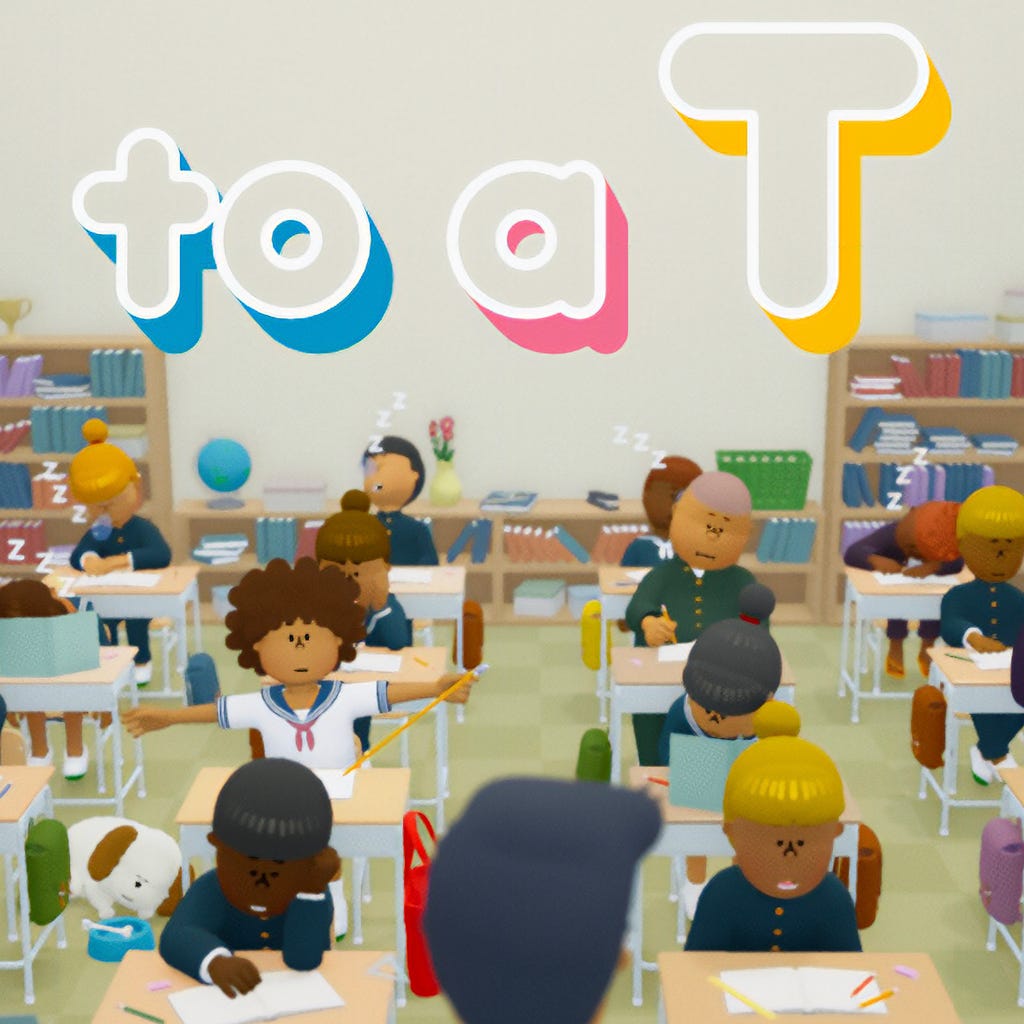
There are games that chase spectacle, games that chase realism, and games that chase trends. Then there is to a T, a title that seems completely uninterested in any of those things. Instead, it focuses on something far rarer: kindness. Created by Keita Takahashi and the team at uvula, this narrative adventure takes one of the strangest premises in recent memory and turns it into one of the year’s most sincere gaming experiences.
You play as Teen, a thirteen-year-old whose body is permanently shaped like the letter T. With arms stretched out wide at all times, Teen navigates everyday life in a seaside town filled with eccentric residents, unusual situations, and the ordinary challenges of growing up. It sounds absurd on paper, and at times it absolutely is. Yet beneath the humour lies a remarkably thoughtful story about identity, accessibility, friendship, and self-acceptance.
Like many of Takahashi’s creations, to a T feels as though it exists in its own little universe. It operates on dream logic, where giraffes run shops, giant crabs appear without explanation, and strange events are treated as perfectly normal. Somehow, it all works.
Everyday Tasks Become Extraordinary
The genius of to a T lies in how it transforms ordinary activities into memorable gameplay moments. Because Teen’s arms are permanently extended, even simple tasks require creative solutions. Getting dressed, brushing teeth, eating breakfast, and interacting with household objects become mini-games that showcase both the limitations and adaptability of Teen’s daily life.
What could have become repetitive instead feels surprisingly engaging. There is something endearing about guiding Teen through routines most people take for granted. These moments never feel designed to frustrate players. Instead, they encourage empathy by placing you directly in Teen’s shoes and allowing you to understand their perspective through interaction rather than exposition.
The game consistently finds humour in these situations without ever making Teen the punchline. That balance is difficult to achieve, yet to a T handles it beautifully. The comedy comes from the absurdity of the world and the creative solutions required to navigate it, not from mocking the character at its centre.
Outside the story missions, players can freely explore the coastal town. Hidden coins, quirky residents, shops, and scenic viewpoints encourage exploration. The town itself feels alive despite its relatively small scale. Wandering through its streets often leads to unexpected conversations or delightful visual gags that reward curiosity.
The Heart Beneath the Weirdness
While the quirky premise initially grabs attention, the emotional core ultimately leaves a lasting impression. Teen’s journey is not simply about having an unusual body shape. It is about finding confidence in who they are while navigating a world that often struggles to accommodate differences. School life brings teasing and bullying, while everyday environments frequently remind Teen that many spaces were not designed with them in mind.
What makes the writing so effective is its restraint. The game never delivers heavy-handed lectures or dramatic speeches. Instead, it presents situations honestly and allows players to draw their own conclusions. Small moments often carry more emotional weight than major plot developments.
Teen’s relationship with their mother is particularly touching. She is supportive without being overprotective, loving without becoming overly sentimental. Their interactions feel genuine and grounded, providing an emotional anchor amidst the game’s surreal surroundings.
The inclusion of Teen’s loyal dog is another highlight. More than just a companion, the fluffy canine becomes an essential part of daily life, helping with tasks and providing constant emotional support. Some of the game’s warmest moments involve nothing more than spending time together.
As the narrative progresses, it gradually introduces increasingly bizarre elements, including mysterious objects, supernatural abilities, and broader mysteries surrounding the town. Even as the story drifts into stranger territory, it never loses sight of its central themes. The emotional throughline remains remarkably strong from beginning to end.
A World Bursting with Personality
Visually, it is delightful to a T. Its colourful art direction feels like a natural evolution of the whimsical style seen throughout Takahashi’s previous projects. Characters are expressive despite their simple designs, while environments radiate warmth and personality.
The seaside town is packed with charming details. Small animations, environmental storytelling, and visual jokes constantly reward attentive players. Every corner feels handcrafted, filled with little touches that make the world memorable.
The animation deserves special praise. Teen’s movements communicate emotion exceptionally well despite the limitations of their rigid posture. Whether they are embarrassed, excited, nervous, or determined, their body language conveys it clearly.
The soundtrack is equally impressive. Gentle melodies accompany quieter moments, while playful tunes enhance the game’s more absurd sequences. Music often appears unexpectedly, turning ordinary scenes into memorable set pieces. Rebecca Sugar’s involvement helps elevate several key moments, adding an extra layer of charm to an already outstanding presentation.
Voice work is replaced by expressive gibberish reminiscent of classic life simulation games. This choice proves surprisingly effective, allowing emotions to come through without relying on traditional dialogue delivery.
Not Every Player Will Connect
For all its strengths, to a T is not a game designed to appeal to everyone. The pacing is deliberately slow. Daily routines repeat throughout the adventure, and some players may find certain activities overly simplistic. The mini-games rarely offer meaningful challenge, prioritising storytelling and atmosphere over mechanical depth.
Those expecting traditional puzzles, action sequences, or complex progression systems may be disappointed. to a T is far more interested in character development than in gameplay mastery. Success largely depends on whether players connect with its unique tone and rhythm.
The adventure is also relatively short. Most players will finish the main story within five hours, with additional exploration adding a little extra time. While the experience never overstays its welcome, some may wish there were more opportunities to spend time in this wonderfully strange world.
Still, it is difficult to view these aspects as genuine flaws. They are conscious design decisions that serve the game’s overall vision. to a T knows exactly what it wants to be and commits fully to that identity.
Final Verdict
to a T is a beautiful reminder that games do not need epic battles, sprawling worlds, or endless progression systems to leave a lasting impact. Through its unconventional protagonist, heartfelt storytelling, and wonderfully eccentric world, it offers an experience that feels refreshingly unique in today’s gaming landscape.
Its gentle pacing and simple mechanics may not resonate with every player, but those willing to embrace its unusual perspective will find one of the year’s most charming and emotionally resonant adventures. Funny, heartfelt, imaginative, and quietly profound—’to a T’ is effective because it recognises that our differences are not obstacles but aspects of ourselves to cherish.