There’s a moment in Tides of Tomorrow when you realise the world you’re exploring isn’t entirely yours. As you drift between floating platforms, sifting through the remnants of a fallen civilisation that couldn’t keep its head above water, something strange catches your eye. A door left ajar that probably shouldn’t be, a stash of supplies already looted, and a faint, ghostly silhouette replaying the movements of someone who stood exactly where you are now. It hits you that you weren’t the first to come through here and you won’t be the last. This place seems to hold whispers of those who came before, memories faint but unmistakable, and each step feels heavier with history.
At the heart of Tides of Tomorrow lies a captivating vision, brought to life by DigixArt, the passionate creators of Road 96. Their dedication and creative spirit infuse the project with a unique soul that promises to resonate deeply. It’s a narrative adventure set in a future flooded by rising waters, where plastic waste has outlasted the world that birthed it. As a Tidewalker, you navigate the ruins of this oceanic society, seeking answers to a mysterious disease known as Plastemia. The premise may seem familiar a world collapsed, a quiet journey through its remnants but Tides of Tomorrow aims to evoke something deeper, something more lingering than just another post-apocalyptic tale.
A World Built on What Others Leave Behind
The game’s core feature is its “Online Story-Link” system, and it’s much more than a simple gimmick. It’s the essence of the experience. Before you even start, you pick a Story-Link, which could be with a friend, a stranger, or a developer-curated path. From that moment on, your world is shaped by the choices someone else made in their playthrough.
This idea may seem subtle, but its effects run deep. Perhaps they trusted a faction you would have avoided, or hoarded resources instead of sharing. Maybe they made a decision that closed off a hidden path you’ll never discover. These choices aren’t just reflected in dialogue; they are felt in the very fabric of the world. Locations evolve, resources fluctuate, and characters respond differently, all quietly reshaping the game around a history you didn’t create.
As you forge your own path, you leave traces for someone else to find. There’s something unexpectedly intimate in that connection, a sense that you’re part of a larger, living story that intertwines with others in ways both subtle and profound.
Plasticpunk With a Pulse
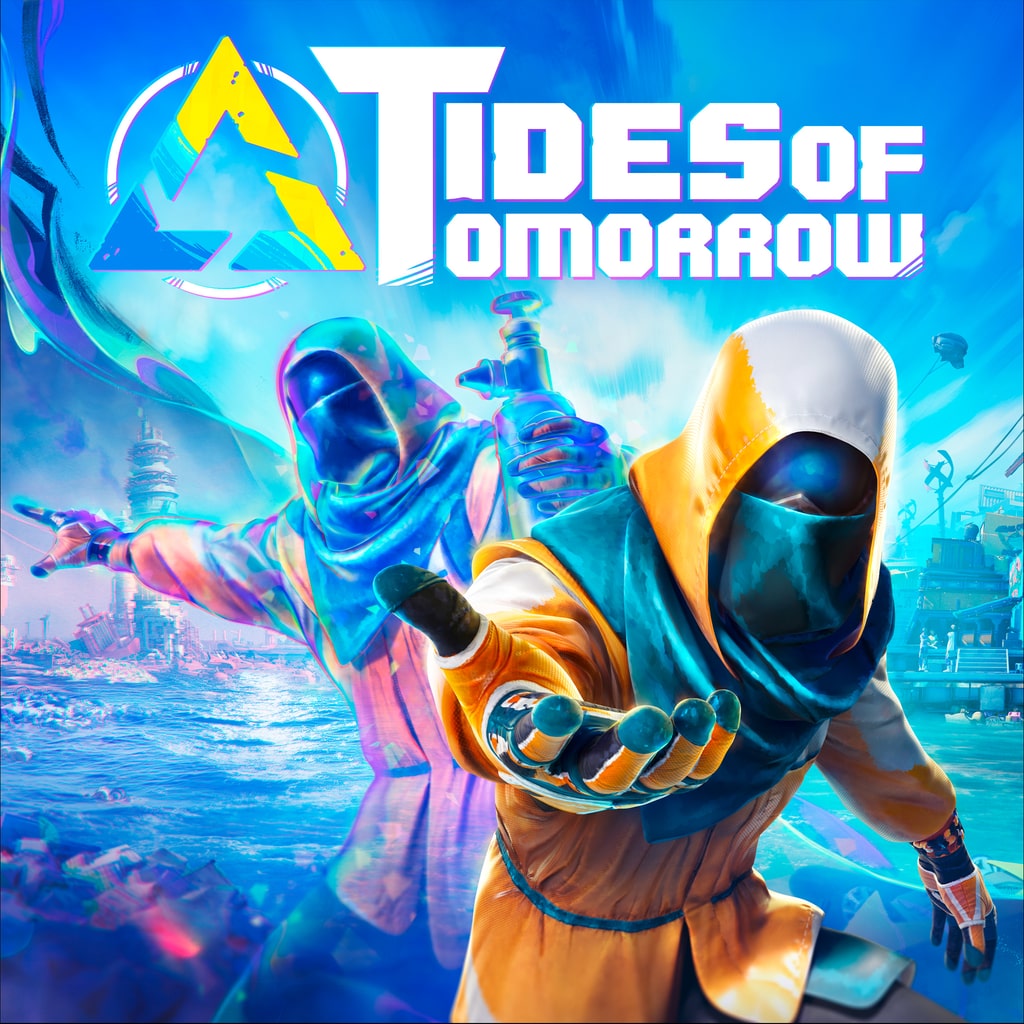
Visually, Tides of Tomorrow departs from the typical post-apocalyptic colour scheme. This isn’t a world shaded in greys and ash; it’s vibrant, strange, and at times almost hauntingly beautiful despite its decay.
Floating platforms drift across an expansive ocean composed not only of water but also of debris. Plastic structures rise like monuments to a lost era. Boats are stitched together from whatever materials have survived. The term “plasticpunk” may sound odd at first, but it captures the essence perfectly.
Everything has a tactile feel. You can almost sense the rough edges of salvaged materials, the textures that tell stories of reuse and resilience. It’s not just a setting; it’s a powerful statement, a reflection of survival and adaptability in a world reshaped by chaos.
Quiet Exploration, Subtle Tension
Gameplay immerses you in exploration and resource management. You sail from one location to another, gathering materials and deciding how to use what you find. There’s no relentless pressure, but an underlying sense of fragility lingers. Supplies are precious, and every decision carries weight. The world doesn’t feel overtly hostile, but it’s undeniably uncertain, holding its secrets close.
Interactions with factions add rich layers to the experience. The Marauders, who control medicine and trade, operate with a cold pragmatism that’s hard to ignore. The Reclaimers are more grounded, focused on surviving without succumbing to despair or madness. The Mystics, meanwhile, seem to belong to another era entirely, clinging to beliefs that may or may not be rooted in truth. None of these groups are painted simply; each has depth and nuance. Trust is never clear-cut, and the game respects your pace, allowing the uncertainty to settle and grow. It’s a world that invites curiosity and patience, where every choice feels real and meaningful.
Echoes That Linger
One of the most captivating aspects is how previous players are portrayed. These ghostly echoes appear as faint, spectral figures that replay fragments of their past actions from earlier attempts. They don’t speak or explain themselves, yet their presence is undeniably felt. You might catch someone hesitating before opening a door or walking away from a conversation you thought was significant.
Sometimes you see a path they took that you never even considered. It creates a strange, almost haunting connection. You’re not interacting directly, yet you share the same space across time. It’s subtle, but it adds depth to your own choices. Knowing that someone else will observe your actions, albeit in this abstract way, shifts your perspective and influences how you think about your decisions.
A Story That Breathes
Narratively, Tides of Tomorrow feels less like a fixed story and more like a living, breathing experience. The central theme—the spread of Plastemia and the quest to find a way to fight it—provides structure. Yet the details are fluid, shifting with your Story-Link and personal choices.
Some players might find this approach a bit disjointed. There are moments when the narrative seems fragmented, with threads that don’t always tie together seamlessly. But there’s a certain charm in that lack of rigidity. It reflects the world itself—broken, reshaped, and influenced by forces beyond your control.
When it works, it resonates on a personal level, not just because of the choices you make, but because of the ones you inherit, which shape the story in unique ways.
Where the Tide Pulls Back
Despite its ambitious scope, Tides of Tomorrow occasionally struggles to feel cohesive. The pacing is uneven, particularly in the middle sections, where exploration becomes repetitive. Sailing from one location to another, collecting resources, and managing inventory can start to feel like routine chores rather than part of an exciting journey.
The Story-Link system, while intriguing, can also lead to moments of confusion. You might experience consequences without fully understanding their origin, making the game feel less like a mystery and more like a puzzle with missing pieces.
The world itself is visually captivating, drawing you into its beauty. Yet character interactions often lack the same depth. Some conversations come across as too brief or distant, which can diminish the richness of the setting and the emotional connection.
The Feeling It Leaves Behind
What Tides of Tomorrow does best is evoke a deep sense of presence. It’s not just about your own awareness but also about the traces of others, the choices they made before you arrived, and the decisions that will continue to echo long after you’re gone.
The game revolves around connection, even when that connection is indirect. It’s about how actions send ripples outward, shaping experiences you may never see or understand. There’s a gentle, lingering melancholy in it, a quiet reminder that the world keeps moving and changing around us, even when we’re not looking. It’s a reflection on how we’re part of a vast, unfolding story, one that persists beyond our individual moments.
Verdict
Tides of Tomorrow is a bold, quietly experimental, story-driven adventure that takes risks few developers would even consider. Its Online Story-Link system isn’t just a fancy feature; it fundamentally reshapes how you experience the world, sometimes for better, sometimes for worse. Not every idea hits the mark, and pacing issues and narrative gaps prevent it from reaching its full potential.
Still, when everything comes together, it offers something truly special. You find yourself in a world shaped by others, connected by a story that’s not entirely your own. There’s also a lingering sense that your choices matter, even long after you’ve moved on.