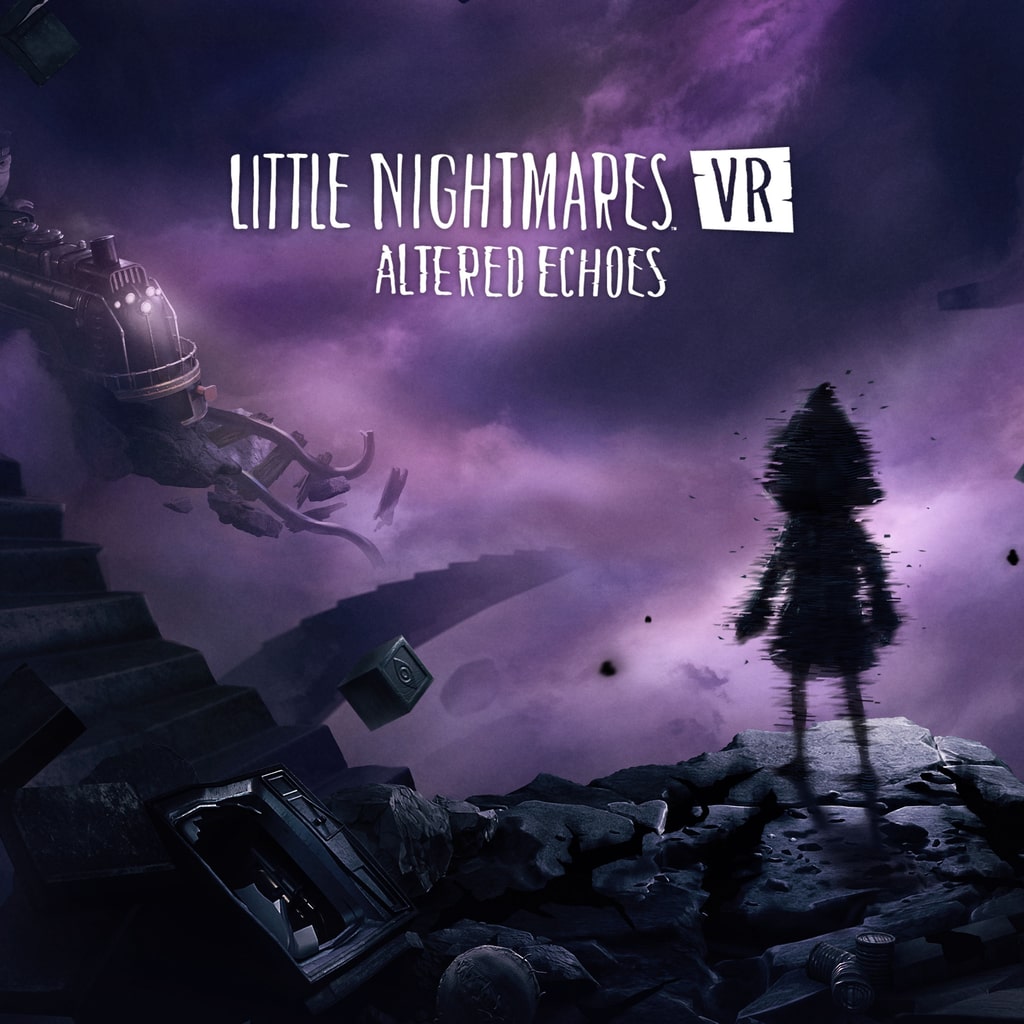
Most of us share a universal childhood memory: lying in the dark, watching shifting shadows on the wall transform into something monstrous while every floorboard creak felt like a looming threat. It is this primal, foundational sense of vulnerability that Little Nightmares VR: Altered Echoes expertly weaponises. By moving the series into a first-person virtual reality space, developer Iconik bridges the gap between those distant memories and our current reality. The game doesn’t just ask us to watch a child face her fears; it places us directly inside the yellow raincoat, forcing us to confront the grotesque scale of a world that feels as vast and terrifying as it did when we were small.
Immerse yourself in the unsettling universe of Little Nightmares from a first-person perspective in VR, seeing everything through your own eyes. Every sight, sound, and shadow blends into your reality, drawing you deeper into a distorted world where nightmares and reality intertwine. Interacting with your environment reveals complex puzzles, hidden routes, and secrets concealed in darkness, offering a level of immersion the series couldn’t achieve before.
What once seemed a distant, carefully staged nightmare is now directly in front of you. Breathing. Watching. Waiting. This transition into virtual reality does far more than alter perspective. It fundamentally changes the emotional texture of the experience. The fear no longer feels theatrical or observed from a safe distance. It feels intimate, invasive, and deeply personal.
From Observer to Participant
The original Little Nightmares games thrived on distance. You guided fragile children through oversized, grotesque environments, recognising their vulnerability without fully inhabiting it yourself. Altered Echoes removes that protective barrier entirely.
You are no longer watching events unfold from afar. You are Dark Six. You hear every scrape of metal, every distant whisper, every sickening creak of warped floorboards from within the world itself. The environments no longer exist behind a screen. They surround you completely, recreating that childhood sensation of feeling impossibly small in a threatening place.
That shift changes how fear operates. Rooms feel enormous. Enemies feel towering and intrusive. You don’t simply notice danger anymore. You physically anticipate it. There were moments when I caught myself hesitating before opening doors or turning corners because the game had successfully awakened those old instincts we all carried as children: the irrational certainty that something awful might be waiting in the dark.
A World That Presses Back
The environments in Altered Echoes are familiar in concept yet transformed by VR. “The Transmission” hums with unnatural energy, its flickering lights and distorted architecture creating a persistent sense of instability. The School returns in spirit, though not exactly in form, and feels far colder when you stand within its suffocating corridors than when you merely observe them from a distance. The Train Station stretches endlessly into shadow, dreamlike and disorientating, constantly undermining your sense of safety.
Everything feels slightly wrong, which has always been the series’ greatest strength. VR amplifies that unease dramatically. Hallways feel tighter. Ceilings loom overhead. Shadows stretch unnaturally across walls, triggering the same anxious imagination many of us remember from childhood bedrooms lit only by moonlight and half-seen shapes. The world doesn’t just exist around you. It presses against you.
Touching the Nightmare
The biggest change beyond perspective is interaction. Puzzles are no longer detached mechanical exercises. You physically reach out to manipulate the environment. You pull open drawers. You lift objects. You turn handles with trembling precision, listening desperately for movement nearby.
These tactile interactions create an intimacy that suits the series perfectly. Even the smallest actions carry tension because you perform them yourself. A simple act like sliding open a cabinet suddenly feels dangerous when you know something might hear you.
That slower pace works strongly in the game’s favour. You move carefully through environments, constantly aware of your surroundings. Every sound matters. Every darkened corridor feels threatening. The game understands that fear often thrives in anticipation rather than in action.
Hiding Feels Different Now
Stealth has always been central to Little Nightmares, but VR transforms it into something far more personal. Hiding behind furniture, peeking around corners, or cautiously leaning to check whether danger has passed create an entirely different level of tension.
Enemies are not necessarily smarter than before, but they feel more intimidating because your relationship to them has changed. You are no longer calculating movement patterns from a detached perspective. You are reacting instinctively, often with incomplete information.
Several encounters genuinely unsettled me not because the game relied on cheap jump scares, but because I found myself frozen, unsure whether moving forward would expose me to something horrific. That hesitation becomes the true source of fear. The game constantly weaponises uncertainty.
A Story Told in Fragments
Narratively, Altered Echoes follows Dark Six on a journey of identity, separation, and transformation. As with previous entries, the story unfolds primarily through environmental storytelling and fragmented imagery rather than direct exposition.
This ambiguity remains both a strength and a weakness. The symbolism is compelling, and there are moments when the game brushes against genuinely haunting ideas about childhood trauma and fractured identity. Yet it often stops just short of fully exploring them.
Some players will appreciate the interpretive nature of the storytelling. Others may find it frustratingly elusive. Personally, I found the mystery effective precisely because it mirrors childhood fear itself. As children, we rarely understood the full picture behind what frightened us. We only understood the feeling.
Where Immersion Falters
As impressive as the VR transition is, the experience is not flawless. Movement can feel restrictive in tighter environments, particularly when the game subtly guides player behaviour. These moments briefly expose the mechanical underpinnings of the immersion.
Puzzle design also leans towards simplicity at times. While the tactile interaction elevates even basic tasks, some challenges feel underdeveloped mechanically. The game prioritises atmosphere over complexity, which works most of the time but occasionally leaves certain sections feeling slight.
Pacing can also fluctuate unevenly. A few sequences linger longer than necessary, while others end before they have fully capitalised on their tension. These issues are relatively minor, though they do create occasional breaks in the otherwise oppressive atmosphere.
Fear That Lingers
What Little Nightmares VR: Altered Echoes achieves better than almost any VR horror game is emotional presence. This is not simply about physical immersion. It reconnects players with the raw vulnerability of childhood fear.
The horror here is rarely loud. It rarely relies on startling the player. Instead, it thrives on unease. On silence. On the dreadful anticipation that something may emerge from the darkness at any moment.
Long after removing the headset, certain sounds and spaces linger in your memory. A distant creak. A flickering hallway. The sensation of standing alone in an impossibly large room while something unseen watches from the shadows.
That is the game’s greatest achievement. It doesn’t merely create horror. It resurrects a feeling many of us have not experienced since childhood.
Verdict
Little Nightmares VR: Altered Echoes is a thoughtful and deeply unsettling evolution of the series, one that understands precisely what made the original games resonate. By shifting into virtual reality, Iconik has not simply increased immersion. It has transformed the emotional core of the experience.
Its tactile interactions deepen tension, its oppressive atmosphere feels almost suffocating in VR, and its slower pacing allows dread to build naturally rather than relying on constant shocks. While the puzzle design occasionally lacks complexity and the narrative remains frustratingly opaque in places, those flaws feel minor compared with the sheer effectiveness of the overall experience.
Most importantly, the game understands that true horror is rooted in vulnerability. In the fear of feeling small, powerless, and alone in a world that no longer makes sense. Little Nightmares VR: Altered Echoes captures that sensation with terrifying precision.