Horror games often struggle to maintain their identity across multiple sequels. What begins as a fresh idea can easily be diluted as developers chase larger audiences, bigger budgets, or shifting trends. The Coma series has managed to avoid that fate. Across multiple entries, developer Devespresso Games has remained remarkably committed to its core vision: vulnerable protagonists, an oppressive atmosphere, Korean folklore, and the constant sense that nowhere is truly safe.
The Coma: Sehwa Complete Edition brings the entire saga together in one comprehensive collection. It includes The Coma: Recut, The Coma 2B: Catacomb, The Coma 2: Vicious Sisters, and The Coma 3: Bloodlines, alongside a wealth of additional content. This package serves as both a celebration of the franchise and a fascinating look at how the series has evolved over the years. More importantly, it remains one of the most distinctive survival horror collections available today.
Welcome to the Coma
The series begins with The Coma: Recut, in which exhausted student Youngho collapses during final exams and awakens inside a twisted reflection of Sehwa High School. The familiar classrooms and corridors become warped, bloodstained versions of themselves, while terrifying entities stalk the halls in search of prey.
From the opening moments, The Coma establishes a sense of dread that rarely lets up. Unlike many horror games that arm players with weapons sooner or later, survival here relies almost entirely on awareness, caution, and quick thinking. When danger appears, your only options are to run, hide, or desperately outsmart whatever is pursuing you. That vulnerability becomes the foundation of the entire franchise.
What makes the narrative particularly effective is its initial sense of grounding. Academic pressure, student anxiety, social isolation, and personal trauma all play major roles throughout the series. The supernatural horrors become more frightening because they emerge from recognisable human fears.
As the collection progresses through its sequels, the mythology surrounding Sehwa High and the mysterious mirror dimension grows increasingly complex. Characters return, relationships deepen, and long-running mysteries begin to reveal themselves. By the time Bloodlines arrives, the series has transformed into a surprisingly ambitious interconnected horror saga.
Running Never Stops Being Scary
At its heart, The Coma remains a side-scrolling survival horror experience built around pursuit. The gameplay loop sounds deceptively simple. Explore environments, gather clues, solve puzzles, collect important items, and avoid deadly enemies. In practice, however, the execution is remarkably tense. Every hallway feels dangerous because danger can arrive at any moment.
The sound design deserves enormous credit. Hearing distant footsteps echo through dark corridors creates immediate anxiety. Every creak, every door opening, and every sudden noise carries weight because the consequences of being discovered can be severe.
Stamina management becomes equally important. Sprint too often, and you risk exhausting yourself at precisely the wrong moment. Panic can quickly become your worst enemy, especially during longer chase sequences, where a single mistake may force a restart.
The hiding mechanics remain simple but effective. Ducking into lockers, slipping behind obstacles, or quietly waiting for a threat to move on never loses its tension. Even after dozens of hours across multiple games, there is still something nerve-racking about hearing an enemy linger nearby while you remain completely helpless.
Growth Through the Sequels
One of the most satisfying aspects of this collection is watching the series mature. While Recut lays the foundation, later entries steadily build on it. The Coma 2: Vicious Sisters perhaps represents the biggest leap forward. Featuring Mina Park as its protagonist, the game expands beyond the school setting, introducing larger environments, improved exploration systems, crafting mechanics, and more varied progression.
The wider district surrounding Sehwa High adds welcome variety to the formula. New locations, fresh enemy encounters, and additional story threads help the sequel feel significantly more ambitious than its predecessor.
The Coma 2B: Catacomb serves as an effective bridge between major entries. Though shorter in scope, it adds important context to the overarching narrative while refining many of the systems introduced earlier.
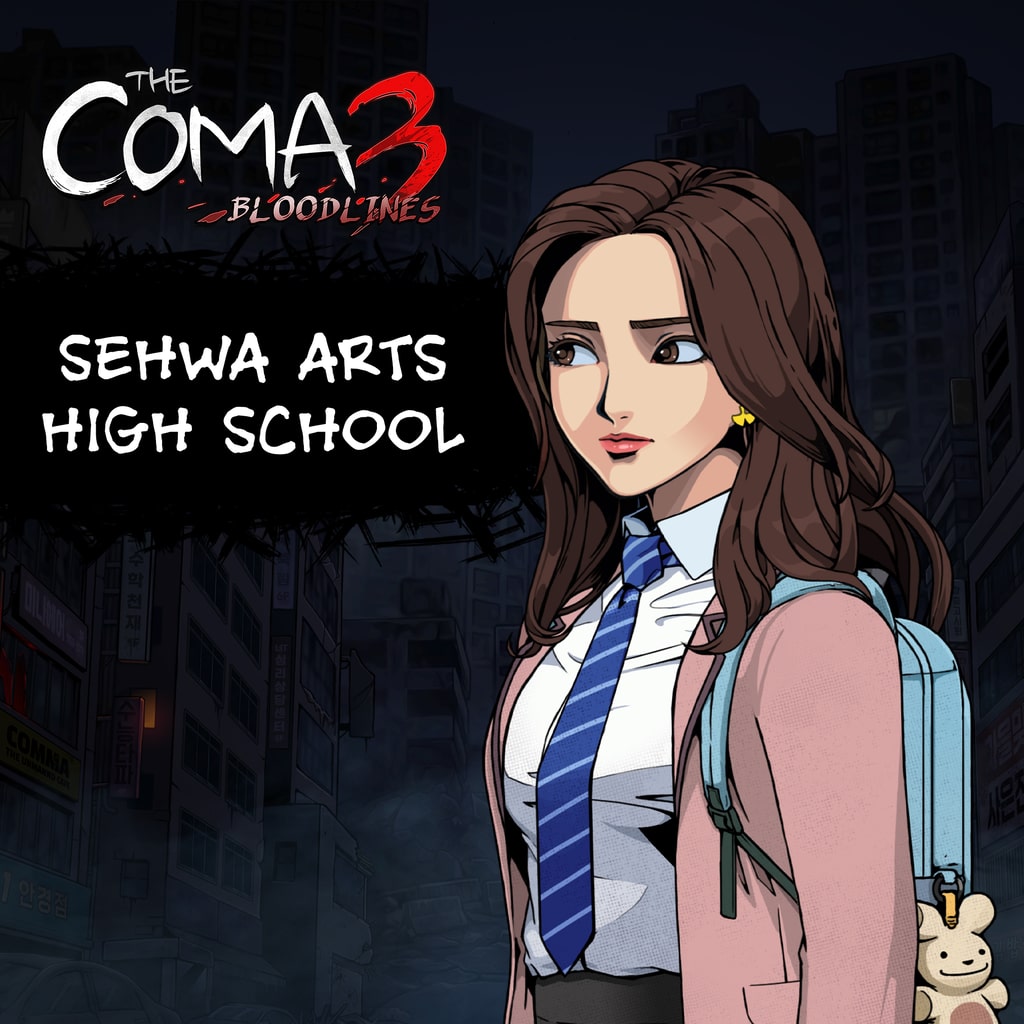
Then comes Bloodlines, arguably the most polished entry in the franchise. Character animations are smoother, environmental detail is richer, and the storytelling feels more confident. While the core gameplay remains familiar, the presentation receives a substantial upgrade that helps bring the series into a more modern era. Taken together, these games showcase a developer steadily improving its craft without losing sight of what made the original special.
A Beautifully Disturbing World
Visually, The Coma remains one of the most distinctive horror franchises. The hand-drawn art style immediately sets it apart from countless other indie horror projects. Character portraits are expressive, environments are richly detailed, and every location feels steeped in atmosphere. The series draws heavily on manhwa aesthetics, creating a visual identity that feels uniquely Korean while remaining universally accessible.
The contrast between ordinary locations and their corrupted mirror-world counterparts is particularly effective. Familiar spaces become unsettling reflections of themselves, creating an uncanny feeling that lingers throughout the journey.
Lighting plays a major role despite the predominantly 2D presentation. Shadows stretch unnaturally across hallways, while subtle environmental effects create a constant sense of unease. Even when nothing is actively chasing you, the world itself feels hostile.
Complementing the visuals is an outstanding soundtrack. Rather than relying on loud orchestral stingers, the music often opts for subtle ambient tension. Soft piano notes, distant echoes, and eerie atmospheric tracks create an unsettling backdrop that perfectly supports the horror.
One Long Nightmare
If there is a drawback to experiencing the entire anthology in one package, it is repetition. Across all four games, the core mechanics remain largely unchanged. Exploration, hiding, stamina management, item collection, and chase sequences form the backbone of every entry. While each game introduces improvements and new ideas, the fundamental structure remains remarkably consistent.
Playing a single title feels tense and engaging. Playing all four consecutively can occasionally expose the formula’s limitations. Certain objectives begin to blur together, and some puzzle structures feel overly familiar by the later chapters.
There are also moments when progression becomes slightly obscure. The series occasionally expects players to notice subtle environmental clues or revisit locations without always providing clear direction. While this contributes to the sense of exploration, it can sometimes result in frustrating backtracking.
Fortunately, the strength of the atmosphere and storytelling helps overcome most of these issues. Even when the mechanics repeat, the mysteries surrounding the mirror dimension remain compelling enough to push players forward.
Horror with a Unique Identity
What truly elevates The Coma above many indie horror competitors is its cultural identity. Rather than relying on familiar Western horror conventions, the series draws heavily on Korean folklore, social pressures, and supernatural traditions. This gives the world a distinctive flavour that feels refreshing in a genre often crowded with similar ideas.
The emotional themes also resonate strongly. Beneath the monsters and supernatural mysteries lies a story about fear, trauma, friendship, regret, and survival. These human elements prevent the horror from feeling purely mechanical. There is genuine heart beneath the darkness.
Final Verdict
The Coma: Sehwa Complete Edition is exactly what a complete collection should be. It preserves an entire horror saga, presents it in its best possible form, and allows newcomers to experience the full journey from start to finish.
While the repetitive mechanics can occasionally lead to fatigue during marathon sessions, the strength of the storytelling, atmosphere, visual presentation, and world-building easily outweighs those concerns. Few horror franchises manage to maintain such a strong sense of identity across multiple entries, and even fewer do so while remaining this consistently engaging.
For survival horror fans, indie enthusiasts, and anyone curious about one of gaming’s most distinctive Korean horror series, The Coma: Sehwa Complete Edition is an unforgettable descent into darkness.