Sugoroku New Year’s Party arrives with a festive flourish and a deceptively simple premise: bring the beloved traditional Japanese board game sugoroku into a video game format and build a party experience around it. What begins as a cheerful adaptation of a centuries-old pastime swiftly unfurls into a surprisingly strategic, socially engaging, and richly layered experience that captures both the celebratory spirit of New Year’s festivities and the tactile satisfaction of thoughtful play. It’s not perfect—limited variety and occasional pacing hiccups temper its broader appeal—but as a digital gathering game, it offers warmth, charm, and ample reasons to keep rolling the dice.
This review unpacks how Sugoroku New Year’s Party balances tradition with modern design, why its social features are its strongest asset, and where its simplicity can sometimes feel like a constraint rather than a choice.
Premise and Presentation — Tradition Meets Celebration
Sugoroku is itself a game of lineage—often likened to backgammon and roll-and-move board mechanics, it’s a staple of Japanese holiday culture. Sugoroku New Year’s Party honours that heritage without feeling antiquated; its initial tutorial reinforces core rules while gesture-animating explanations to welcome newcomers. Whether you’ve played sugoroku in physical form, or this is your first introduction, the game’s baseline accessibility is solid.
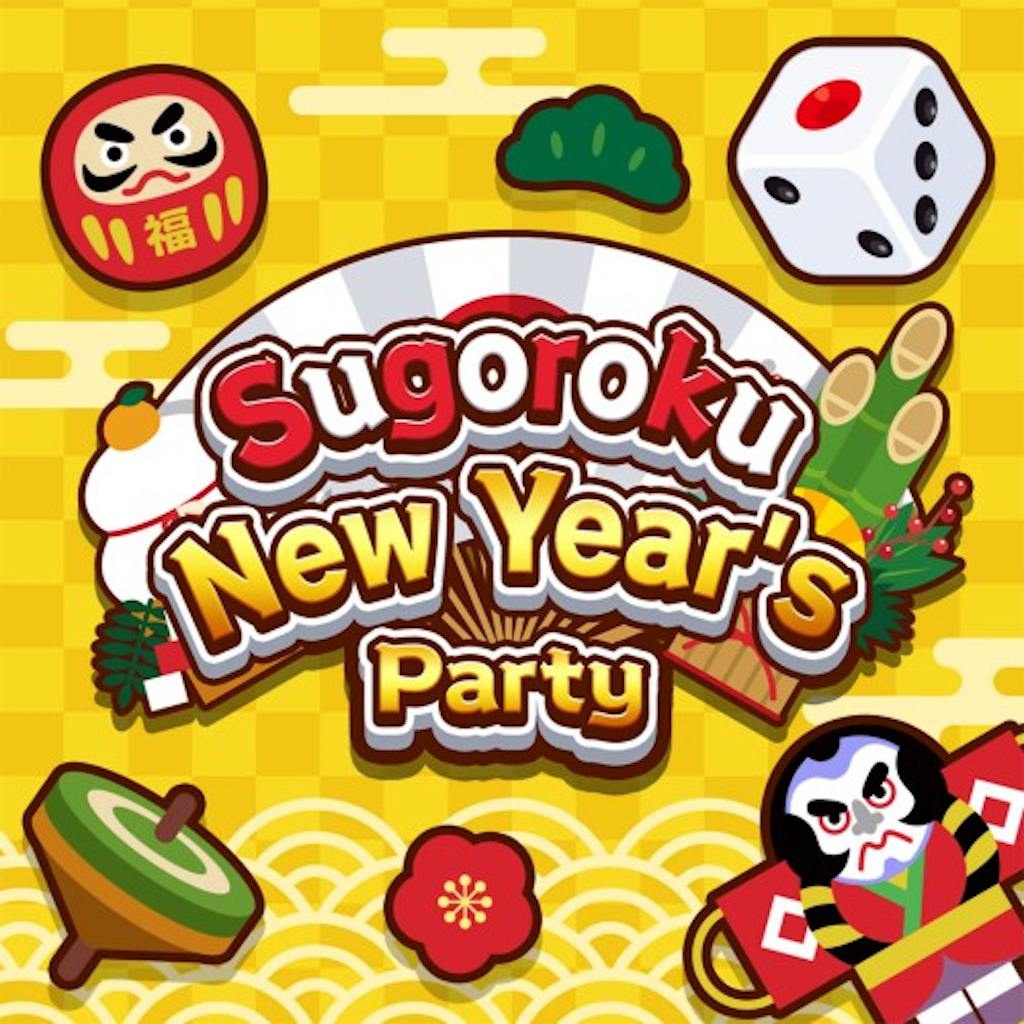
What truly sets the tone is its presentation. The aesthetic leans into New Year’s seasonality with cheerful colour palettes, symbolic motifs (think kadomatsu decorations, lion dances, and celebratory banners), and joyful particle flourishes when key events trigger. This visual optimism is paired with a soundtrack that mixes traditional instruments, bright melodies, and celebratory cues so that matches feel festive rather than clinical.
This isn’t a hyper-polished AAA production, but it doesn’t need to be. The art style is inviting, the UI is clean, and the interface prioritises read-and-play clarity over unnecessary frills. It’s a friendly gateway into the mechanics and mood of the game.
Core Mechanics — Simple at Heart, Strategic in Practice
The foundational gameplay in Sugoroku New Year’s Party stems from classic roll-and-move mechanics: players roll dice to advance along a path, trigger events based on landing spots, and strategise to reach objectives or attain victory conditions. Early turns feel straightforward, encouraging players to focus on pacing and anticipation rather than deep tactical timing.
Where the game earns its depth is how it layers special squares, event cards, and branching paths. Landing on certain tiles can trigger:
- Bonuses (extra movement, resource gains)
- Penalties (loss of progress, event setbacks)
- Mini-challenges (quick decision scenes that affect turn outcomes)
- Player interactions (trades, move swaps, blockages)
These event thresholds transform what would otherwise be rote dice advancement into a mini-strategy ecosystem where position, timing, and risk awareness matter. Rolling a six doesn’t always mean blanket advantage; on crowded boards or during certain event phases, moving extra spaces can force an unfavourable trigger. The decision to use or save items that influence movement becomes a genuine strategic layer.
Dice randomness injects uncertainty, but Sugoroku New Year’s Party consistently ensures that luck never feels arbitrary or unfair. Choices always follow impact: you can mitigate risk, influence outcomes, and plan around uncertainty once you understand event maps and opponent tendencies. Mastery doesn’t come just from lucky rolls—it comes from strategic deployment of tools and anticipation of outcomes.
Multiplayer and Party Features — The Heart of the Experience
This is where the game genuinely shines. Sugoroku New Year’s Party is designed as a social experience first. Whether you’re playing locally with friends or connecting online with others, the game’s rhythm thrives on shared laughter, banter, and the unpredictable narrative arcs that emerge from interactive turns.
Online integration is robust. Matchmaking, private lobbies, and asynchronous play options ensure that a group doesn’t need to be physically together—or even online simultaneously—to enjoy the experience. Sending turns in asynchronous sessions works very well; it keeps everyone engaged without dragging any one player down with overly long wait times.
Local play, however, is where the game earns its heart. When played in the same room with four controllers or devices, Sugoroku New Year’s Party becomes an analogue to classic living-room board game nights—complete with flavour text quips, social trades, and the occasional gloating voice line when luck favours one player over others.
Social features extend to emotes, quick chat prompts, and personalised avatars. These tools elevate matches from sterile number progression to memorable social sessions. Victory feels shared, and even losses feel less like defeat and more like fodder for group storytelling.
Progression, Events, and Replayability
One of the game’s cleverest inclusions is its dynamic event calendar. Beyond core board mechanics, Sugoroku New Year’s Party provides weekly and seasonal challenges that unlock new boards, themed items, and cosmetic variations. These boards often carry unique modifiers—some slow down movement, others introduce hidden paths or bonus loci—that shift meta-planning from match to match.
This content cadence staves off repetition impressively well, giving players a reason to return beyond basic play. That said, the rate at which new boards and events arrive affects long-term freshness; the initial slate of boards, while well-designed, can feel limited if you’re a frequent player. A broader palette of environments and modifier types would expand the game’s strategic possibilities and long-term appeal.
Accessibility and Learning Curve
The game’s onboarding is effective without being cloying. It introduces basic movement, event anticipation, item utilisation, and interaction pacing through a series of early matches that double as tutorials. More complex mechanics are unlocked incrementally, which keeps tutorial fatigue at bay.
For players coming from strategy board games, learning sugoroku mechanics is swift and intuitive. For casual players or those unfamiliar with roll-and-move systems, the learning curve is gentle enough to be welcoming without feeling condescending. Dice randomness ensures beginners can remain competitive against veterans, particularly in short sessions.
Difficulty scaling is mediated through board design and event modifiers rather than artificial AI savviness—another welcome choice. The AI plays predictably at first but evolves to block optimal paths, trade tactically, and respond to player items in ways that feel fair and engaging rather than scripted.
Limitations — Depth Versus Variety
If Sugoroku New Year’s Party has a core constraint, it is variety. Despite solid progression systems and event calendars, the core gameplay loop inevitably returns to dice advancement and trigger interpretation. While this loop is deeply satisfying in social contexts, it can feel repetitive in extended solo play.
Another area for improvement is thematic diversity. Many early boards lean on cosmetic changes rather than mechanically distinct pathways. Given the cultural richness that could be interwoven into sugoroku’s grid pathways—seasonal festivals, narrative encounters, or branching lore moments—there is untapped potential that could enrich the experience further.
Lastly, while the endgame is mechanically sound, it sometimes lacks climactic payoff. Culminating boards or championship modes that introduce higher stakes or memorable multi-stage battles would give players aspirational goals beyond leaderboard placement and cosmetic unlocks.
Verdict
Sugoroku New Year’s Party is a delightful fusion of tradition and modern design sensibility. It reframes a classic board game into an accessible yet strategic digital format that rewards foresight, planning, and social interaction. Its strengths lie in its elegant systems, engaging social play, and festive presentation.
While its long-term variety could be broader and its solo experience occasionally repetitive, the core experience remains compelling—especially when shared with friends or family. It captures a joyful sense of celebration and turns every match into a story worth remembering.