The Weird West has become fertile ground for indie developers looking to blend six-shooters with the supernatural. But while many games flirt with occult aesthetics, few commit as fully as Soulslinger: Envoy of Death, developed by Elder Games and published by Headup Games. After launching in Early Access on PC in December 2023 and hitting its 1.0 release in April 2025, Soulslinger now rides onto PlayStation 5 and Xbox Series X|S (February 19, 2026), bringing its roguelike FPS gunfights to consoles at £15.99.
It’s a fast, ferocious, and surprisingly narrative-driven shooter that fuses arena combat with permanent progression—and occasionally punches above its weight in both style and ambition.
Death Wears Spurs
You play as an Envoy of Death, a gunslinger trapped in Limbo and tasked with dismantling “The Cartel,” a ruthless syndicate harvesting souls in an attempt to escape damnation. It’s a simple hook, but Soulslinger leans into it with confidence.
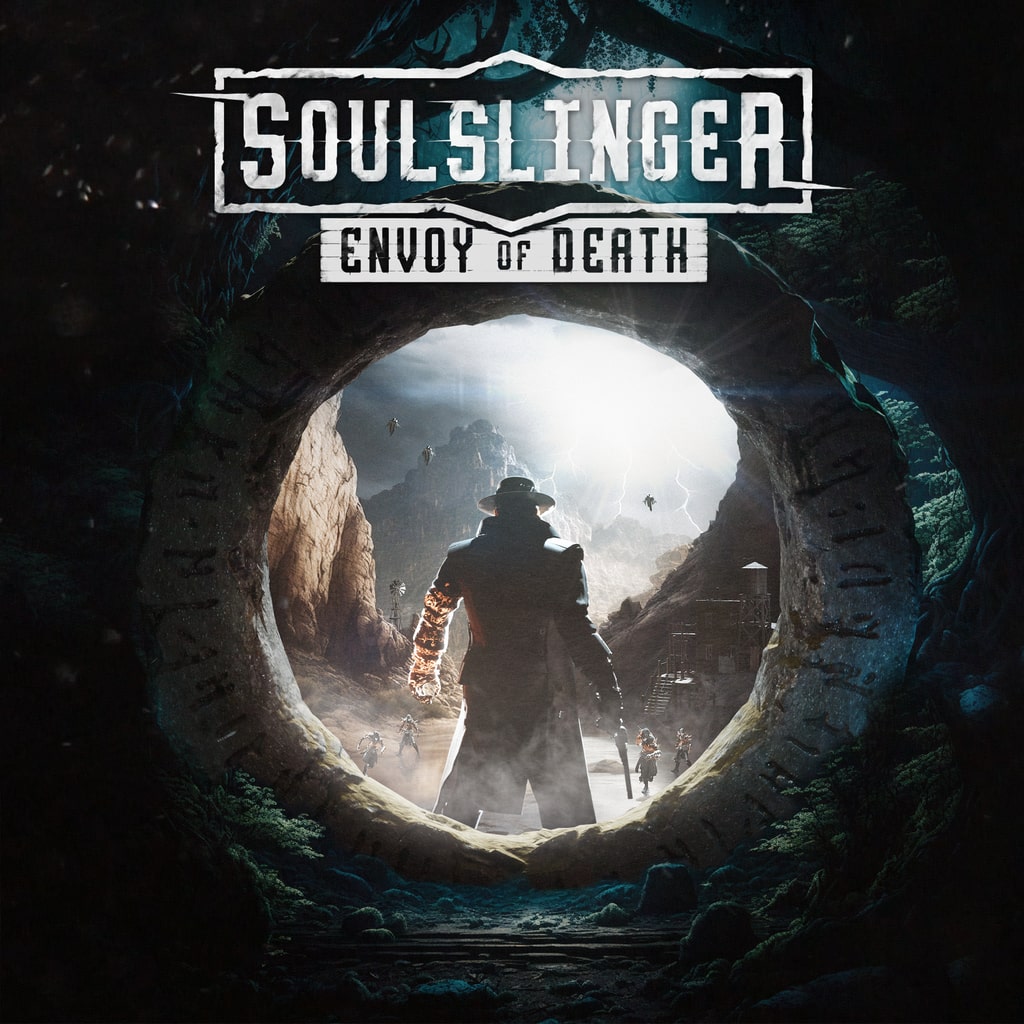
Limbo is no abstract void—it’s a decayed frontier stitched together from dust-blown towns, abandoned saloons, and fractured purgatorial landscapes. Unreal Engine 5 gives the environments a moody, high-contrast look. Neon glows cut through sepia tones. Shadows stretch long across warped wooden planks. The visual blend of 19th-century grit and macabre fantasy gives Soulslinger a distinct identity.
It’s not Red Dead Redemption with skeletons. It’s a haunted fever dream in a cowboy hat.
Fast Guns, Faster Footwork
At its core, Soulslinger is an arena-based roguelike FPS. Each run drops you into a sequence of randomized combat rooms where waves of cultists, undead outlaws, and elite horrors swarm from every angle.
Combat is fast. Aggressive. Demanding.
Movement is your lifeline. You dash, strafe, and vault across arenas while unloading revolvers, shotguns, and more exotic soul-infused weaponry. Gunplay feels snappy and responsive on console, maintaining a smooth 60FPS on PS5 and Series X.
DualSense haptic feedback on PlayStation adds subtle texture—recoil pulses, environmental vibrations, and satisfying trigger resistance during heavy shots.
The pacing encourages relentless momentum. Stand still and you’re overwhelmed. Push forward, chain eliminations, and you feel unstoppable.
It’s Doom-lite in speed, but more focused on wave-clearing rhythm than labyrinthine exploration.
Crafting Your Fate
Where Soulslinger separates itself from pure arena shooters is in its permanent progression system.
Between runs, you return to Haven—a hub world populated by stray souls and enigmatic NPCs. Here, you spend collected essence to craft new weapons, unlock abilities, and improve your Envoy’s baseline power.
This isn’t surface-level meta progression. The upgrade tree meaningfully alters playstyle. You can:
- Enhance critical damage potential
- Boost mobility skills
- Modify elemental effects
- Increase survivability
Weapons themselves evolve. Crafting new variants shifts how encounters unfold. A powerful burst shotgun encourages close-quarters aggression, while precision-focused builds reward distance control.
The permanent upgrades soften the roguelike sting without trivializing difficulty. Early runs are punishing. Later descents feel empowered—but never effortless.
Reactive Storytelling in a Shooter?
Perhaps the most unexpected strength of Soulslinger lies in its narrative ambition.
Haven isn’t just a menu screen—it’s a living (or unliving) settlement. NPCs respond to your performance. Fail repeatedly, and dialogue shifts. Succeed in high-intensity runs, and relationships deepen differently.
Choices made in conversations influence alliances and tone. The Cartel’s threat looms larger or feels more personal depending on how you engage with the world.
This isn’t branching RPG-level complexity, but it’s deeper than most arena shooters attempt.
The writing walks a line between grim fatalism and frontier grit. Themes of obsession, loss, and cheating death anchor the story. While not groundbreaking, it adds emotional texture to what could have been a purely mechanical experience.
Enemies of the Afterlife
The Cartel’s forces range from basic gun fodder creeps to elite mobs with dangerous modifiers.
Standard enemies swarm in numbers, testing spatial awareness. Elite units introduce tactical shifts—area denial attacks, teleportation bursts, shield mechanics.
Boss encounters punctuate runs with intensity spikes. These fights demand pattern recognition and precise resource management.
Enemy variety isn’t massive, but encounter design and room layouts keep engagements dynamic.
Still, after extended sessions, repetition creeps in. Room themes, while atmospheric, recycle environmental motifs. Soulslinger thrives on moment-to-moment combat more than environmental diversity.
Performance and Polish
On PS5 and Xbox Series X, Soulslinger runs smoothly at 4K/60FPS. Load times are minimal. Particle effects during intense firefights remain stable.
Unreal Engine 5’s lighting creates striking visual contrasts—dusty browns pierced by spectral blues and fiery oranges. It’s stylish without overwhelming clarity.
Menus are clean and controller-friendly. The transition from PC to console feels considered, not rushed.
Given its indie scope, technical execution is impressively solid.
Where It Stumbles
Soulslinger’s strengths are clear—but it isn’t flawless.
The roguelike structure can feel predictable over long sessions. While builds vary, core room-to-room progression lacks environmental surprises.
Narrative reactivity, though commendable, doesn’t radically transform outcomes. It adds flavor more than consequence.
Difficulty balancing leans toward punishing in early hours. New players may struggle until permanent upgrades accumulate.
And while the Weird West aesthetic is strong, some players may crave more environmental storytelling within runs rather than primarily in Haven.
Value Proposition
At £15.99, Soulslinger positions itself competitively in the indie shooter space.
You’re getting:
- A fast-paced roguelike FPS
- Meaningful permanent progression
- Reactive narrative elements
- Strong console optimization
- A distinctive aesthetic
It doesn’t reinvent the genre, but it executes its vision with polish and confidence.
Final Verdict
Soulslinger: Envoy of Death is a stylish, high-octane roguelike shooter that balances arena chaos with meaningful progression and surprisingly thoughtful storytelling.
It may not match AAA spectacle, and its room-based repetition occasionally dulls the edge—but moment-to-moment gunplay is satisfying, builds feel impactful, and the Weird West setting oozes personality.
For fans of roguelike FPS titles craving something drenched in dust and damnation, Soulslinger hits its mark.