A deceptively simple puzzle that coils into something surprisingly clever
Puzzle games often live or die by a single idea. Some rely on spectacle, others on escalating chaos, but the most enduring entries in the genre succeed because they take a familiar mechanic and twist it just enough to feel new again. Slither Realm, developed by kazakovstudios and Sharkgame, understands this philosophy perfectly. At first glance it looks like a modernized riff on classic Snake — colourful creatures sliding across tidy grids — but beneath its minimalist presentation lies a methodical spatial puzzler that demands patience, foresight, and careful planning.
Released first on PC before arriving on PlayStation consoles shortly after, Slither Realm positions itself as a quiet, low-cost brain teaser rather than a flashy indie showcase. And while its modest price and simple visuals may initially suggest a disposable experience, the deeper you venture into its winding puzzles, the clearer it becomes that this is a thoughtfully designed logic game built around clarity and efficiency rather than gimmicks.
A Puzzle Built on Movement
The core concept is immediately understandable: guide snakes across a grid so they occupy specific resting spaces without blocking one another. Each snake moves continuously along its path, and once placed incorrectly, it can easily trap itself or prevent another snake from reaching its destination. Unlike arcade-style snake games focused on reflexes or survival, Slither Realm transforms movement into a planning exercise.
Every level becomes a miniature logistical problem. You’re not reacting — you’re predicting.
Early puzzles act as tutorials without explicitly announcing themselves as such. Single snakes introduce movement constraints, followed by tighter environments that teach players how easily a wrong turn can doom an entire solution. Soon, multiple snakes of varying lengths must share cramped spaces, forcing you to visualize solutions several steps ahead.
The brilliance lies in how naturally complexity grows. New mechanics aren’t layered through menus or tutorials; instead, the puzzles themselves teach you through failure and experimentation. One moment you’re comfortably guiding two snakes into place, and the next you’re staring at a grid that resembles a living knot, wondering how any solution could possibly exist.
And yet, it always does.
Thinking in Reverse
What makes Slither Realm particularly satisfying is how it encourages reverse thinking. Traditional puzzles ask players to move from start to finish, but here success often comes from imagining the ending first. Where must each snake ultimately lie? Which paths must remain open until the final move?
The game quietly trains players to think backwards — a hallmark of well-designed logic puzzles.
When solutions click into place, the sensation is immensely rewarding. There’s no explosive animation or triumphant fanfare, just the calm realization that a seemingly impossible configuration suddenly makes perfect sense. That understated satisfaction becomes the driving force behind the experience.
Importantly, the absence of timers or penalties reinforces this philosophy. There’s no pressure to perform quickly. You can experiment freely, undo mistakes, and reconsider approaches without punishment. It transforms frustration into contemplation, making the game feel closer to solving a physical puzzle box than competing in a traditional video game challenge.
Minimalism Done Right
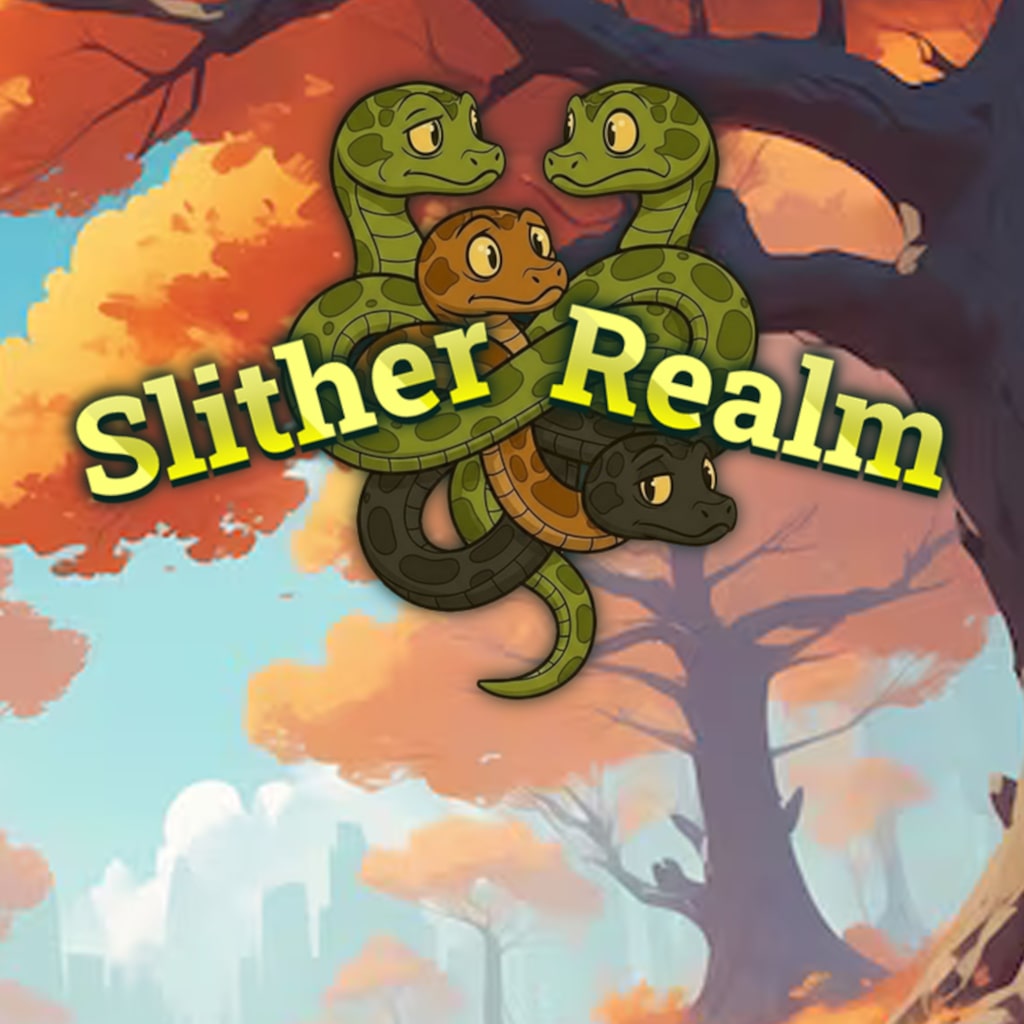
Visually, Slither Realm adopts a clean 3D aesthetic that complements its design goals. The snakes are colourful and expressive without being distracting, and the environments remain intentionally simple to keep focus on spatial reasoning.
This restraint works in the game’s favour. Many modern puzzle titles overload players with effects or visual clutter, but Slither Realm keeps the board readable at all times — a crucial factor when solutions depend on tracking movement paths precisely.
Performance across platforms is equally solid. The game runs smoothly on both PlayStation 5 and PlayStation 4, with instant restarts and quick transitions that keep puzzle-solving momentum intact. On PC, its extremely low system requirements make it accessible to virtually any machine, reinforcing its pick-up-and-play appeal.
Sound design follows the same minimalist philosophy. Gentle audio cues accompany movement and completion without becoming repetitive or intrusive. It’s the kind of game you can comfortably play alongside a podcast or during a quiet evening session — relaxed but mentally engaging.
Difficulty Curve and Longevity
Where Slither Realm truly earns its stripes is in its escalation. Later puzzles demand genuine spatial awareness and long-term planning, sometimes requiring multiple restarts before the correct sequence reveals itself.
Importantly, difficulty rarely feels unfair. Solutions are logical rather than obscure, and failure typically stems from incomplete planning rather than hidden mechanics. That distinction is vital; players feel challenged, not tricked.
However, the game’s simplicity does come with limitations. The core mechanic remains largely unchanged throughout the experience, meaning players seeking dramatic mechanical evolution may find progression somewhat predictable. The enjoyment comes from increasingly intricate configurations rather than new rule sets.
Still, for puzzle enthusiasts, that consistency is a strength. Like Sudoku or Picross, variation emerges from arrangement rather than reinvention.
Casual Design with Strategic Depth
Despite its relaxed presentation, Slither Realm hides surprising strategic depth. Snake length, grid gaps, and movement order combine into layered problems that reward patience and logical deduction.
The game fits neatly into the growing category of “thinking games” designed for short sessions but capable of absorbing hours at a time. One level leads to another, and suddenly an hour has passed as you chase that satisfying moment of clarity.
Its affordability also enhances its appeal. At under £2 in many regions — often discounted even further — it delivers remarkable value for players who enjoy deliberate puzzle-solving experiences.
Where It Falls Short
The game’s biggest weakness is presentation variety. While the puzzles themselves remain engaging, environmental themes and visual changes are minimal. A bit more aesthetic evolution could have helped sustain visual freshness across longer play sessions.
Additionally, players looking for narrative context or progression systems will find none here. Slither Realm is unapologetically mechanical — a pure puzzle experience with little framing beyond its core idea.
But for many players, that purity is precisely the point.
Final Verdict
Slither Realm is proof that strong design doesn’t require complexity or spectacle. By transforming the familiar concept of snake movement into a thoughtful spatial puzzle, it creates an experience that feels calm, intelligent, and quietly addictive.
It won’t dominate headlines or redefine the genre, but it succeeds at something equally valuable: delivering clear, focused puzzle design that respects the player’s intelligence.
In a gaming landscape increasingly filled with progression systems and constant rewards, Slither Realm stands out by asking only one thing — think carefully.
And sometimes, that’s exactly what you want.