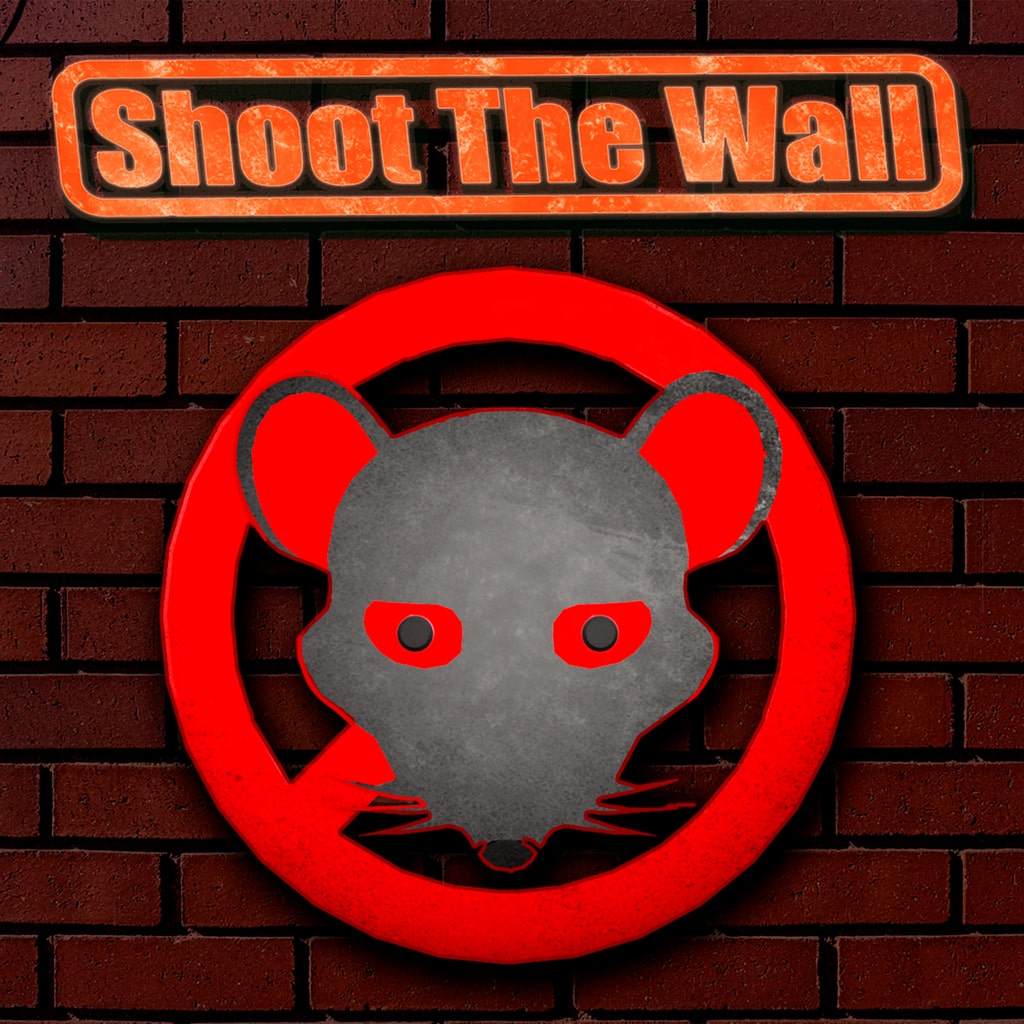
There is something almost comically direct about Shoot The Wall, a game so stripped of metaphor or flourish that it feels as if it were designed during a conversation that ended halfway through. The premise is right there in the title, delivered without irony or hesitation. You shoot the wall, you upgrade your gun, and then you shoot the wall again. It is the kind of design purity that borders on parody, yet it commits so fully to its own simplicity that it loops back into being oddly sincere. There are no distractions here, no narrative threads pulling you away from the task, only the quiet expectation that you will keep firing until something changes.
Minimalism is both the game’s identity and its limitation. In an industry constantly chasing novelty, Shoot The Wall decides novelty is unnecessary, almost intrusive. Instead, it offers a single idea stretched across its entire runtime, trusting that repetition and incremental upgrades will be enough to carry the experience. For a while, that confidence is strangely compelling. There is a meditative rhythm to it, a sense of focus that comes from having nothing else to think about but the next bullet and the next crack in the brickwork.
The Loop of Impact and Increment
At its core, Shoot The Wall is a hybrid of an aim trainer and an incremental progression game. You stand in a fixed position facing a massive brick structure, each section of which behaves like a layered puzzle of hit points disguised as masonry. Every shot chips away at the surface, numbers tick down, and fragments burst outward in small, satisfying bursts of feedback. The game quickly establishes a rhythm in which action and reward are tightly linked, creating a loop that feels almost mechanical in its predictability.
Between shooting sessions, you upgrade your weapon with currency earned from destruction. Fire rate increases, damage scales up, and ammunition capacity expands until your basic pistol becomes far more efficient than its humble beginnings suggest. These upgrades are not surprising, but they effectively reinforce the core fantasy of gradual escalation. The wall grows tougher, your gun grows stronger, and the space between those two forces becomes the entire game. It is a clean loop, almost clinical in how clearly it defines success.
There is a strange satisfaction in watching the wall evolve alongside your weapon. Early bricks crumble quickly, almost apologetically, while later sections demand sustained focus and increasingly optimised damage output. The visual feedback does much of the heavy lifting, with clean particle effects and sharp audio cues that make each impact feel weighty enough to matter. Even if the gameplay itself never expands beyond its core premise, the presentation ensures that moment-to-moment actions retain a small but consistent sense of reward.
Repetition as Design Philosophy
Where Shoot The Wall begins to lose its grip is in its rigid commitment to simplicity. There are no enemy variations, no environmental shifts, and no meaningful structural changes to break the rhythm of shooting and upgrading. The wall is both your obstacle and your entire world, and while that focus is admirable, it also risks the experience collapsing under its own repetition. After a certain point, improvement becomes less about discovery and more about endurance.
The upgrade system, while functional, adds little strategic depth. Choices are straightforward, often boiling down to increasing numbers rather than altering how you interact with the game. There are no experimental weapon types that radically change the flow, no branching systems that encourage different playstyles, only steady numerical growth. This makes progression feel reliable but emotionally flat, like watching a counter rise without any real sense of transformation.
That said, there is a particular kind of player who may find comfort in this repetition. The game works surprisingly well as a background activity, something to engage with while listening to music or focusing on something else. In those moments, the lack of complexity becomes less of a flaw and more of a feature. It asks very little of the player and never demands more than simple attention and occasional input.
Visual Clarity and Mechanical Honesty
Visually, Shoot The Wall is clean to the point of austerity. The environment is minimal, almost sterile, ensuring nothing distracts from the central act of destruction. The wall itself becomes the focal point of every session, gradually changing as it absorbs more damage. Cracks spread, bricks fall away, and the structure slowly transforms, providing just enough visual feedback to keep the loop feeling alive.
The weapon feedback is arguably the strongest aspect of the experience. Each shot feels deliberate, with satisfying recoil and clear audio cues that emphasise impact. There is a tactile quality to the shooting that prevents the experience from feeling hollow, even when the gameplay itself becomes predictable. It is this physicality that carries the game through its longer stretches, giving weight to what would otherwise be a purely numerical exercise.
Still, even a strong presentation cannot fully compensate for the lack of mechanical evolution. Once you understand the rhythm of destruction and upgrading, there are few surprises left. The game does not escalate in complexity so much as in scale, asking you to repeat the same actions against increasingly durable targets. For some, that may be enough. For others, it will feel like a loop that runs out of ideas before it runs out of runtime.
Final Verdict
Shoot The Wall is a game defined entirely by its restraint. It does not attempt to be ambitious, narrative-driven, or mechanically diverse. Instead, it commits fully to a single idea and explores it in the most straightforward way. That clarity is admirable, and for short bursts of play, it can even be oddly relaxing. There is a certain honesty in a game that tells you exactly what it is and refuses to pretend otherwise.
However, that same honesty becomes a limitation over time. Without meaningful variation, strategic depth, or evolving systems, the experience eventually flattens into repetition. It works best in small doses, when its simplicity feels calming rather than constraining. Extended sessions reveal its lack of structural ambition more clearly, and that is where it begins to lose momentum.
In the end, Shoot The Wall is exactly what it claims to be, nothing more, nothing less. A wall. A gun. A loop of destruction and upgrades. Whether that is enough depends entirely on how much satisfaction you can draw from repetition alone.