War games often lean toward spectacle or abstraction, but Rising Front takes a more grounded and deliberate approach. Rather than chasing cinematic excess or fast-paced bombast, it focuses on tactical control, historical weight, and the sobering reality of frontline warfare. It’s a strategy experience that asks players to think carefully about positioning, timing, and sacrifice — not just victory conditions.
From its first moments, Rising Front makes it clear that this is not a game about rushing headlong into battle. It is about patience, planning, and understanding the cost of every decision. The result is a thoughtful and engaging experience that rewards strategic thinking while still delivering moments of intense pressure and satisfaction.
Core Concept and Structure
At its heart, Rising Front is a tactical warfare game built around controlling territory, managing limited resources, and responding dynamically to evolving battlefields. Matches unfold at a measured pace, encouraging players to observe the front line, assess threats, and adapt their strategy as conditions change.
Unlike many strategy titles that overwhelm players with layers of complex systems from the outset, Rising Front introduces its mechanics gradually. Early scenarios focus on fundamentals — unit placement, defensive positioning, and supply management — before expanding into more demanding engagements that require multi-layered planning.
This measured onboarding helps ensure that the game feels approachable without sacrificing depth. As new mechanics are introduced, they naturally build upon earlier lessons, making the learning curve feel earned rather than forced.
Gameplay Mechanics and Tactical Depth
The defining strength of Rising Front lies in its tactical nuance. Every unit serves a distinct role, and success often depends on understanding how those roles interact under pressure. Charging blindly into enemy positions is rarely effective; careful coordination and timing are essential.
Combat emphasizes positioning over raw firepower. Elevation, cover, and line of sight all play significant roles, encouraging players to think like commanders rather than button-mashers. Defensive strategies are just as important as offensive ones, and sometimes holding the line is the smartest move you can make.
Resource management is deliberately restrained. You are rarely flush with supplies or reinforcements, which adds tension to every decision. Losing units carries real consequences, forcing players to weigh risks carefully rather than relying on brute force.
The game also does an excellent job of communicating information clearly. Visual cues, sound design, and UI elements make it easy to understand what’s happening on the battlefield without overwhelming the player. This clarity allows you to focus on strategy rather than wrestling with the interface.
Pacing and Match Flow
One of Rising Front’s most admirable qualities is its pacing. Battles unfold slowly enough to allow thoughtful decision-making, but not so slowly that they become tedious. There is a constant sense of pressure, particularly as fronts shift and new threats emerge.
Moments of quiet tension — waiting to see if an enemy push will materialise, or deciding when to commit your final reserves — are just as impactful as the clashes themselves. These lulls give weight to the action when it finally erupts, making victories feel earned rather than inevitable.
Matches rarely feel predictable. Even when you believe you have the upper hand, a single mistake or overlooked vulnerability can turn the tide. This unpredictability keeps engagements fresh and encourages players to stay alert until the very end.
Visual Presentation and Atmosphere
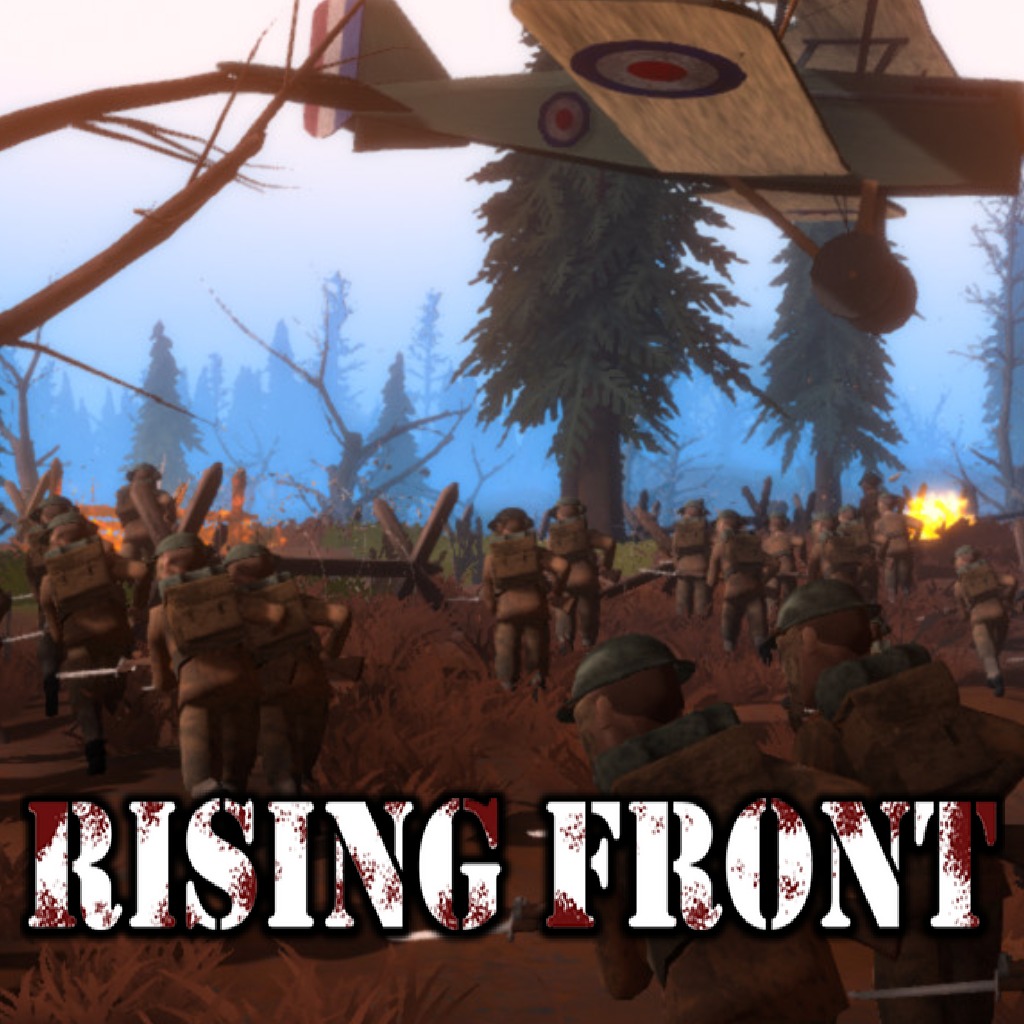
Visually, Rising Front opts for clarity and mood over flashy effects. Environments are detailed without being distracting, and the battlefield is easy to read at a glance. Terrain features are clearly defined, helping players quickly assess tactical options during high-pressure moments.
The colour palette is muted, reinforcing the grim tone of prolonged conflict. Explosions and combat effects are impactful but restrained, ensuring that spectacle never overwhelms strategy.
Sound design plays a crucial role in immersion. The distant rumble of artillery, the crack of gunfire, and the ambient noise of the battlefield all work together to create a convincing sense of scale and tension. Audio cues also provide valuable tactical information, subtly alerting players to threats without relying solely on visual indicators.
AI and Challenge
Enemy AI in Rising Front is generally competent and occasionally ruthless. Opponents respond dynamically to player actions, exploiting weaknesses and reinforcing vulnerable positions when given the chance. While there are moments where AI behaviour can feel predictable, these are relatively rare and rarely undermine the overall experience.
Difficulty scales well, offering a satisfying challenge without veering into unfair territory. The game rewards preparation and adaptability rather than punishing experimentation outright. Failures often feel like learning opportunities rather than arbitrary setbacks.
For players who enjoy refining strategies and mastering systems, Rising Front provides ample room for growth. Each loss teaches something new, and each victory reinforces the importance of careful planning.
Replay Value and Longevity
Replayability is one of Rising Front’s strongest attributes. The variability of engagements, combined with the game’s systemic depth, ensures that no two matches feel exactly alike. Different approaches can lead to vastly different outcomes, encouraging experimentation with tactics and unit compositions.
The game’s structure lends itself well to repeat playthroughs, particularly for players who enjoy optimising strategies or tackling higher difficulty settings. While it may not offer a vast array of modes or narrative branches, the core gameplay loop is strong enough to sustain long-term interest.
That said, players seeking a heavily narrative-driven experience may find the presentation somewhat restrained. Rising Front prioritises mechanics and atmosphere over storytelling, which aligns with its strategic focus but may limit its appeal for some audiences.
Final Verdict
Pros:
- Deep, thoughtful tactical gameplay
- Strong pacing and tension throughout battles
- Clear visual design and effective soundscape
- Rewarding learning curve and replay value
Cons:
- Limited narrative framing
- Occasional AI predictability
- May feel slow for players who prefer fast-paced action
Summary:
Rising Front is a confident and well-executed strategy game that values patience, planning, and tactical awareness above all else. It doesn’t chase trends or spectacle, instead delivering a grounded experience that respects the intelligence of its audience. While its slower pace and restrained storytelling won’t appeal to everyone, players who enjoy deliberate, meaningful decision-making will find a lot to admire here.
By focusing on clarity, challenge, and consequence, Rising Front earns its place as a compelling addition to the tactical warfare genre — one that rewards those willing to think before they act.