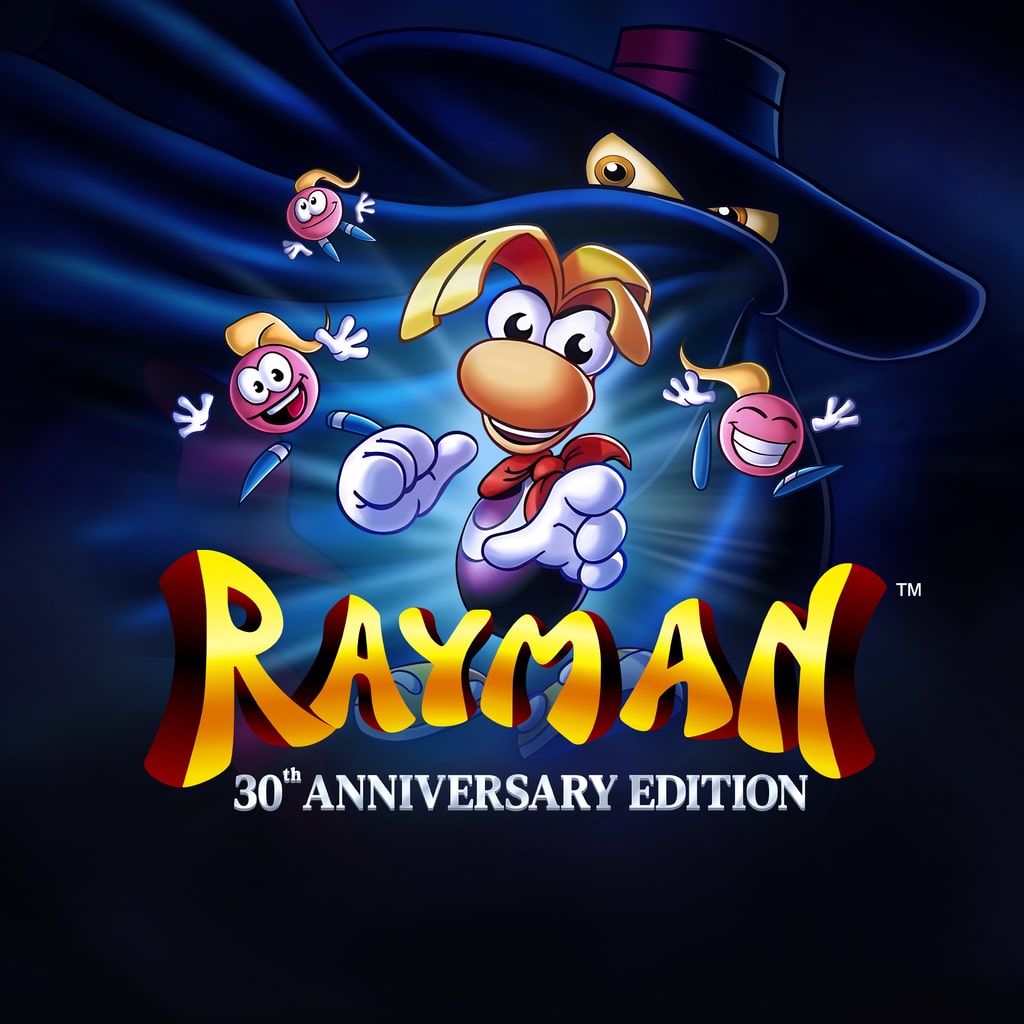
Rayman: 30th Anniversary Edition Review
A Gold Master Tribute to a Limbless Legend
When Rayman first launched in 1995, it didn’t just introduce a new mascot — it introduced a visual identity. Hand-drawn animation. Surreal worlds. A hero without limbs who somehow felt more expressive than most fully articulated characters of the era.
Thirty years later, Rayman: 30th Anniversary Edition arrives as a lovingly assembled archival package developed by Digital Eclipse in collaboration with Ubisoft Montpellier. More than a simple remaster, this is a curated museum piece — a playable documentary celebrating one of platforming’s most distinctive classics.
It’s nostalgic.
It’s challenging.
And it’s far more comprehensive than anyone expected.
A Time Capsule Done Right
Rather than modernize the original into a full remake, the 30th Anniversary Edition preserves history.
Included in the bundle are five original versions of Rayman:
- MS-DOS
- PlayStation
- Atari Jaguar
- Game Boy Color
- Game Boy Advance (Rayman Advance)
Each version is faithfully emulated with subtle modern enhancements — rewind, save states, accessibility toggles — but without sacrificing authenticity.
The Atari Jaguar version, long considered by purists to be the most vibrant and technically complete, shines particularly bright here. Colors pop. Parallax layers feel richer. Background animation breathes in ways that were muted in later ports.
This isn’t just about nostalgia.
It’s about preservation.
The Long-Lost SNES Prototype
The headline feature — and a genuine historical treat — is the playable SNES prototype.
This unfinished build reveals an alternate direction Rayman could have taken. Character movement feels subtly different. Level layouts are experimental. Some enemy placements never made it to retail.
It’s not a fully polished experience, but it’s fascinating.
For fans of game history, this inclusion alone elevates the package beyond standard re-releases.
120+ Bonus Levels: The Forgotten Era
Rayman’s legacy extended far beyond the original cartridge. PC expansions like Rayman Designer, Rayman By His Fans, and Rayman 60 Levels became cult curiosities over the years.
Now, all 120+ of those additional levels are compiled here.
Some are clever.
Some are brutally punishing.
A few feel more experimental than polished.
But together, they represent a forgotten chapter of platforming history. For veterans who mastered the base game decades ago, these bonus stages offer a fresh gauntlet.
And make no mistake — Rayman remains punishing.
Brutal Beauty
Revisiting the original 1995 campaign is a reminder of how uncompromising 90s platformers could be.
The Dream Forest still enchants with its watercolor-like palette. The mosquito ride remains iconic. Band Land’s musical chaos still feels inventive.
But difficulty spikes are real.
Enemy placement can feel merciless.
Checkpoint spacing is sparse.
The difference now? You have options.
Quality of Life Without Compromise
Digital Eclipse has added a thoughtful suite of modern features:
- 60-second rewind
- Infinite lives toggle
- Instant level unlocks
- Multiple save slots
- Accessibility adjustments
These tools don’t dilute the core design — they empower players to experience it on their own terms.
Want the pure 1995 challenge?
Turn everything off.
Want to see the full game without controller-throwing frustration?
Rewind is your friend.
It’s preservation with compassion.
The Reimagined Soundtrack
While the original compositions remain intact, the edition also features a high-fidelity reinterpretation by Christophe Héral (best known for his work on Rayman Origins and Rayman Legends).
The updated arrangements add warmth and orchestral depth without overpowering the playful tone of the originals.
Switching between classic and remastered audio is seamless.
And it’s a subtle reminder of how musically inventive Rayman always was.
The Interactive Documentary
Digital Eclipse has become synonymous with interactive documentaries, and this release continues that tradition.
Over 50 minutes of interviews with original developers explore:
- The creation of Rayman’s limbless design
- Early technical hurdles
- The shift from 16-bit development to 32-bit platforms
- Ubisoft’s transformation during the mid-90s
Concept art, sketches, and internal design documents provide context that elevates this from “retro collection” to “archival project.”
It’s not fluff.
It’s substantive.
And for long-time fans, deeply satisfying.
Performance Across Platforms
The release launched simultaneously on PlayStation 5, Xbox Series X|S, Nintendo Switch, Switch 2, and PC.
The Switch 2 version stands out with 4K UI scaling and virtually zero input latency, making the tight platforming feel crisp.
Load times are minimal across all systems.
Emulation is stable.
This is a technically polished package.
Where It Shows Its Age
For all its beauty and historical importance, Rayman is still a product of 1995 design philosophy.
Enemy telegraphing isn’t always clear.
Backtracking for Electoons can feel grind-heavy.
Some later levels border on trial-and-error cruelty.
Modern players accustomed to forgiving platformers may find the pacing archaic.
But that’s part of the experience.
Rayman was never easy.
It was expressive.
Demanding.
And unapologetically old-school.
The Collector’s Touch
A physical edition shipping in June 2026 will include postcards, stickers, and a poster — a thoughtful nod to 90s packaging culture.
Even digitally, the presentation menu feels curated rather than dumped together.
Every version is contextualized.
Every bonus feature feels intentional.
Final Verdict
Rayman: 30th Anniversary Edition is more than a celebration.
It’s preservation done properly.
By including five original versions, rare PC expansions, the SNES prototype, a reimagined soundtrack, and a meaningful documentary, Digital Eclipse has created a package that respects both history and players.
The core game remains challenging — sometimes brutally so — but modern quality-of-life features make it accessible without erasing its identity.
It’s not a remake.
It’s a museum exhibit you can jump through.
And in an era where classic games are often hastily ported, this stands as an example of how to do it right.