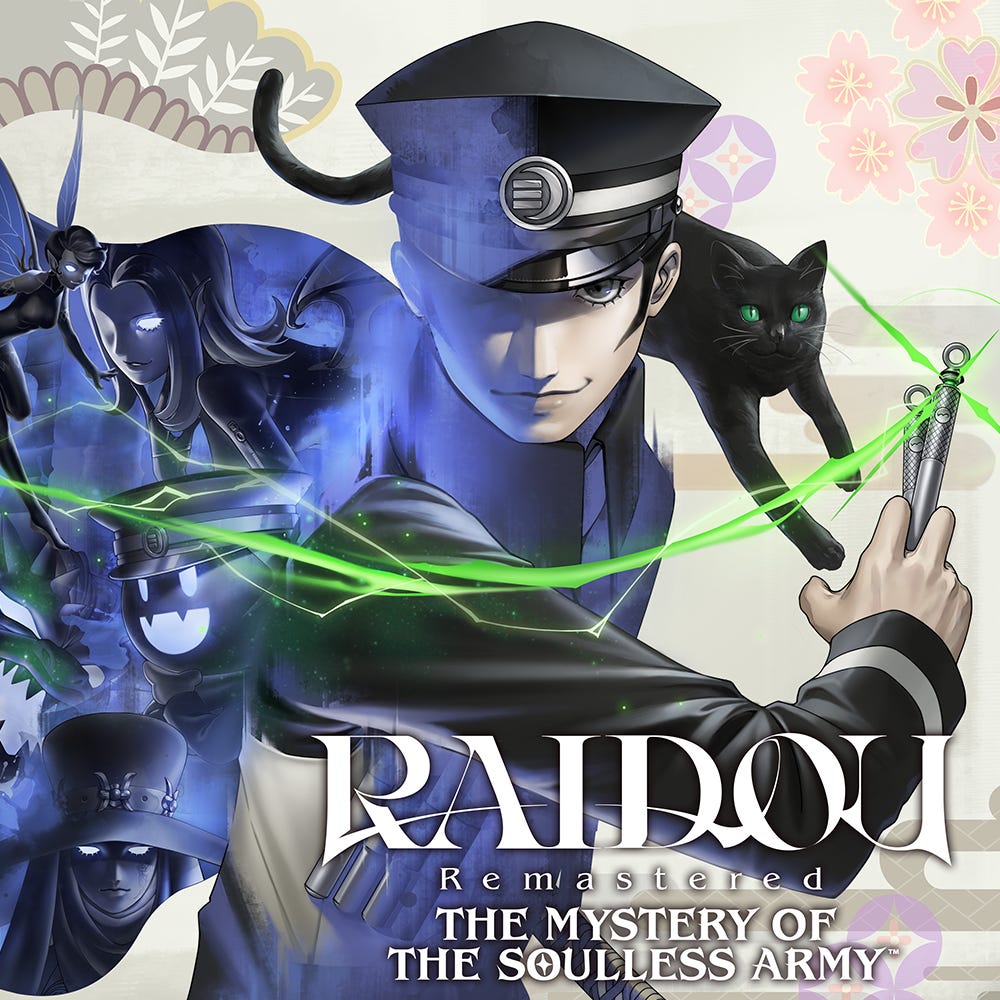
When Shin Megami Tensei: Devil Summoner – Raidou Kuzunoha vs. The Soulless Army first hit PlayStation 2 back in 2006, it was one of Atlus’ strangest and most stylish experiments. A fusion of supernatural detective drama, real-time demon combat, and Taisho-era noir, it stood apart even within its own franchise. Raidou Remastered: The Mystery of the Soulless Army brings that eccentric gem into the modern era, and while its vintage roots still show, this polished return makes a strong case for why Raidou deserves another spotlight.
Set in an alternate 1930s Tokyo brimming with jazz-age flair and occult intrigue, Raidou Remastered casts you as Raidou Kuzunoha the 14th, a silent but sharp young detective tasked with protecting the Capital from spiritual disturbances. Alongside his sardonic talking cat, Gouto, Raidou balances his role as a student and devil summoner — part exorcist, part private eye. What begins as a routine missing persons case soon spirals into a conspiracy involving mechanized soldiers, political corruption, and demonic experimentation. The story remains one of Atlus’ most atmospheric and well-paced narratives, steeped in mystery and melancholy but punctuated by dry humor and stylish weirdness.
A Revival That Respects Its Roots
The remaster doesn’t reinvent the wheel, but it meaningfully enhances the experience. Atlus has rebuilt the game’s visuals with crisp HD models and reworked lighting, retaining the painterly PS2 aesthetic while giving environments new vibrancy. The bustling streets of Tsukudo-Cho, the eerie glow of the Dark Realm, and the Art Deco offices of the Narumi Detective Agency all look beautifully preserved and subtly refreshed. Character models have sharper definition, and the expressive demon designs — from classic Jack Frosts to hulking Ose demons — pop like never before.
The soundtrack, always a highlight, receives a faithful remastering. The mix of brass-driven jazz, melancholic piano themes, and gothic undertones perfectly complements the setting. Hearing the battle themes in full clarity adds extra punch to each skirmish, and the voice acting, newly recorded for this version, adds life to a cast that was once largely silent.
Combat Reforged
Where Raidou Remastered makes its biggest improvements is in combat. The original game’s real-time battle system was ambitious but clunky; this version tightens responsiveness and adds a smoother lock-on mechanic. You still summon up to two demons at a time to fight beside you, and commanding them feels much more natural. Demons now have smarter AI, meaning they’re less likely to stand idly by or waste energy on ineffective attacks. You can still pause mid-battle to issue direct orders, but you won’t need to micromanage as heavily.
Demon negotiation — a Shin Megami Tensei staple — has been streamlined too. Conversations flow more naturally, and success rates feel fairer. Captured demons can be fused to create stronger allies, with the revamped fusion UI making it easier to compare stats and skills. The system rewards experimentation, letting you build a team that fits your preferred playstyle. Whether you favor brute-force Oni or trickster-type spirits, there’s a satisfying sense of progress as your supernatural roster grows.
The difficulty curve remains challenging but less punishing. Atlus wisely added optional auto-save and adjustable difficulty settings, giving newcomers a way in without dulling the game’s teeth. Boss fights — including the iconic duels against the mechanical Soulless Army units — feel thrilling again, thanks to sharper controls and more readable attack patterns.
Detective Work Done Right
Outside of combat, the game shines in its investigation sequences. You’ll roam the Tokyo streets gathering clues, interrogating citizens, and using your demon partners to uncover hidden information. Some can possess objects to reveal memories; others can slip through cracks or detect spiritual energy. These detective mechanics have been lightly modernized with a cleaner interface and contextual prompts, reducing backtracking without simplifying the puzzle-solving.
What’s particularly refreshing is how Raidou Remastered captures the rhythm of a noir detective story — each lead leads naturally into the next, and the writing retains its sharp wit. Your mentor, Shouhei Narumi, still provides comic relief, while side characters like the journalist Kaya Daidouji add emotional weight. The pacing feels deliberate but never plodding; every chapter ends on a hook that propels the mystery forward.
Old Soul, New Tricks
Despite its upgrades, Raidou Remastered is still a product of its era in some respects. Movement can feel stiff during exploration, and certain design choices — like limited fast travel or occasional fetch quests — remind you of its mid-2000s origins. Yet these moments are outweighed by the charm of its world and characters. The game’s commitment to its setting and tone gives it an identity few modern RPGs attempt.
Atlus also includes a few thoughtful extras: a museum mode with concept art and developer commentary, an arranged soundtrack option, and post-game challenges that cater to veterans. It’s clear this remaster was handled with care, not as a quick cash grab but as a genuine preservation effort.
Verdict
Raidou Remastered: The Mystery of the Soulless Army stands as both a time capsule and a testament to creative ambition. It’s still a peculiar mix of detective drama, action RPG, and supernatural folklore — but in an age of formulaic reboots, its eccentricity feels refreshing. The improved visuals, smoother combat, and quality-of-life updates make this the definitive way to experience one of Atlus’ most underrated adventures.
If you’re a longtime Shin Megami Tensei fan or simply someone who loves stylish, story-driven RPGs with personality, Raidou’s return to the case files is well worth your attention. The remaster doesn’t erase every rough edge, but like its trench-coated hero, it carries its scars with pride.
Stylish, soulful, and just the right amount of strange — Raidou Remastered proves that even after two decades, the Devil Summoner still has plenty of life left in him.