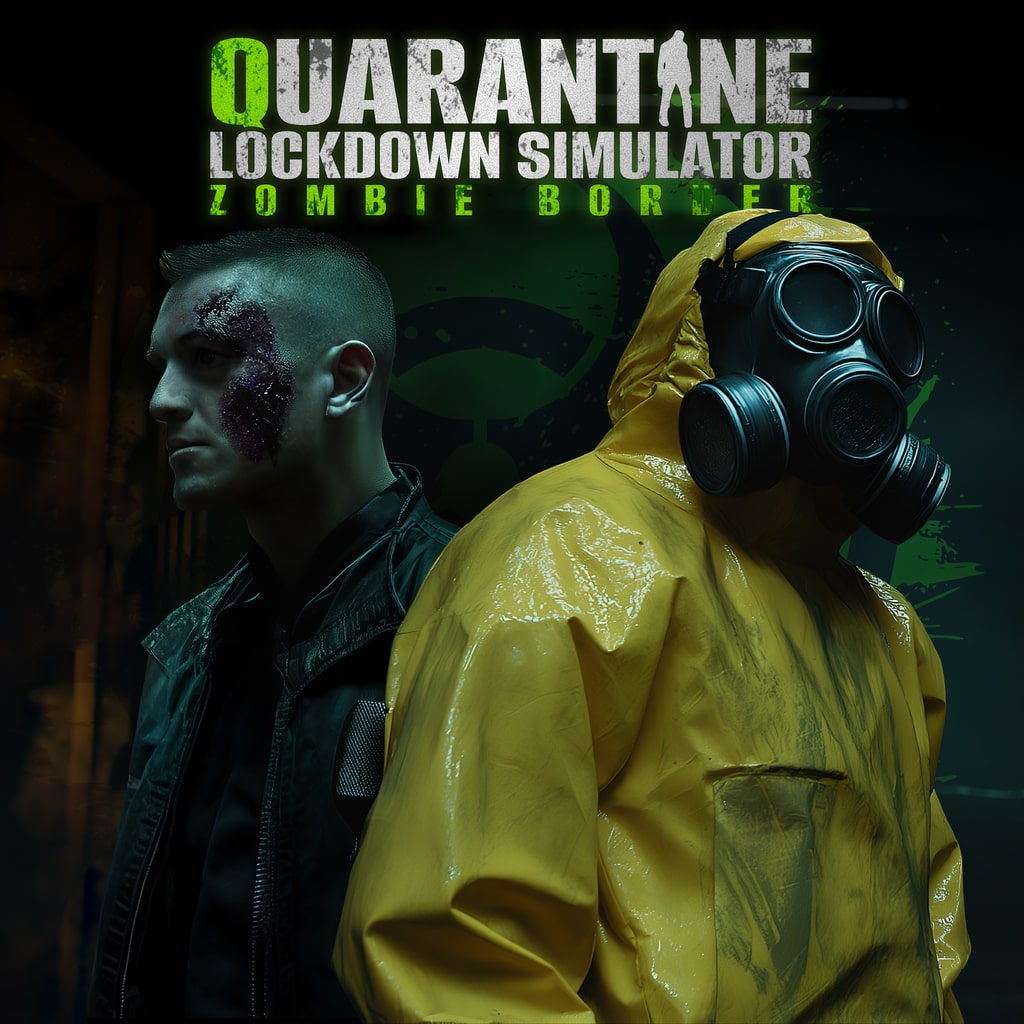
There’s a particular kind of tension that arises not from action, but from making decisions under pressure. The fear of choosing incorrectly. The weight of responsibility. The creeping realisation that one small mistake could undo everything.
That’s the space Quarantine Lockdown Simulator: Zombie Border aims to occupy.
On paper, it’s a compelling premise: a zombie apocalypse viewed through the lens of bureaucracy. You’re not out fighting hordes—you’re standing at a checkpoint, deciding who lives, who gets quarantined… and who doesn’t survive.
It’s a concept clearly inspired by games like Papers, Please, but with a survival horror twist.
The question is: does it deliver on that potential?
The answer is… partially.
A Strong Core Idea
At its best, Quarantine Lockdown Simulator: Zombie Border offers a highly engaging gameplay loop.
Each shift, survivors approach your checkpoint.
You must:
- Inspect their appearance
- Look for signs of infection
- Decide whether to admit, quarantine, or reject them
It’s simple but effective.
The tension arises from uncertainty.
Not every infected person appears obviously ill. Some symptoms are subtle, and others may be completely hidden.
And if you make the wrong decision?
You could condemn the entire camp.
Decision-Making as Gameplay
The game’s most powerful moments occur when it compels you to make tough decisions.
You might encounter:
- A family begging to be let in, but one member looks suspicious
- A healthy individual when your camp is already over capacity
- Someone clearly infected, but pleading for help
These scenarios present genuine moral dilemmas.
Should you play it safe and protect the many?
Or take a risk to save the few?
This is where the game feels most like Papers, Please, conveying that same sense of uneasy responsibility.
Systems That Add Pressure
Beyond basic inspection, the game layers in additional mechanics:
- Quarantine zones that must be monitored
- Resource management, including your own stamina
- Defense sequences where outbreaks must be contained
These systems aim to broaden the experience beyond mere gatekeeping.
And to some extent, they succeed.
Handling multiple responsibilities simultaneously adds a sense of urgency and variety.
However, these systems often feel underdeveloped.
Rather than enriching the gameplay, they sometimes seem like surface-level additions.
A Constant Sense of Tension… at First
In the early hours, the game truly engages you.
You’re learning symptoms, managing limited resources, and trying to stay one step ahead of disaster.
Every decision feels significant.
But as time passes, cracks begin to appear.
Patterns emerge.
Scenarios repeat.
And the tension that once felt sharp starts to fade.
Repetition Sets In
.
You’ll start to notice:
- Recycled character models
- Repeated dialogue and scenarios
- Predictable symptom patterns
Once you grasp the systems, the challenge moves from thinking to consistent execution.
And that’s where the game loses some of its impact.
Presentation: Functional, Not Memorable
Visually, the game fulfills its purpose, but not much more.
Character models are simple, environments are limited, and animations can seem stiff.
The UI is straightforward but lacks refinement.
On PlayStation 4, performance remains stable, though not notably impressive.
The Nintendo Switch version, while playable, exhibits some compromises in visual quality and smoothness.
This isn’t a game you enjoy for its presentation.
It’s a game you appreciate for its concept.
Tone and Atmosphere
Where the game does succeed is in its tone.
There’s a constant sense of unease:
- The quiet desperation of survivors
- The sterile, controlled environment of the checkpoint
- The ever-present threat of infection
It’s not outright terrifying, but it creates a subtle psychological pressure.
You’re not afraid of zombies.
You’re afraid of making the wrong call.
Missed Opportunities
What holds the game back most is the sense that it could have been more.
The foundation is there for something truly special:
- Deeper narrative branching
- More complex moral dilemmas
- Expanded management systems
- Greater variety in scenarios
But the current version only scratches the surface.
It feels like a prototype of a great game rather than the finished article.
Pros
- Strong, engaging core concept
- Meaningful decision-making in early gameplay
- Tense atmosphere and moral dilemmas
- Easy to pick up and understand
Cons
- Repetitive scenarios and limited variety
- Underdeveloped supporting systems
- Basic visuals and presentation
- Lacks long-term depth
Final Verdict
Quarantine Lockdown Simulator: Zombie Border is a game built around a brilliant idea.
Being the last line of defence in a zombie outbreak—not through combat, but through judgment—is a fresh twist on the genre.
And for a time, it works.
The early hours are tense, engaging, and filled with meaningful decisions.
However, as the experience progresses, repetition and a lack of depth begin to detract.
What starts as a gripping simulation gradually turns into routine.
It’s not a poor game.
It’s just one that doesn’t fully realise its potential.
If you’re interested in decision-based gameplay and moral dilemmas, there’s definitely something here to enjoy.
Just don’t expect it to hold your attention for the long run.