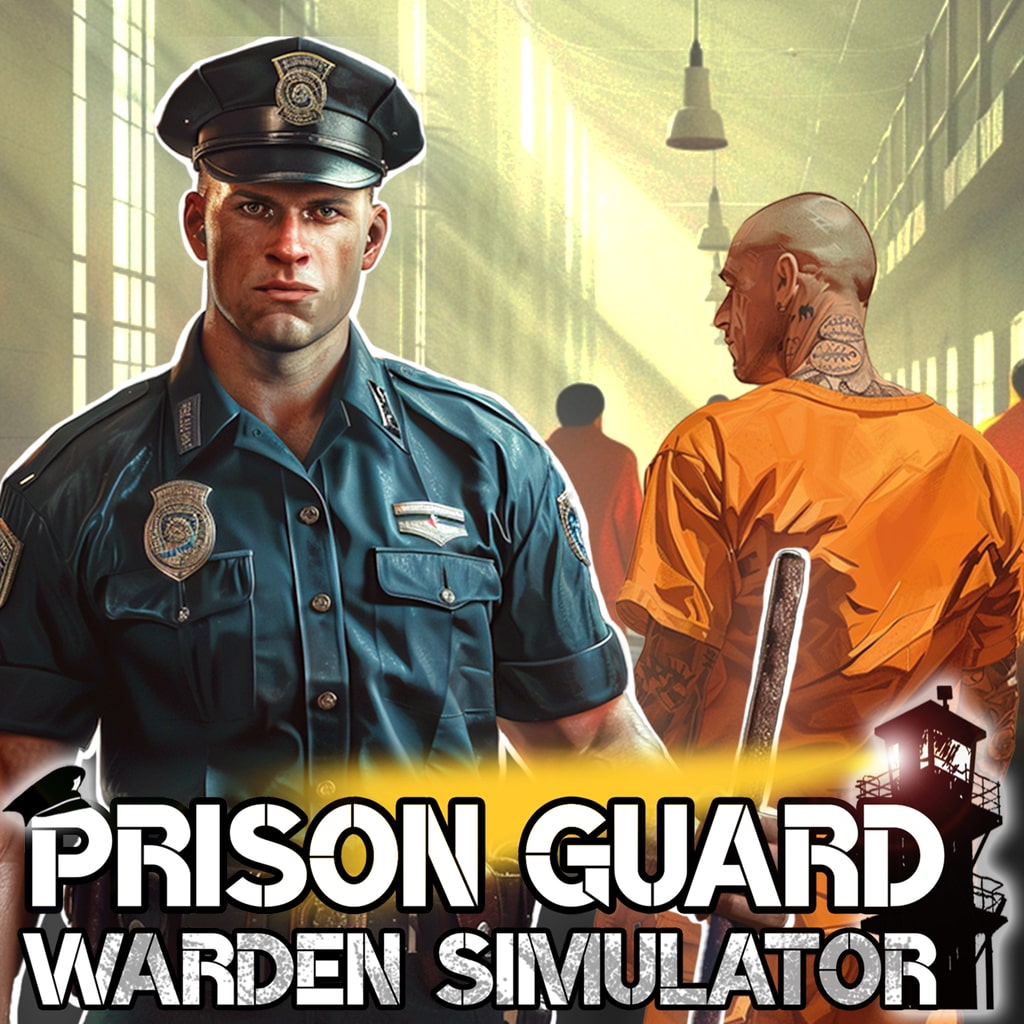
Prison simulators typically fall into one of two categories: gritty, morally heavy management sims, or exaggerated, slapstick “chaos” games focused on mischief rather than realism. Prison Guard: Warden Simulator attempts something more ambitious and arguably more interesting—it aims to sit directly between these extremes. It combines boots-on-the-ground guard duties, top-down facility administration, and a branching narrative about leadership, order, and the ethical tightrope walked by those who run correctional institutions.
The result is a rough-edged but surprisingly immersive simulation experience. At times, it’s intense and dramatic; at others, it’s mundane in exactly the right way. While it stumbles here and there due to uneven pacing and some AI inconsistencies, Prison Guard: Warden Simulator delivers one of the most engaging takes on prison management we’ve seen in recent years.
A Dual Identity: Guard AND Warden
The game opens with a simple premise: you start as a rank-and-file guard in a deteriorating correctional facility. Cells are overcrowded, tensions are high, and the previous warden has vanished under suspicious circumstances. Through a combination of performance, decision-making, and political maneuvering, your character gradually rises through the ranks, eventually stepping into the role of warden.
This dual progression is the beating heart of the experience. Early gameplay is grounded, intimately stressful, and hands-on: patrolling corridors, breaking up fights, escorting prisoners, conducting searches, tracking contraband, and responding to alarms. Later, as warden, the perspective expands into planning, budgeting, reform initiatives, staff hiring, facility upgrades, and handling media pressure.
It’s rare for a simulator to convincingly merge first-person action with high-level administration, but Prison Guard: Warden Simulator pulls it off with surprising fluidity.
Guard Duty: Boots on the Ground, Tension in the Air
The first half of the game focuses on performing guard duties from a first-person or third-person perspective. Here, the game shines.
Daily Routines with Real Impact
Your responsibilities include:
- supervising prison yard time
- conducting cell inspections
- monitoring contraband hotspots
- escorting inmates to appointments
- intervening during altercations
- responding to riots, fires, or medical emergencies
What makes these routines engaging is the dynamic inmate AI. Prisoners have individual personalities, needs, grudges, and alliances. They observe your behaviour and react organically to fairness, negligence, or excessive force.
A harsh or corrupt guard may see escalating violence; a fair and consistent one may witness more cooperation. Your small actions ripple outward through the prison ecosystem.
Moments of Film-Level Intensity
The game doesn’t shy away from hard moments. Fights break out suddenly. Inmates may set traps. Contraband can lead to dangerous consequences. Emergency lockdowns turn familiar spaces into pressure cookers of tension.
These sequences are cinematic without feeling scripted. They elevate the experience into something more gripping than a traditional sim.
The Warden Phase: Strategy, Ethics, and Long-Term Planning
Eventually, through promotion or narrative events, you’re given the keys to the entire facility. The shift is dramatic—but welcome.
Management Depth
As warden, you control:
- staff hiring and training
- prison layout redesign
- security upgrades
- inmate programs (education, therapy, labour, recreation)
- disciplinary policies
- budgeting and supply ordering
- reputation management
The game truly opens up here. You can build a rehabilitative institution focused on reducing recidivism or a high-security fortress emphasizing strict discipline. Each direction has clear gameplay consequences.
Ethical Decision Making
One of the game’s strengths is how it frames moral choices:
- Do you approve a controversial solitary confinement expansion?
- Do you negotiate with gang leaders or crack down aggressively?
- Do you invest in mental health staff or surveillance systems?
- Do you ignore corruption among guards or risk destabilising morale by exposing it?
These decisions affect inmate behaviour, staff loyalty, budget efficiency, and the broader narrative. The balancing act feels real: economic, social, and human considerations all intersect.
AI Behaviour: Ambitious but Imperfect
Prison Guard: Warden Simulator features an ambitious inmate simulation system. Prisoners have needs such as:
- hunger
- safety
- privacy
- gang allegiance
- emotional stability
They chat, argue, trade, form alliances, and occasionally betray one another. They seek weak points in routines and exploit them creatively.
However, the AI occasionally struggles:
- prisoners repeat certain behaviours too often
- guards sometimes glitch during escort sequences
- large disturbances can cause pathfinding chaos
These hiccups don’t ruin the experience but remind you that the system is reaching beyond typical simulation boundaries.
Presentation: Grit Without Gratuitousness
Visually, the game straddles realism and stylisation. The prison feels utilitarian and bleak without descending into grimdark shock value. Lighting plays a significant role, especially during night shifts or lockdowns. The soundscape—distant shouting, metal-on-metal echoes, radio chatter—sells the atmosphere beautifully.
Animations can be stiff, but the overall presentation supports immersion effectively.
Music is minimal but atmospheric, with tense low-frequency rumbling during crises and somber ambient tones during patrols.
Performance and Features
The game runs smoothly on modern hardware, though large riots or high-population facilities can introduce dips. Load times are reasonable, and an auto-save system ensures progress isn’t lost during chaotic moments.
Accessibility options include:
- simplified combat
- color-blind UI modes
- adjustable inmate aggression levels
- reduced graphic violence settings
These options make the game approachable without losing its identity.
Where It Falters
Despite being a strong simulation title, the game does stumble:
- Some story events trigger too abruptly, interrupting gameplay flow.
- Economic balancing can feel harsh early on, leaving little room for error.
- Certain guard tasks become repetitive during long sessions.
- Prisoner variety is good but could benefit from more unique behaviours.
- Late-game management sometimes lacks new challenges after stabilising the prison.
With updates, these areas have clear room to grow.
Verdict: An Ambitious, Atmospheric, and Surprisingly Thoughtful Prison Simulator
Prison Guard: Warden Simulator sets itself apart by refusing to be just one thing. It’s part management sim, part narrative drama, part boots-on-the-ground action game, and part ethical playground. Its hybrid structure is bold and occasionally messy, but when everything comes together, it produces some of the most immersive and memorable moments in the simulation genre.
Players who enjoy deep systems, dynamic AI, tough choices, and tense boots-on-the-ground gameplay will find a lot to love. It’s not always polished, but it is always engaging.