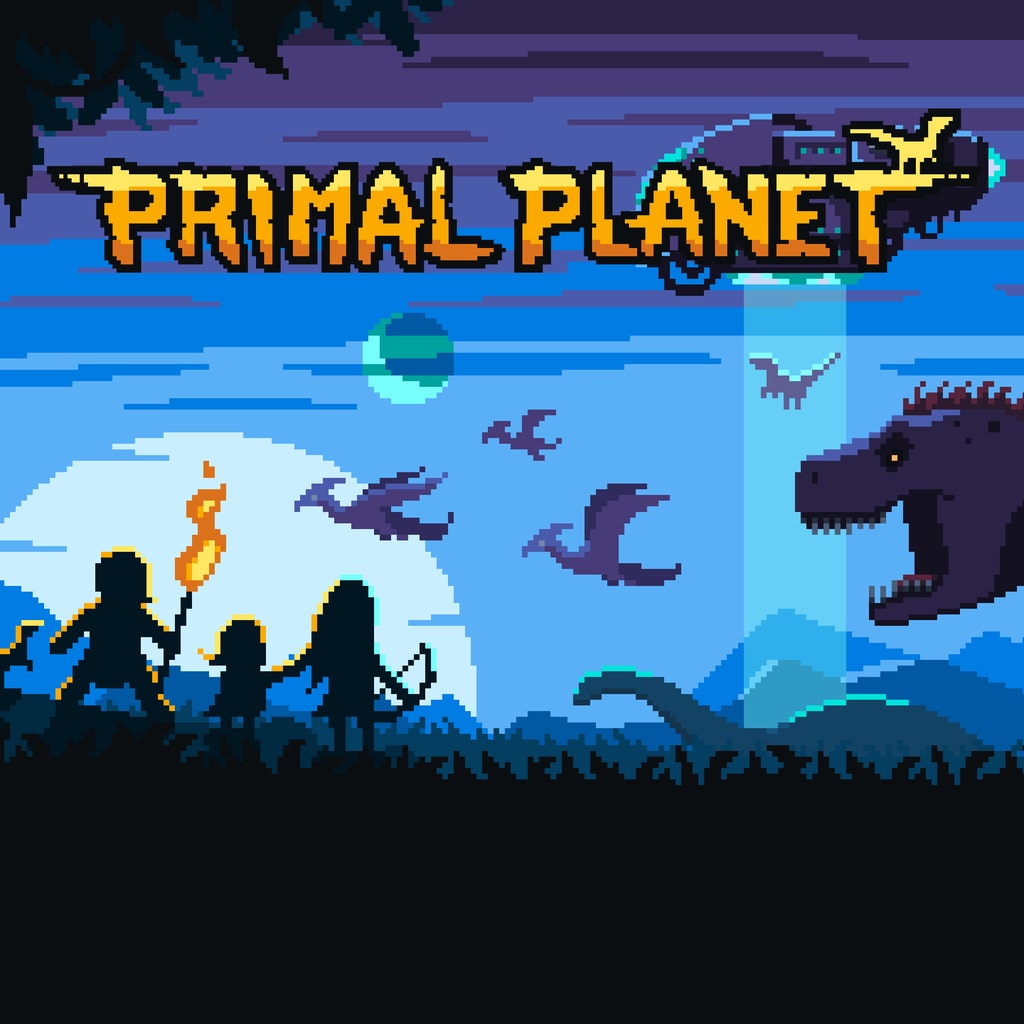
There is a distinct audacity to Primal Planet that immediately distinguishes it from the increasingly crowded metroidvania genre. Developed almost entirely by solo creator Albert under the studio name Seethingswarm, this so-called “dinovania” combines prehistoric survival fiction with unexpected science fiction twists, creating a game that is as emotionally grounded as it is structurally wild.
Initially released on PC in 2025 and now available this week in its “Complete Edition” on PlayStation and Xbox platforms, Primal Planet is more than just a port—it’s an evolution. It features post-launch balance changes, a redesigned map system, and expanded progression for the dinosaur companion Sino, making this the most accessible and polished version yet.
What emerges is a captivating hybrid: part survival platformer, part crafting simulation, part emotional family drama, and part alien conspiracy thriller. It shouldn’t work as well as it does — yet, very often, it unquestionably does.
A Father, a Dinosaur, and the End of the World
At its core, Primal Planet is about survival and protection. You play as a prehistoric father whose life is shattered after a brutal encounter with a Tyrannosaurus Rex. What begins as a simple struggle for survival quickly evolves into something far stranger, as alien technology and UFOs start to reshape the world beneath its prehistoric surface.
The narrative tone is one of the game’s most distinctive features. It begins with grounded emotional stakes—family, loss, survival—but gradually transforms into something more akin to speculative sci-fi mythology. This shift is not subtle, and it may divide players, but it imparts a sense of escalating mystery that sustains its momentum.
Rather than depending on dialogue-intensive storytelling, Primal Planet relies on environmental cues, animation, and gameplay-driven narrative progression. This approach imparts a sense of quiet intimacy to the world, even as it becomes increasingly surreal.
Metroidvania Structure with Survival DNA
At a structural level, Primal Planet comfortably fits within the metroidvania genre. Exploration is limited by ability upgrades, environmental traversal enhancements, and map expansion. However, it sets itself apart through its survival and crafting systems, which introduce an extra layer of resource management rarely seen in the genre.
Players collect natural materials to craft weapons, healing items, traps, and utility tools. These systems are not just add-ons—they are vital for progression. Combat encounters are often designed around planning rather than improvisation, encouraging players to think ahead before facing threats.
This is where the “dinovania” identity is most evident. Encounters are not solely about platforming skill or combat reflexes; they focus on adaptation. Whether facing large prehistoric predators or strange alien constructs, players are constantly encouraged to adjust tactics based on the resources at hand.
The revamped map system in the Complete Edition marks a notable improvement. Navigation becomes clearer, progression tracks are more visibly signposted, and backtracking feels less tedious than in earlier versions.
Sino: More Than Just a Companion
One of the game’s most engaging features is its co-op design centred around Sino, your dinosaur companion. In single-player, Sino functions as an AI partner. In local co-op, a second player can directly control him, turning exploration and combat into a shared experience.
Sino is not merely a combat assistant—he embodies a progression system in his own right. As the game advances, he evolves, unlocking new abilities and behaviours that greatly influence traversal and puzzle-solving.
The bond between father and companion is subtly emotional. Without relying heavily on dialogue, the game conveys attachment through mechanics: calling Sino to aid, protecting him in combat, or using his abilities to access otherwise unreachable areas.
In co-op, this dynamic becomes even more captivating. One player focuses on the human character’s survival tools and combat, while the other manages Sino’s mobility and support abilities. It’s one of the more inventive uses of asymmetrical local co-op in recent indie design.
Exploration and Atmosphere
The world of Primal Planet is its greatest asset. From dense prehistoric forests to vast open plains and deep oceanic regions, each biome feels unique and carefully designed. The pixel-art style remains consistent, balancing detail with clarity even during chaotic encounters.
There’s a strong sense of scale here. Dinosaurs roam in the background with an indifference that makes the player feel small in a way few modern games achieve. Encounters with creatures like Carnotaurus or Apatosaurus are not just combat challenges—they are environmental events.
The introduction of sci-fi elements gradually changes this perception of the world. What starts as a natural ecosystem slowly reveals hidden technological layers, implying a history far more intricate than initially suggested.
This gradual tonal shift is one of the game’s most effective narrative devices.
Combat and Difficulty
Combat on Primal Planet is intentionally deliberate. Instead of fast-paced action, it focuses on positioning, preparation, and environmental awareness. Players typically rely on crafted tools and traps rather than raw offensive power.
Early encounters feel tense and grounded, but later fights become much more complex, especially as alien enemies become more common. These encounters require careful resource management and strategic planning.
However, difficulty balancing is not always consistent. Some mid-game spikes can seem sudden, particularly when resource scarcity coincides with multiple enemy types. While the Complete Edition improves this somewhat, there are still moments where progression feels uneven.
Presentation and Audio Design
The game’s visual identity is one of its key strengths. The pixel art is detailed with animation, especially in creature behaviour and environmental movement. Dinosaurs feel heavy and alive, while weather and lighting effects add depth to exploration.
Sound design is equally impressive. Ambient jungle noises, distant roars, and subtle mechanical hums from alien structures all create a layered audio atmosphere. Music is used sparingly but effectively, often giving way to silence to increase tension.
Where It Struggles
Despite its ambition, Primal Planet has some flaws. The pacing can feel uneven, especially when crafting requirements slow exploration. Inventory management may become repetitive during long sessions, and some traversal parts seem artificially prolonged by resource gating.
The shift into sci-fi, although interesting, might also feel sudden for players expecting a purely prehistoric survival story. While thematically engaging, it can break immersion for those more focused on the grounded survival theme.
Final Verdict
Primal Planet is a bold and highly personal metroidvania that combines survival mechanics, emotional storytelling, and genre experimentation into something truly unique. It is not always perfectly balanced, and its ambition sometimes outstrips its refinement, but its identity remains unmistakable.
It stands as a testament to what a dedicated solo developer can achieve when willing to take creative risks.