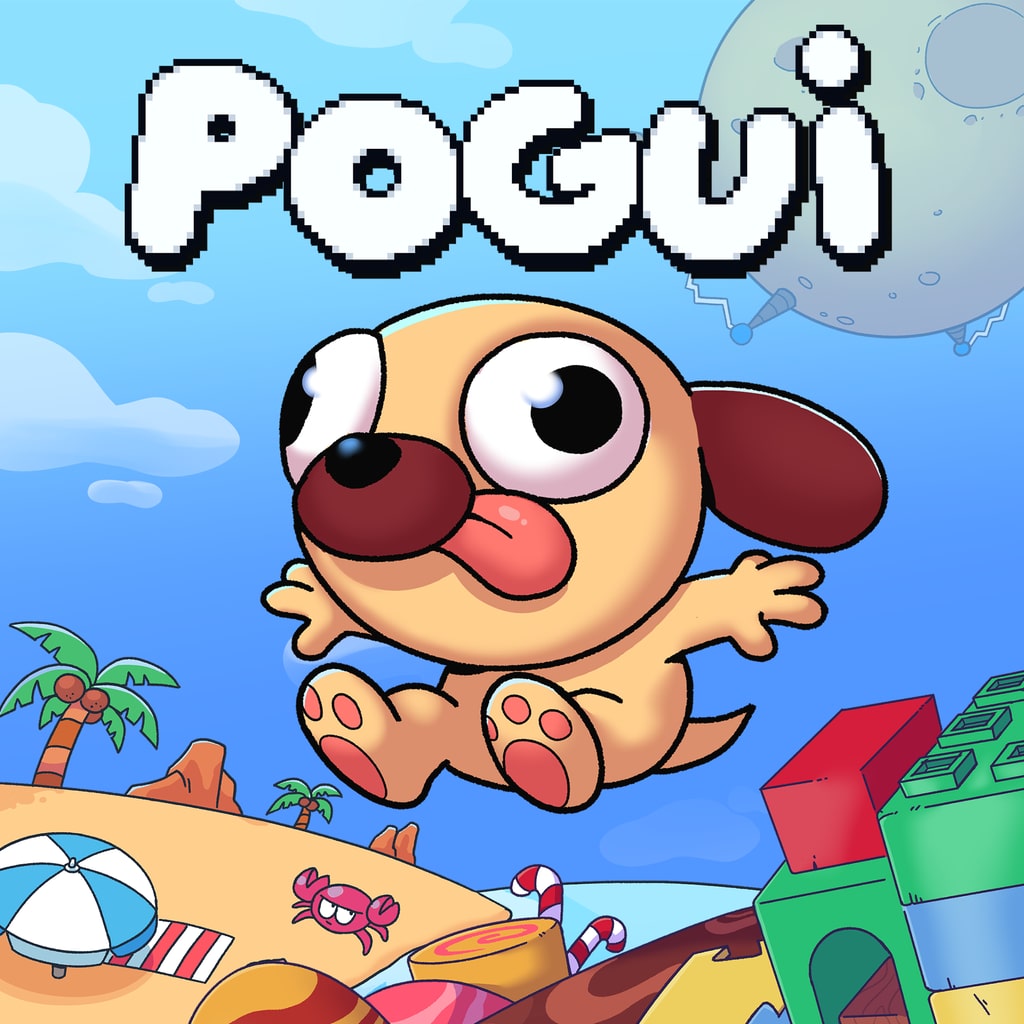
There’s a long tradition in indie platformers of disguising brutal precision gameplay behind cheerful visuals. Pogui, developed by Pufferfish Digital and published by eastasiasoft, proudly joins that lineage — arriving today, February 25, 2026, across virtually every modern platform.
At first glance, Pogui looks like pure comfort gaming: bright pixel art, pastel dream worlds, and an irresistibly sleepy dog protagonist simply searching for a quiet place to nap. But beneath its soft exterior lies a tightly designed precision platformer that demands timing, patience, and mastery.
It’s small in scope, affordable in price, and refreshingly focused — a game that understands exactly what it wants to deliver and wastes no time getting there.
And sometimes, that’s exactly what a platformer needs.
A Simple Story Done Right
Narratively, Pogui keeps things minimal.
You play as Pogui, a tiny dog navigating surreal dreamscapes in pursuit of one universal goal: sleep. Each world represents a whimsical interruption preventing that peaceful nap — toy-filled environments, candy-colored landscapes, beaches, and abstract dream realms that feel pulled straight from a child’s imagination.
There’s no dialogue, no lengthy exposition, and no lore dumps. Instead, storytelling unfolds visually through transitions between environments and subtle environmental cues.
It’s charming without trying too hard.
This restraint works in the game’s favor. Rather than interrupt gameplay with narrative beats, the story complements the tone: light, cozy, and quietly humorous.
Pogui doesn’t need saving. He just needs rest — and somehow that makes every jump feel oddly relatable.
Precision Platforming Beneath the Cuteness
Make no mistake: Pogui is a precision platformer first and foremost.
Early stages ease players in with forgiving jumps and wide platforms, but difficulty ramps steadily. Soon you’ll be navigating spike corridors, moving hazards, collapsing platforms, and tightly spaced obstacles requiring pixel-perfect timing.
Movement feels crisp and responsive — the single most important quality for a game of this type.
Core mechanics include:
- Running and jumping with tight physics
- Mid-air dashing for directional control
- Glide mechanics for extended traversal
- Stamina management that limits overuse of abilities
The stamina system adds subtle strategy. Players cannot spam dash or glide endlessly, forcing thoughtful movement rather than panic recovery.
Failures feel fair. When you miss a jump, you understand why — and that clarity encourages immediate retries instead of frustration.
Respawns are quick, checkpoints are generous, and the game maintains momentum even during tougher sequences.
It’s challenging, but rarely punishing.
Level Design: Small Spaces, Smart Ideas
What makes Pogui stand out is its efficient level design.
Stages are compact but densely packed with ideas. Rather than stretching mechanics across long levels, each stage introduces a concept, explores it thoroughly, then moves on before overstaying its welcome.
You’ll encounter:
- Moving platform chains
- Timing-based hazard cycles
- Vertical climb challenges
- Momentum-focused dash sequences
- Environmental mechanics unique to each biome
This constant evolution keeps the experience feeling fresh despite its short runtime.
Importantly, difficulty increases through smarter design rather than faster reaction demands. The game teaches mechanics visually, allowing players to learn through play instead of tutorials.
It’s classic platformer philosophy executed cleanly.
Collectibles and Replayability
Hidden throughout levels are floating snacks and golden bones — optional collectibles that reward exploration and mastery.
These items serve several purposes:
- Unlock Dream Medals
- Provide cosmetic outfits for Pogui
- Encourage riskier platforming routes
- Extend replay value beyond completion
Collectibles are positioned cleverly, often requiring mastery of dash and glide mechanics rather than blind exploration.
Completionists will find plenty of motivation to revisit stages, shaving seconds off runs and perfecting routes.
The overworld map structure also makes revisiting levels painless, reinforcing the game’s pick-up-and-play design.
Presentation: Retro Warmth Done Well
Visually, Pogui embraces a vibrant retro pixel aesthetic inspired by late 16-bit platformers.
The color palette is intentionally bright and readable. Hazards stand out clearly against backgrounds, ensuring gameplay clarity never suffers for style.
Animations are simple but expressive — Pogui’s tiny movements, costume changes, and idle behaviors add personality without requiring complex assets.
Each biome carries its own identity:
- Toy-themed dreamlands feel playful and nostalgic
- Candy worlds lean into surreal sweetness
- Beach stages introduce calming visual rhythms
The aesthetic never becomes visually overwhelming, maintaining readability even during intense platforming sections.
Sound design complements the visuals with cheerful chiptune tracks that maintain a relaxed tone even during difficult segments.
It’s comfort gaming presentation executed with polish.
Short but Purposeful
True to many eastasiasoft releases, Pogui is intentionally brief.
Most players will complete the main journey in a few hours, with additional time spent hunting collectibles or perfecting runs.
Rather than feeling incomplete, the brevity works in its favor. The game delivers its mechanics, explores them fully, and concludes before fatigue sets in.
In an era dominated by 50-hour commitments, there’s something refreshing about a tightly contained experience designed for a weekend playthrough.
It respects player time — a quality increasingly rare.
Accessibility and Platform Performance
Across platforms, performance is smooth and stable. Controls feel responsive whether played handheld or on console, and the simplicity of the design ensures consistent performance even on lower-powered hardware.
Accessibility is mostly handled through forgiving checkpoints and readable visual design rather than extensive options menus. While advanced accessibility settings are limited, the game remains approachable thanks to its clear mechanics and fast retry system.
Younger players can enjoy the charm, while experienced platformer fans can chase mastery through collectibles and optimized runs.
Where It Falls Short
While polished, Pogui does have limitations.
Its short runtime may leave players wanting more variety or additional mechanics in later stages. Enemy interactions are minimal, and gameplay remains focused almost entirely on environmental challenges.
Players expecting narrative depth or mechanical evolution beyond platforming may find the experience lightweight.
Additionally, difficulty spikes appear occasionally in later stages, where stamina management becomes less forgiving.
None of these issues break the experience — they simply reveal the game’s intentionally modest scope.
Pros & Cons
Pros
✔ Tight, responsive platforming controls
✔ Charming visual presentation and protagonist
✔ Smart, compact level design
✔ Fair difficulty with quick retries
✔ Excellent value at a low price
Cons
✘ Short overall runtime
✘ Limited gameplay variety beyond platforming
✘ Minimal narrative depth
✘ Occasional late-game difficulty spikes
Final Verdict
Pogui is proof that small games can still leave a strong impression.
It doesn’t reinvent the platforming genre or aim for sweeping ambition. Instead, it delivers a carefully crafted precision platformer wrapped in warmth, charm, and accessibility.
The adorable presentation might suggest a casual experience, but the gameplay reveals thoughtful design built for players who enjoy mastering movement and perfecting execution.
At its modest price point, Pogui feels less like a disposable indie release and more like a lovingly made snack-sized adventure — short, sweet, and satisfying.
Sometimes all you need is a good jump, a clever level, and a sleepy dog chasing a dream.