There is a particular kind of childhood joy tied to food that was never really about eating it. It was about stretching melted cheese until it snapped, twirling noodles around a fork until they became impossible to manage, or pretending dinner was somehow alive before being told to stop playing with it. Those tiny moments of imagination carried a strange energy, in which everyday objects suddenly felt elastic, unpredictable, and full of personality. Noodlebound understands that playful chaos completely.
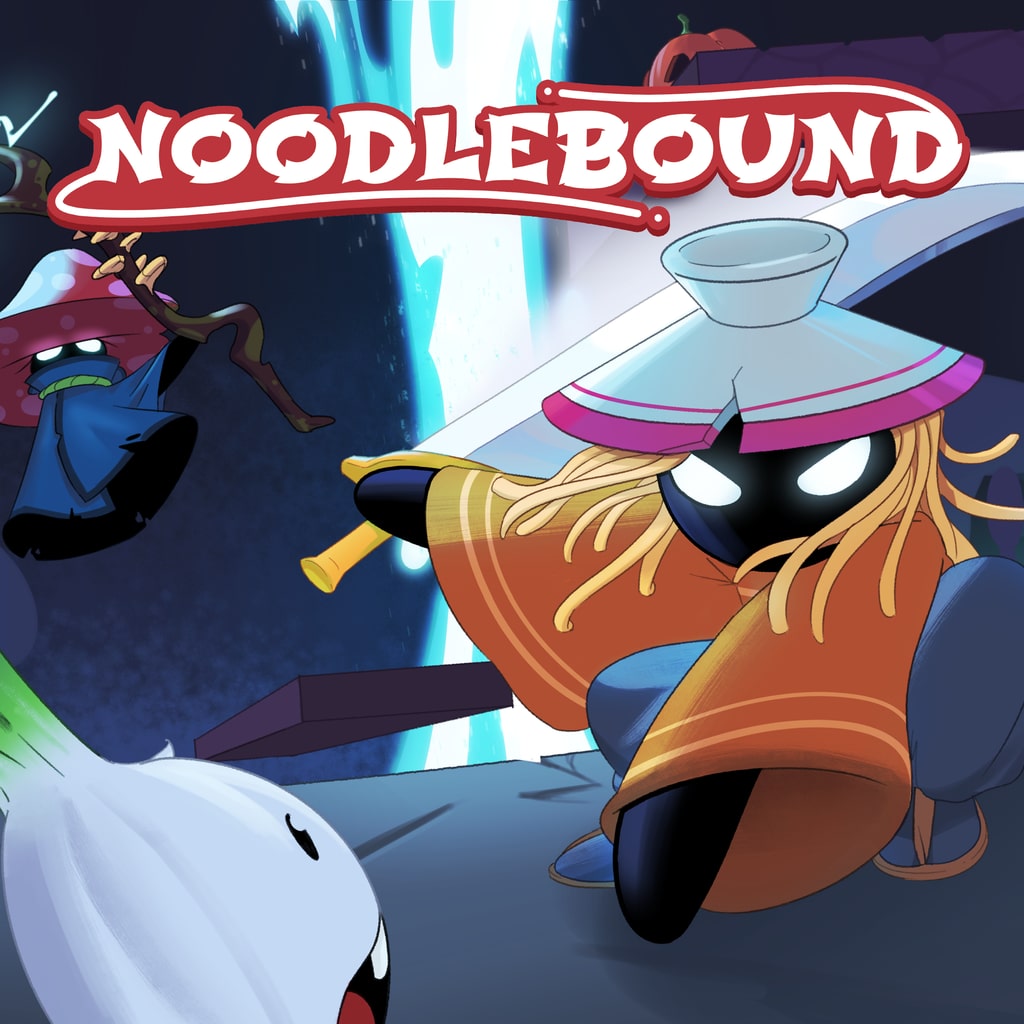
Developed by Klang Games and published by Afil Games, Noodlebound launched this month across PC and consoles, delivering a vibrant 2D action-platformer built around momentum, elasticity, and precision combat. On the surface, it looks like a charming pixel-art adventure about a ramen samurai reclaiming runaway ingredients after a magical disaster strikes. Beneath that colourful exterior lies one of the most mechanically satisfying indie platformers released this year.
This is not a slow, methodical platformer. It is a game about movement with intent. Every leap, dash, tether, and collision matters. The further you progress, the less it feels like a traditional action game and the more it feels like a performance.
The Rhythm of Movement
At the centre of Noodlebound is its extraordinary movement system. Your ramen samurai is neither rigid nor weightless. Instead, they move with elastic momentum that constantly forces you to think ahead. Dashing into walls, rebounding through hazards, and slingshotting yourself between anchor points become second nature over time, but the learning process is what makes the experience memorable.
Many platformers focus on control. Noodlebound focuses on flow. The physics-based movement has an almost tactile quality. You can feel the tension build as you stretch towards an anchor point before launching yourself across a deadly gap. Momentum carries naturally through the environment, and once the game clicks, traversal becomes deeply satisfying. There is an unmistakable rhythm to it all. You stop reacting and start improvising. Some levels feel less like obstacle courses and more like songs waiting to be played correctly.
Combat Through Motion
Combat follows the same philosophy. Rather than separating movement and attacks into distinct systems, Noodlebound fuses them. Enemies are not merely obstacles in your way. They are part of the flow itself.
You slash through foes at high speed, ricochet between targets, and use environmental hazards as extensions of your movement toolkit. In tougher encounters, standing still is usually the worst thing you can do. Success comes from staying mobile and treating combat as an extension of traversal.
This creates fights that feel wonderfully dynamic. One moment you are sprinting across collapsing platforms; the next you are slamming into airborne enemies with enough force to propel yourself towards the next section of the stage.
Boss battles especially benefit from this design philosophy. Each major encounter introduces enemies that demand observation rather than brute force. Giant possessed ingredients, corrupted kitchen spirits, and towering noodle monstrosities all operate on distinct attack rhythms and movement puzzles. The best bosses feel like movement exams disguised as combat encounters.
Thirty Stages Full of Personality
What makes Noodlebound especially charming is how much personality it packs into its relatively compact structure. Across 30 stages, the game consistently introduces new environmental twists without ever feeling bloated.
Some levels lean heavily on speed and momentum. Others focus on hazard navigation or precision platforming. Later stages grow increasingly demanding, layering traps, enemies, and traversal puzzles in ways that genuinely test your reflexes.
The “Knotted Peaks” levels in particular push the game close to precision-platformer territory. Timing windows tighten dramatically, and some sequences require near-perfect execution. Yet the controls remain responsive enough that failure rarely feels unfair. Importantly, the game also knows when to breathe.
Between intense challenge sequences are quieter moments where the pixel-art environments are allowed to shine. Neon-lit marketplaces, bubbling broth caverns, enchanted bamboo forests, and collapsing kitchens all give the world a strange yet inviting atmosphere. It is absurd in concept, yet sincere in execution.
Pixel Art With Real Energy
Visually, Noodlebound is bursting with life. The pixel art is expressive without becoming overly busy, and the animation deserves particular praise.
The protagonist stretches, rebounds, and twists with remarkable fluidity. Enemies wobble and respond dynamically in combat, making every encounter feel kinetic. Even small environmental details, such as steam rising from soup pools or lanterns swaying as they move, contribute to the sense that this world is constantly in motion.
Colour also plays a major role in the game’s identity. Bright oranges, rich reds, and warm golds dominate much of the visual design, creating an aesthetic that feels both comforting and energetic. It is impossible not to smile the first time you launch yourself across a glowing ramen market while noodles and sparks fly across the screen.
Soundtrack of the Flow State
The soundtrack deserves enormous credit for elevating the experience. Klang Games clearly understands how vital music is to momentum-based gameplay.
The lo-fi-inspired soundtrack shifts dynamically depending on how well you are performing. During slower exploration, the music remains calm and understated. But once you begin chaining movement together smoothly, additional percussion and melodic layers emerge naturally.
The result is subtle yet incredibly effective. The game rewards strong play not just mechanically, but emotionally. You feel the soundtrack building around your performance, reinforcing the sensation that you are entering a genuine flow state. Combined with crisp sound effects and satisfying combat impacts, Noodlebound creates an audiovisual identity that feels cohesive from start to finish.
Co-op Chaos
The local co-op “Entwined” mode introduces another clever twist. Two players are physically tethered, making cooperation non-negotiable. You constantly rely on one another for momentum, balance, and positioning. Predictably, this creates absolute chaos.
It is hilarious to watch two players accidentally launch each other into hazards while desperately trying to coordinate their movements. Yet beneath the comedy lies a surprisingly smart co-op system that demands communication and trust.
It transforms the game into something closer to a physics puzzle, where success depends on learning how your movements affect someone else’s momentum.
Where the Noodles Tangle
As mechanically strong as Noodlebound is, it occasionally struggles with readability during its busiest moments. Some later stages throw so many hazards and enemies onto the screen that visual clarity briefly suffers.
The difficulty curve may also push away more casual players. Early stages ease you into the mechanics, but the latter half of the game becomes significantly more demanding. Players unfamiliar with precision platformers may find certain sections exhausting rather than exhilarating.
There is also a lingering sense that the narrative exists mainly as a framework for the gameplay. While the world is charming, the story itself rarely leaves a major emotional impact. Still, these issues never fully derail the experience, as the core movement system remains consistently rewarding.
Final Verdict
Noodlebound succeeds because it understands something many platformers forget: movement itself can be joyful. Every mechanic reinforces that idea, from elastic traversal to momentum-driven combat and a reactive soundtrack.
Its colourful world and playful humour give it immediate charm, but it is the precision beneath the silliness that makes it memorable. This is a game that asks players to trust momentum, embrace chaos, and gradually transform frustration into mastery. It can be brutally demanding at times, and its story never reaches the same heights as its mechanics, but when everything aligns, Noodlebound feels extraordinary.