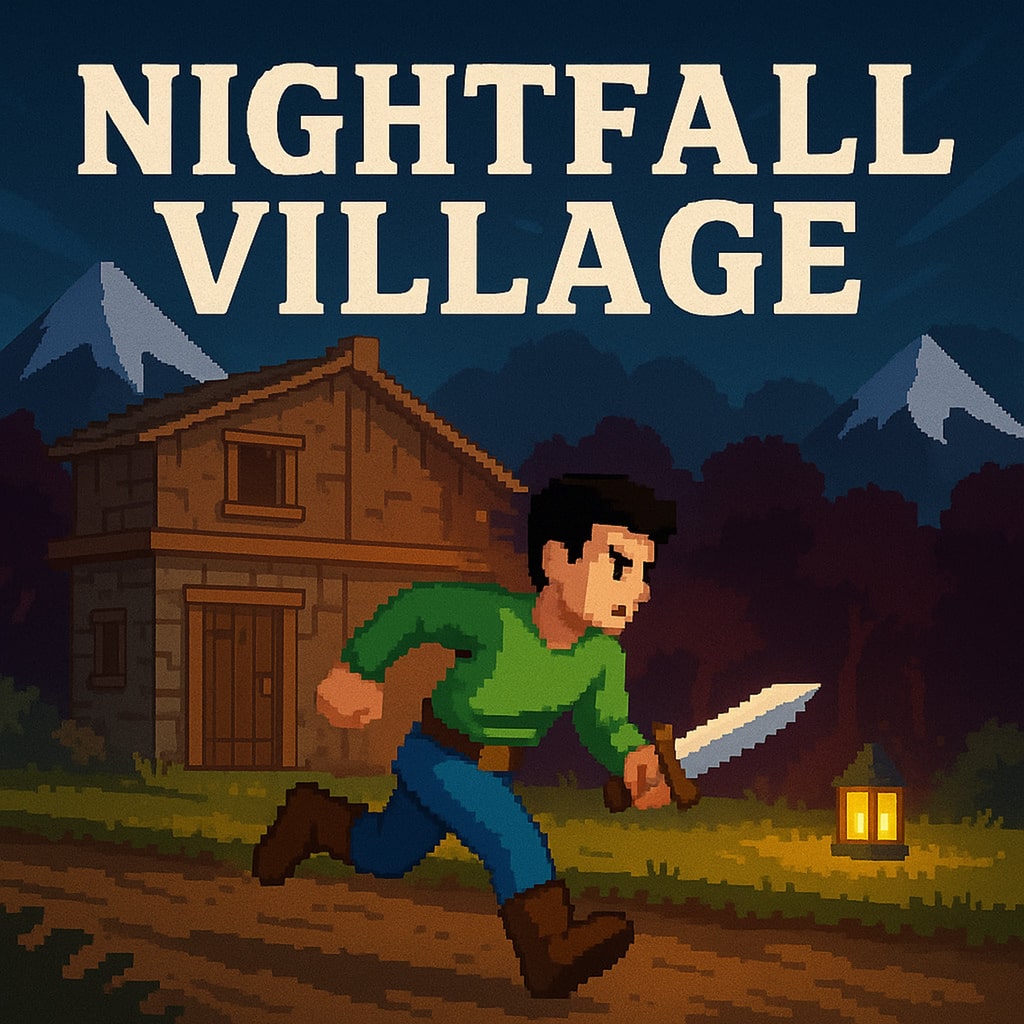
At first glance, Nightfall Village looks like another entry in the crowded field of farming and village simulators. Bright fields, crop cycles, and cheerful villagers suggest an inviting slice-of-life experience. But in the shadows of those fields lurks something far more intriguing: a slow-burn horror undercurrent that transforms routine farming chores into something fraught with tension and consequence. It’s a bold idea — blending pastoral tranquility with eerie storytelling — and Nightfall Village mostly pulls it off with style and surprising emotional depth.
Over the course of dozens of hours, this game evolves from a straightforward village builder into a psychological experience that rewards observation, risk-taking, and ingenuity. You aren’t just planting crops and befriending townsfolk. You’re navigating a community on the brink, watching relationships and personalities develop while unsettling mysteries creep into every horizon.
Harvest Days… But With a Twist
At its core, Nightfall Village functions like many life simulation games: you grow crops, care for animals, upgrade structures, and manage resources to ensure your village thrives. Seasons progress, inventories fill, and every action — sowing, watering, gathering — contributes to a sense of accomplishment.
What sets this title apart, however, is how quickly the pastoral rhythm can be interrupted by unexpected threats. Nightfall brings an unsettling change: shadows lengthen, eerie sounds echo through empty streets, and villagers behave differently — some driven to fear, others to strange obsessions. These fluctuations don’t just add flavour; they demand strategic thinking.
Day cycles encourage productivity and growth, while night cycles test your preparation and resilience. Guarding your village, managing limited resources, and choosing which villagers to trust becomes as vital as deciding what crops to plant. This interplay between day and night gives every action weight, and it ensures that Nightfall Village never feels like a sleepy stroll through predictable terrain.
Storytelling Through Shadows
Narrative in Nightfall Village unfolds organically rather than through cutscenes or heavy-handed storytelling. Instead of dumping plot points in your lap, the game uses character interactions, rumours overheard at the marketplace, and environmental cues to weave its mystery. Tales of disappearances around the forest edge, strange lights over abandoned cabins, and whispered warnings about the Moonlit Marsh become part of the everyday backdrop — until they become impossible to ignore.
Some characters react to nightfall with denial and stubborn routine; others become suspicious, guarded, or even hostile. Your choices — who you trust, who you ignore — influence the community in ways that ripple outward. There’s satisfaction in learning villagers’ backstories and even greater tension in discovering that someone you once trusted may be hiding dark secrets.
This subtle narrative build works because it feels like it grows from the village itself. You’re not a distant observer; you’re embedded in the social fabric of the settlement, and the evolving lore feels like it happens around you, not to you.
Day and Night — Two Sides of a Coin
The contrast between day and night isn’t just atmospheric — it’s mechanical. Daylight hours are about growth: tending fields, crafting tools, trading goods, and building relationships. The village hums with industry, and routines have a comforting predictability.
Nightfall changes the rules. Shadows fill pathways, crops wither without light, and supernatural disturbances become more frequent. Villagers act unpredictably: friendship can turn into paranoia, cooperation into conflict. You have limited influence over these changes, and over time this generates a creeping tension that keeps you actively engaged rather than passively grinding.
Night sequences are where Nightfall Village truly shines. They’re tense, resource-driven, and often unnerving — but never gratuitously scary. Threats aren’t always overt; sometimes it’s simply the dread of not knowing what’s lurking beyond the bonfire’s glow. These moments are heightened by clever sound design, atmospheric lighting, and subtle visual cues that hint at danger without overexplaining it.
It’s a fine line to walk — balancing peaceful gameplay with eerie suspense — and Nightfall Village generally keeps it steady, though occasional pacing dips leave you wondering whether the story’s mystery could unfold more consistently.
Gameplay Mechanics — Balanced But Evolving
Mechanically, the game is generous without becoming trivial. Villagers ask for help, offer quests, or provide useful items when you invest time in building relationships. Resource management is thoughtful: you have to feed the village, prepare for nightfall, and weigh long-term upgrades against immediate needs.
There’s satisfying depth in the crafting and progression systems, allowing you to tailor your village’s development. Do you fortify the perimeter against night incursions, or invest in long-term crop yields? Do you hunt mysterious beasts in the wild, or stay close to tend your fields? These choices keep the gameplay loop engaging even after dozens of hours.
Where the mechanics excel most is in integrating social dynamics with survival strategy. Villagers’ personalities influence their reliability. Some thrive under pressure and excel at night-watch, while others crack under tension or become distracted by rumours. Recruiting a balanced cast becomes a strategic decision, and watching villagers grow (or falter) over time creates genuine emotional stakes.
However, the game isn’t without flaws. Occasional bugs — repetitive dialogue loops, awkward animations during night encounters, or minor UI hiccups — distract from an otherwise smooth experience. Likewise, some players may find the pacing between calm day cycles and tension-filled night cycles inconsistent, with moments of lull that can feel longer than necessary.
Visual and Audio Design — Pastoral Beauty Meets Unsettling Ambience
Visually, Nightfall Village is a blend of charming pastoral aesthetics and evocative horror tone. Sunlit fields, shaded forests, and rustic buildings are beautifully rendered, creating a sense of serene life in the village. But when dusk falls, the world-building shifts: colours drain, shadows stretch, and subtle visual flourishes hint at deeper mysteries.
Sound design plays a crucial role. Ambient village sounds — clinking tools, distant chatter, cheerful birdsong — ground you in everyday life. After sunset, those familiar sounds melt into unfamiliar rustling, whispering wind, and distant thumps that keep you on edge without overwhelming your senses.
The soundtrack underscores both sides of the game’s dual personality: light, melodic themes for daytime chores and tense, atmospheric compositions for nighttime exploration. This dynamic shift reinforces the core theme — that day and night are both beautiful and dangerous in their own ways.
Where It Could Improve
Nightfall Village is ambitious, and most of its systems work harmoniously. But a few areas could use refinement. The narrative pacing occasionally stutters, especially in middle arcs where the mystery loses focus for a spell. Some players may wish for clearer guidance during night sequences, or a more robust tutorial for strategic mechanics.
UI elements, while functional, sometimes feel cluttered when multiple tasks and alerts accumulate. A clearer notification system or improved visual hierarchy would help manage the game’s growing complexity late in playthroughs.
Final Verdict
Nightfall Village is a refreshing blend of life simulation, strategy, and atmospheric storytelling. It surprises by turning mundane village tasks into emotionally invested decision-making and thoughtful survival strategy. Its juxtaposition of pastoral calm and creeping night tension gives it a unique identity, and its rich social dynamics make the village feel alive in ways that most simulators rarely achieve.