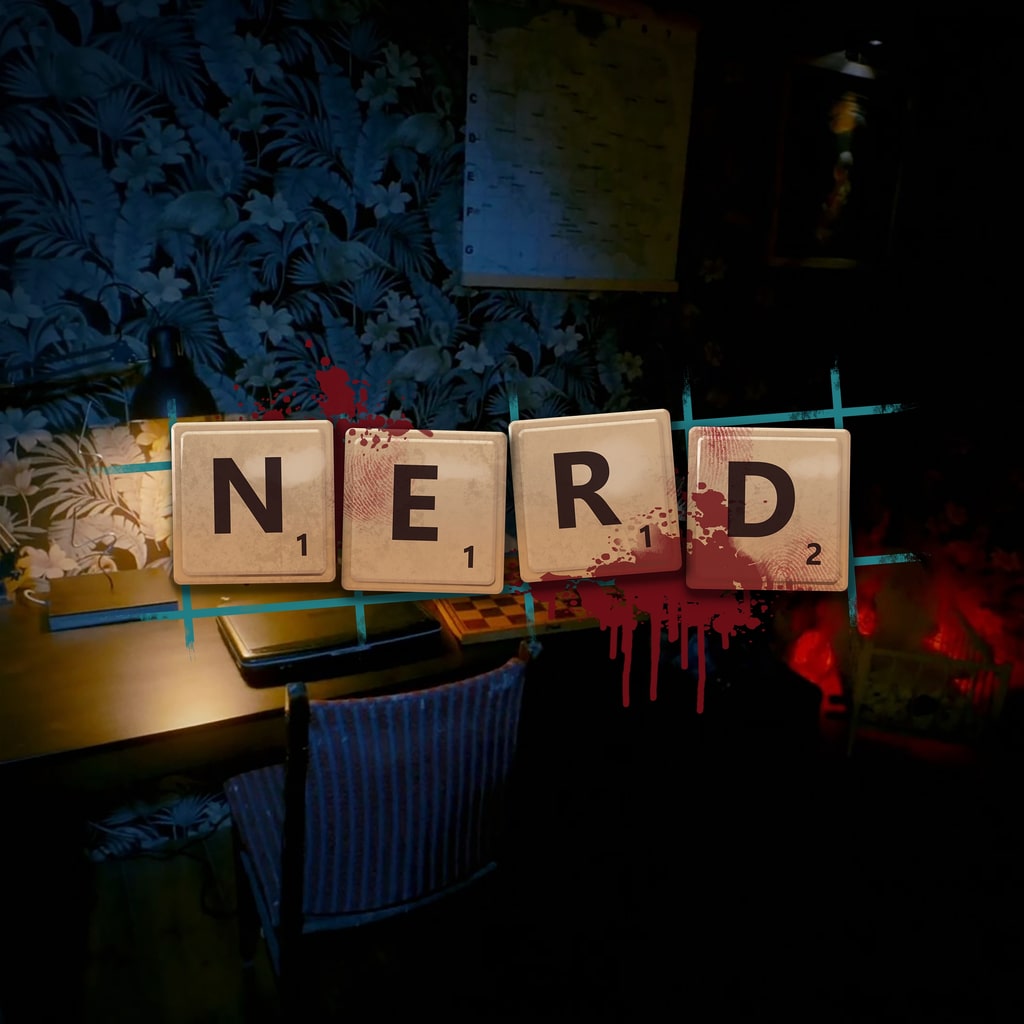
N.E.R.D opens with a familiar yet effective hook that immediately sets its tone. Your partner is abducted; you are knocked unconscious; and you wake trapped in a hostile environment designed by a masked antagonist who feels equal parts theatrical and cruel. From that moment onward, the game commits fully to its psychological thriller identity, drawing heavily on cult survival horror films in which escape is never guaranteed and every room feels like a test of both intelligence and nerve. The narrative does not rush to offer answers. Instead, it lets uncertainty linger, building tension through implication rather than exposition.
As you progress through the experience, the story slowly reveals fragments of something deeper and more personal. It is not just about escaping physical traps but also about confronting buried truths tied to your character’s past. This dual layer of external danger and internal reckoning gives the game a stronger narrative pull than many puzzle-focused titles in its space. The masked captor is not simply an obstacle but a presence that constantly reminds you that this ordeal is deliberate, personal, and designed to break more than just your problem-solving skills.
Cinematic Presentation and FMV Style
One of N.E.R.D’s defining traits is its full embrace of FMV-style storytelling, using real actors and cinematic framing to heighten immersion. This approach gives the game a grounded, almost uncomfortable realism that works surprisingly well in its favour. The environments feel tangible, the performances carry a human weight, and the close camera angles often make even simple interactions feel claustrophobic. It is a style that does not always land perfectly, but when it does, it creates moments that feel closer to interactive film than to a traditional puzzle game.
The influence of classic thriller cinema is clear throughout, particularly in how tension is constructed through pacing and visual restraint. There is a deliberate focus on confinement, both physical and psychological, and the game uses its presentation to reinforce that feeling at every opportunity. However, FMV as a format can sometimes expose the limitations of interactivity, especially when you are waiting for the game to hand control back after narrative beats. Still, the ambition behind its presentation gives it a distinct identity that separates it from more abstract escape room experiences.
Puzzle Design and Core Gameplay
At its core, N.E.R.D is a puzzle-driven experience built around three handcrafted levels, each filled with logic puzzles, environmental clues, and mechanical traps designed to test patience and observation. The puzzles themselves are often the highlight, offering a satisfying blend of traditional escape-room reasoning and more layered problem-solving. They are not designed to be breezy or immediately intuitive. Instead, they demand attention, experimentation, and a willingness to sit with uncertainty until patterns begin to emerge.
What makes the structure more intense is how progression is tied to danger. You are rarely solving puzzles in a safe space. There is always the implication that failure carries consequences, and the optional time-pressure mode pushes this further by introducing a constant sense of urgency. This transforms even relatively simple logic tasks into moments of stress, where clarity of thought becomes as important as raw deduction. When it works, it creates a powerful rhythm of panic and resolution that suits the game’s horror identity.
However, this design choice can also be a source of frustration. Trial and error becomes part of the experience more often than some players might like, especially under time pressure. Mistakes can feel costly, not just in progression but in emotional momentum. For players who enjoy methodical puzzle-solving, this tension enhances engagement. For others, it may feel like the game is deliberately withholding breathing room in favour of constant pressure.
Atmosphere and Psychological Impact
Where N.E.R.D consistently excels is in its atmosphere. The entire experience is steeped in unease, from the sterile, trap-filled rooms to the unsettling presence of the masked antagonist who looms over every decision. There is a persistent sense that you are being observed, not just as a character but as a participant in someone else’s constructed game. This sense of surveillance and control gives the experience a psychological edge that elevates it beyond standard escape room fare.
The horror here relies neither on overt spectacle nor on excessive violence. Instead, it builds discomfort through confinement, implication, and the constant awareness that failure is always one step away. Even moments of relative calm feel temporary, as though the game is simply waiting for the next escalation. This creates a steady emotional pressure that aligns well with its puzzle structure, reinforcing the idea that intelligence alone is not enough without composure under stress.
Performance and Structure
Structurally, N.E.R.D is compact, with its three-level design making it feel more like a tightly curated experience than a sprawling adventure. This works in its favour, as it prevents the pacing from dragging and ensures that each segment carries weight. The limited scope also allows the developers to focus on crafting more detailed puzzle spaces rather than diluting the experience with filler content.
In terms of performance and functionality, the game maintains a stable presentation, which is particularly important for a title that relies heavily on FMV sequences and scene transitions. The flow between cinematic moments and interactive puzzle segments is generally smooth, helping preserve immersion even when shifting between gameplay styles. There are occasional pacing interruptions inherent to the genre, but they do not significantly detract from the overall experience.
Critiques and Limitations
Despite its strengths, N.E.R.D is not without limitations. The reliance on a small number of levels naturally restricts replayability once puzzles are solved. While the experience is designed to be intense rather than endlessly repeatable, some players may find the content pool slightly narrow for long-term engagement. Additionally, the heavy emphasis on time pressure can occasionally undermine the satisfaction of puzzle-solving, especially when stress begins to outweigh clarity.
The FMV presentation, while immersive, also introduces occasional pacing issues inherent in interactive film design. Moments when control is removed for extended narrative sequences can disrupt the otherwise tight rhythm of puzzle progression. Furthermore, players who prefer more mechanical interaction or systemic depth may find the experience closer to an interactive thriller than to a traditional game.
Final Verdict
N.E.R.D is a tense, atmospheric escape room thriller that succeeds most when it fully embraces its cinematic identity and psychological pressure. It delivers strong puzzle design, wrapped in a claustrophobic narrative that keeps you constantly on edge, even when the solutions are grounded in logic and observation. While its limited scope and reliance on time pressure may not appeal to everyone, it remains a compelling experience for players who enjoy narrative-driven puzzle games with a darker edge.
It is not a comfortable game, nor does it try to be. Instead, it leans into discomfort, uncertainty, and controlled panic, creating an experience that feels deliberately engineered to unsettle as much as it challenges. When everything aligns, N.E.R.D becomes more than just an escape room puzzle game. It becomes a test of patience, focus, and composure under pressure, wrapped in a nightmare that never quite lets you relax long enough to forget where you are.