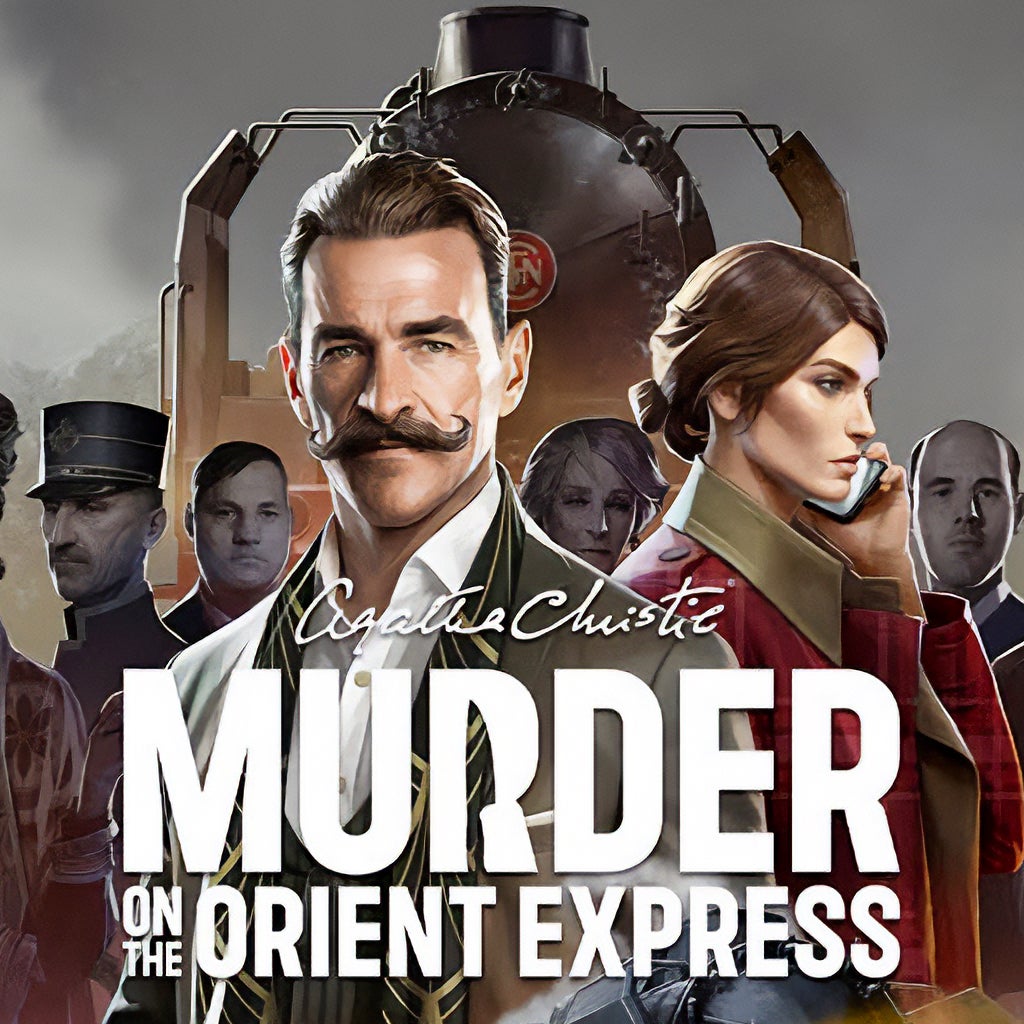
Mystery games live and die by one crucial question: do they make you feel like a detective? The answer sounds simple, but it is surprisingly hard to achieve. Too many investigations hand players every clue on a silver platter, while others become so obtuse that solving the case feels more like guesswork than deduction. Murder on the Disorient Express finds an enjoyable middle ground. It understands that uncertainty is the beating heart of every good whodunit, and it builds its entire structure around forcing players to make difficult decisions with incomplete information.
Developed and published by Infinite Zone, this compact interactive novel draws clear inspiration from classic railway murder mysteries and choose-your-own-adventure books. Rather than focusing on exploration or elaborate puzzle-solving, it places the emphasis squarely on deduction, conversation, and time management. The result is a small but surprisingly engaging detective experience that rewards curiosity, intuition, and repeated playthroughs.
While its minimalist presentation and brief runtime may leave some players wanting more, there is something undeniably satisfying about how it transforms every decision into a meaningful part of the investigation.
All Aboard for Murder
The premise wastes no time getting to the point. William James Magnus III, an influential passenger aboard a luxury train, has been murdered. The train is still hurtling towards its destination, and somewhere among the remaining passengers sits the killer.
Naturally, that leaves you with a problem. As the only person seemingly capable of conducting a proper investigation, you are tasked with uncovering the truth before the train reaches the station. Once it arrives, your suspect could disappear forever. There are no second chances, no lengthy forensic examinations, and no team of investigators backing you up. The responsibility falls entirely on your shoulders.
It is a familiar setup, but it works wonderfully because of its inherent urgency. The confined setting immediately creates tension, while the limited cast of suspects allows the game to focus on character interactions rather than overwhelming players with unnecessary complexity.
Each passenger has secrets, motives, and information that may or may not be relevant to the crime. The challenge lies in determining which leads merit your attention and which are simply distractions.
Every Minute Matters
The most compelling aspect of Murder on the Disorient Express is its time-management system. Unlike many detective games where players can exhaust every dialogue option and inspect every object before reaching a conclusion, this investigation unfolds under strict time constraints. Every action consumes precious minutes. Interviewing a suspect costs time. Examining evidence costs time. Following a lead costs time.
Before long, the pressure begins to mount. You quickly realise there is no way to see everything in a single playthrough. Every choice carries an opportunity cost. Spend too much time pursuing one suspect and another may escape scrutiny entirely. Focus on physical evidence and you might miss crucial contradictions hidden in a witness statement.
This design creates genuine tension throughout the investigation. Rather than simply gathering every available clue, you are constantly forced to prioritise. The result feels remarkably close to actual detective work, where perfect information rarely exists and decisions must often be made on instinct and probability. The game trusts players to connect the dots themselves, and that trust makes every successful deduction feel earned.
A Web of Branching Possibilities
Replayability forms the backbone of the experience. Because a single investigation reveals only part of the larger picture, subsequent playthroughs gradually uncover new information, alternative perspectives, and entirely different outcomes. Conversations missed in one run become available in the next. Seemingly insignificant details suddenly take on greater importance as additional context emerges.
This structure cleverly turns the game’s short runtime into a strength rather than a weakness. Individual investigations can be completed quickly, making it easy to dive straight back in and explore another path.
The branching narrative also creates the illusion of a much larger mystery than the game’s modest scope might initially suggest. With over a dozen possible endings to uncover, players are encouraged to experiment with different approaches and challenge their previous assumptions.
One suspect who appears guilty in an initial playthrough may seem entirely innocent later. Likewise, a seemingly harmless passenger might gradually reveal a far darker side as new information comes to light. That constant shifting perspective keeps the mystery engaging long after the credits roll for the first time.
Characters Worth Investigating
A good mystery depends on memorable suspects, and fortunately Murder on the Disorient Express delivers a colourful cast. Without relying on extensive cinematics or voice acting, the game establishes distinct personalities through strong writing and clever dialogue. Each passenger feels like a potential suspect, and, importantly, each has enough depth to sustain uncertainty throughout the investigation.
The writing does an excellent job of balancing humour, intrigue, and suspicion. Certain characters are immediately likeable. Others practically radiate guilt from the moment they appear. Yet the game consistently avoids making things too obvious.
Everyone seems capable of murder. That lingering doubt becomes one of the experience’s greatest strengths, keeping players second-guessing their conclusions until the very end.
Simplicity as a Strength
Visually, Murder on the Disorient Express adopts a minimalist aesthetic. Character portraits and illustrations lend enough personality to bring the cast to life, while the user interface remains clean and easy to navigate. There are no elaborate animations or flashy visual effects vying for attention. Instead, the game focuses entirely on delivering information efficiently. This approach works because the mystery itself remains the star of the show.
The soundtrack also deserves praise. Gentle piano melodies and atmospheric jazz pieces perfectly complement the setting, creating a mood that feels both elegant and slightly uneasy. The music quietly reinforces the sense that danger lurks beneath the train’s refined exterior.
Combined with the strong writing, these elements create an atmosphere that feels surprisingly immersive despite the game’s modest production values.
Not Every Passenger Will Be Satisfied
As enjoyable as the investigation is, there are limitations to the experience. Players seeking traditional point-and-click exploration, environmental puzzle-solving, or cinematic detective work may find the presentation too static. Much of the gameplay unfolds through menus, text, and dialogue choices. There is very little action in the conventional sense.
The brevity of individual runs may also prove divisive. While the replay-focused structure justifies the shorter playthroughs, some players may wish for a larger, more expansive mystery to sink their teeth into.
Additionally, the quality of the experience depends heavily on your willingness to replay the game multiple times. Those who complete a single run and move on will only see a fraction of what the narrative has to offer. Fortunately, the game’s fast pace makes repeated investigations feel more rewarding than repetitive.
Final Verdict
Murder on the Disorient Express understands exactly what makes detective fiction so compelling. It is not about gathering every clue or following a perfectly scripted path. It is about making deductions under pressure, weighing incomplete evidence, and living with the consequences of your decisions.
Its minimalist presentation and short playthroughs may not appeal to everyone, but those willing to embrace its interactive novel structure will find a surprisingly clever and highly replayable mystery. The time-management system adds genuine tension, the branching paths encourage experimentation, and the cast of suspects keeps you guessing until the final reveal.
Infinite Zone has crafted a smart little detective adventure that punches above its weight. It may not be the most elaborate mystery on the rails, but it captures the thrill of deduction remarkably well.