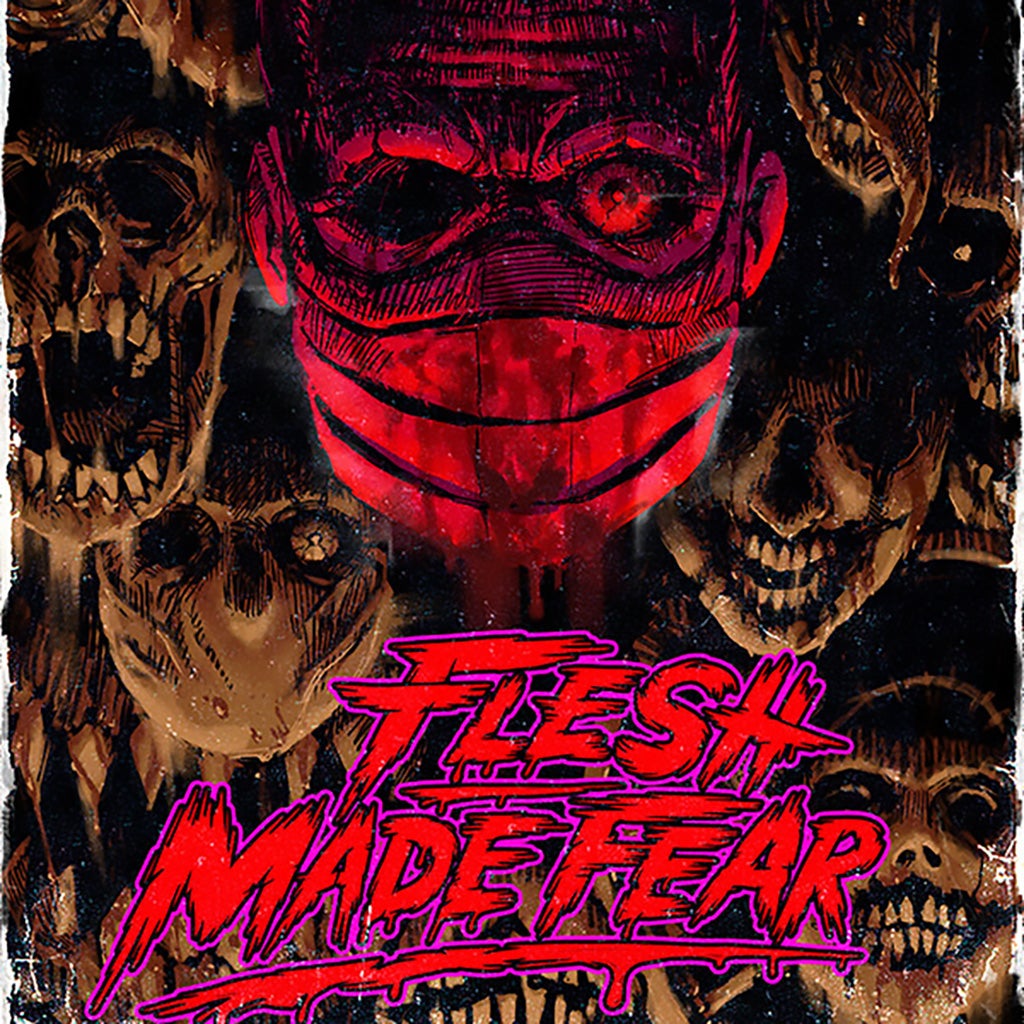
The survival horror genre has enjoyed a remarkable resurgence in recent years. Between lavish remakes of genre classics and a wave of indie developers revisiting the design philosophies of the late 1990s, players have been spoiled for choice. Yet while many modern horror games borrow the visual identity of the PlayStation era, far fewer embrace the slower pacing, strict resource management, and deliberate vulnerability that defined those formative experiences. Flesh Made Fear dives headfirst into those traditions and emerges as one of the most authentic love letters to classic survival horror in recent memory.
Developed by Tainted Pact Games, Flesh Made Fear wears its influences proudly. From fixed camera angles and limited saves to labyrinthine puzzles and grotesque biological monstrosities, the game feels as if it has been transported directly from a forgotten shelf of survival horror history. Thankfully, this is far more than simple nostalgia. Beneath its retro exterior lies a carefully crafted experience that understands exactly why those classic games worked in the first place.
Into the Mouth of Madness
The story begins with a mission that quickly spirals into something far more horrifying than anyone anticipated. Players assume the role of a member of the Reaper Intervention Platoon, an elite task force dispatched to investigate and eliminate Victor Ripper, a former CIA operative whose descent into madness has transformed an isolated town into a nightmare of occult rituals, human experimentation, and biological corruption.
What initially appears to be a straightforward operation soon unravels into a disturbing journey through decaying laboratories, abandoned facilities, and grotesque chambers where humanity has been twisted beyond recognition. The narrative embraces the melodramatic spirit of classic horror games, complete with mysterious documents, cryptic clues, and larger-than-life villains.
While some of the dialogue occasionally drifts into B-movie territory, it somehow feels appropriate within the game’s world. Flesh Made Fear understands the appeal of old-school survival horror and never tries to distance itself from its inspirations. Instead, it embraces the camp and uses it as a foundation for a genuinely unsettling tale steeped in dread and mystery.
Two Survivors, Two Perspectives
One of the game’s strongest features is its dual-protagonist structure. Players can choose between Natalie and Jack, each with distinct strengths and weaknesses that significantly shape the overall experience.
Natalie has a larger inventory, allowing her to carry more supplies and puzzle items at once. This flexibility proves invaluable during longer exploration sequences, when resource management becomes increasingly demanding. However, her reduced health means every encounter carries considerable risk. A few mistakes can quickly turn a manageable situation into a desperate scramble for survival.
Jack offers the opposite approach. He can absorb far more punishment, making combat encounters somewhat less intimidating. The trade-off is his smaller inventory, which forces players to make difficult decisions about what to carry and what to leave behind. Every trip away from a storage box becomes a careful balancing act between preparedness and practicality.
These differences do more than simply alter statistics. They fundamentally change how players approach exploration and survival, providing meaningful replay value without resorting to artificial gimmicks.
Fear Through Limitation
Many contemporary horror games eventually turn players into unstoppable killing machines. Flesh Made Fear has no interest in offering that comfort. Resources are scarce, ammunition is precious, and healing items never appear in quantities that inspire confidence. Every bullet fired feels significant. Every healing item consumed prompts an immediate question: was that really necessary?
The limited save system reinforces this tension beautifully. Saving requires collectible resources, so players cannot simply preserve progress whenever they choose. As a result, exploration carries genuine consequences. Venturing into an unfamiliar corridor feels dangerous because failure could cost meaningful progress.
This design philosophy runs throughout the experience. Inventory space remains restricted. Enemies hit hard. Safe rooms feel genuinely safe because the rest of the game often feels anything but. It is a careful balancing act that consistently keeps players on edge without becoming unfair.
Puzzles That Matter
The puzzle design deserves particular praise for avoiding many of the pitfalls that plague modern adventure horror games. Rather than serving as simple roadblocks, the puzzles feel integrated into the environment and narrative. Solving them requires observation, exploration, and occasionally a willingness to think unconventionally. Players will find themselves deciphering cryptic notes, combining unusual items, and uncovering hidden connections between seemingly unrelated locations.
Importantly, the game trusts its audience. Solutions are rarely handed out freely, yet the logic behind them remains coherent enough that breakthroughs feel rewarding rather than frustrating. There is genuine satisfaction in piecing together clues and gradually unlocking the secrets hidden within the facility.
The mansion and laboratory complex itself becomes a puzzle. New keys open shortcuts, locked doors reveal fresh pathways, and familiar locations constantly evolve as new discoveries reshape your understanding of the map.
A Beautifully Rotten World
Visually, Flesh Made Fear is a triumph of atmosphere. The low-poly aesthetic immediately evokes the original PlayStation era, yet the presentation incorporates enough modern enhancements to avoid feeling dated. Dynamic lighting, detailed environmental effects, and carefully crafted cinematics elevate the experience while preserving its retro identity.
The environments are wonderfully oppressive. Rusted corridors, bloodstained laboratories, forgotten archives, and ritual chambers create a world that feels both lived-in and profoundly corrupted. Every room tells a story, often without a single line of dialogue.
Creature design is equally impressive. The monsters inhabiting this nightmare are genuinely disturbing, blending body horror and biological experimentation into forms that feel unpredictable and deeply unsettling. Even after hours of play, new encounters retain their ability to provoke discomfort.
The lighting system plays a major role in sustaining tension. Certain sections plunge players into near-total darkness, forcing them to rely on narrow flashlight beams that reveal only fragments of their surroundings. The result is a constant sense of vulnerability that enhances every encounter.
Sound Design That Gets Under Your Skin
If the visuals establish the horror, the audio completes it. The soundtrack rarely dominates proceedings, favouring subtle ambient compositions that quietly build tension. Distant metallic groans, distorted whispers, and unsettling environmental sounds create a constant sense that something is wrong, even when no immediate threat is present.
Enemy sounds are particularly effective. Grotesque shrieks, wet footsteps, and unnatural breathing patterns frequently announce danger before it appears on screen. This turns sound into a crucial survival tool while keeping players perpetually on edge.
Few moments in gaming are as effective as hearing something horrifying nearby while being completely unable to pinpoint its exact location. Flesh Made Fear understands this principle perfectly.
Not For Everyone
For all its strengths, Flesh Made Fear is unapologetically committed to old-school design conventions, and that commitment will inevitably divide audiences. The fixed camera angles, limited saves, strict inventory management, and occasionally awkward interaction prompts are deliberate choices rather than flaws. However, players accustomed to smoother modern horror experiences may find these systems frustrating. The game demands patience and adaptation rather than immediate accessibility.
Some interactions can feel slightly cumbersome, particularly when positioning characters near specific objects. Some voice performances also lean heavily into retro survival-horror camp, which may not resonate with everyone.
Yet these issues feel minor in the context of what the game is trying to achieve. Flesh Made Fear is not attempting to modernise survival horror for a broader audience. It is preserving a style of game design that many developers have abandoned.
Final Verdict
Flesh Made Fear succeeds because it recognises that true survival horror rests on vulnerability. Every mechanic, from its limited saves to its restrictive inventory system, reinforces that central philosophy. The result is an experience that captures the tension, dread, and satisfaction that made the genre legendary.
Its retro design choices will not appeal to everyone, and some players may be put off by its uncompromising approach. Those willing to embrace its old-school sensibilities, however, will discover an atmospheric, intelligent, and deeply rewarding horror adventure that feels refreshingly confident in its identity.
Tainted Pact Games has delivered far more than a nostalgic throwback. Flesh Made Fear stands as one of the strongest examples of modern retro survival horror, proving that sometimes the oldest fears remain the most effective.