There is something wonderfully miserable about a good Soulslike. The best of them do not simply want you to defeat their monsters. They want you to stare at a grotesque creature twice your size, wonder whether you have any chance of surviving, and then convince yourself that one more attempt is definitely going to be different. Mortal Shell II: Devout Edition understands the particular relationship between player and punishment, but rather than simply copying what came before, it takes the foundations of the original Mortal Shell and builds something considerably broader around them. The result is a dark fantasy adventure that feels heavier, faster and more confident in its own identity.
At its heart, Mortal Shell II remains a game about learning through failure. Every corridor feels like it could contain something unpleasant, every new enemy demands a moment of observation, and every boss encounter has the potential to turn a promising run into a bloodied lesson in humility. Yet there is a satisfying rhythm to that brutality. You explore, experiment, die, understand what went wrong and return with a little more knowledge than before. It is that feeling of gradually becoming better at surviving, rather than simply becoming stronger, that gives the game its appeal.
A Darker World to Get Lost In
The world of Mortal Shell II immediately establishes the atmosphere that fans of bleak fantasy will be looking for. Decaying structures, forgotten temples and miserable stretches of wilderness create a setting that feels as though civilisation has already lost, and nobody bothered to tell the monsters. There is very little warmth here, and that is absolutely intentional. The environment constantly suggests you are trespassing somewhere you were never meant to enter.
What makes the exploration particularly effective is the compact open-world structure. Rather than simply marching from one linear arena to another, you are encouraged to investigate side paths, search ruined locations and work out where different routes lead. There is genuine pleasure in discovering something tucked away behind an apparently insignificant doorway, particularly when that discovery yields a new weapon, upgrade or piece of lore. The world feels hostile, but it also feels worth understanding.
The storytelling takes a similarly restrained approach. Rather than drowning the player in endless exposition, Mortal Shell II allows its setting and characters to do much of the talking. There is a deliberate sense of mystery surrounding the world, its inhabitants and the nature of the Shells themselves. You may not understand everything immediately, but the fragmented storytelling encourages you to keep digging.
Hardening Still Makes Combat Special
The defining feature of Mortal Shell has always been its Hardening mechanic, and thankfully it remains central to the sequel. Being able to temporarily turn your body into stone might sound like a simple defensive ability, but its usefulness becomes far more interesting once you understand its timing. You can use it to absorb an incoming attack, interrupt an enemy’s momentum, or create the breathing room needed to recover from a mistake.
The beauty of the system is that it encourages confidence rather than passive defence. You are not simply hiding behind a shield, waiting for an opening. You are stepping into danger because you know that, if your timing is right, you have a tool capable of completely changing the exchange. That creates wonderfully tense moments when an enormous enemy swings a weapon towards your head and you deliberately refuse to dodge, instead trusting your Hardening to save you.
Combat itself is faster than its predecessor, and that change gives encounters a noticeably different rhythm. Weapons have weight without feeling sluggish, while attacks and defensive manoeuvres need careful consideration. Stamina management remains important, particularly when dealing with groups or more aggressive opponents, and reckless button mashing is usually punished quickly. The game wants you to understand your weapon rather than simply find the biggest sword and start swinging.
Finding Your Perfect Shell
The Shell system adds another layer of personality to combat. Each Shell offers a distinct way to approach the game, giving you plenty of room to experiment with offensive and defensive builds. Some are better suited to absorbing punishment, while others encourage a more aggressive approach that rewards players comfortable with living dangerously.
The ability to switch between Shells adds another interesting dimension to combat. Rather than treating your chosen character as a permanent commitment, you can adapt your approach to the situation. A difficult encounter that exposes the weaknesses of your current build suddenly becomes an opportunity to rethink your strategy rather than simply grind until the problem disappears.
That flexibility also fits well with the game’s broader progression system. Weapons can be upgraded and customised, allowing you to develop equipment that complements how you actually play. It gives progression a welcome sense of ownership. When a particular weapon becomes your favourite because you have spent time improving it and learning its strengths, replacing it with something statistically superior does not necessarily feel like the obvious choice.
The Joy of Getting Things Wrong
One of the most important things a Soulslike can do is make failure feel worthwhile. Mortal Shell II generally succeeds here, as death rarely feels entirely meaningless. Even when an enemy crushes you in seconds, there is usually something to take away from the experience. Perhaps you attacked too aggressively, mistimed your Hardening, or simply failed to recognise an enemy’s attack pattern.
Boss encounters are the most obvious examples of this philosophy. These fights are designed around observation and repetition, with increasingly demanding attack patterns that force you to understand each opponent’s rhythm. The first attempt can feel hopeless, but after a few failures the same boss begins to look less like an impossible wall and more like a puzzle waiting to be solved.
There is a particular satisfaction in reaching the moment when everything suddenly clicks. You stop panicking, recognise the incoming attacks, and begin responding almost instinctively. A fight that once seemed completely overwhelming can become strangely elegant, and those moments are exactly why this genre continues to attract players who apparently enjoy being punished for entertainment.
A Beautifully Bleak Adventure
Visually, Mortal Shell II commits wholeheartedly to its miserable fantasy aesthetic. The environments are packed with crumbling stone, oppressive shadows and unsettling details, while the creatures themselves look like things that should never have escaped the nightmare that created them. The art direction is consistently impressive, with almost every location reinforcing the feeling that this is a world approaching its final days.
The atmosphere is considerably strengthened by the audio design. Heavy impacts give combat an appropriate sense of brutality, while the music knows when to step forward and when to let the environment speak for itself. There is something particularly effective about walking through an abandoned area with little more than distant ambience accompanying your footsteps. It gives the world a sense of loneliness that suits the story beautifully.
The Devout Edition
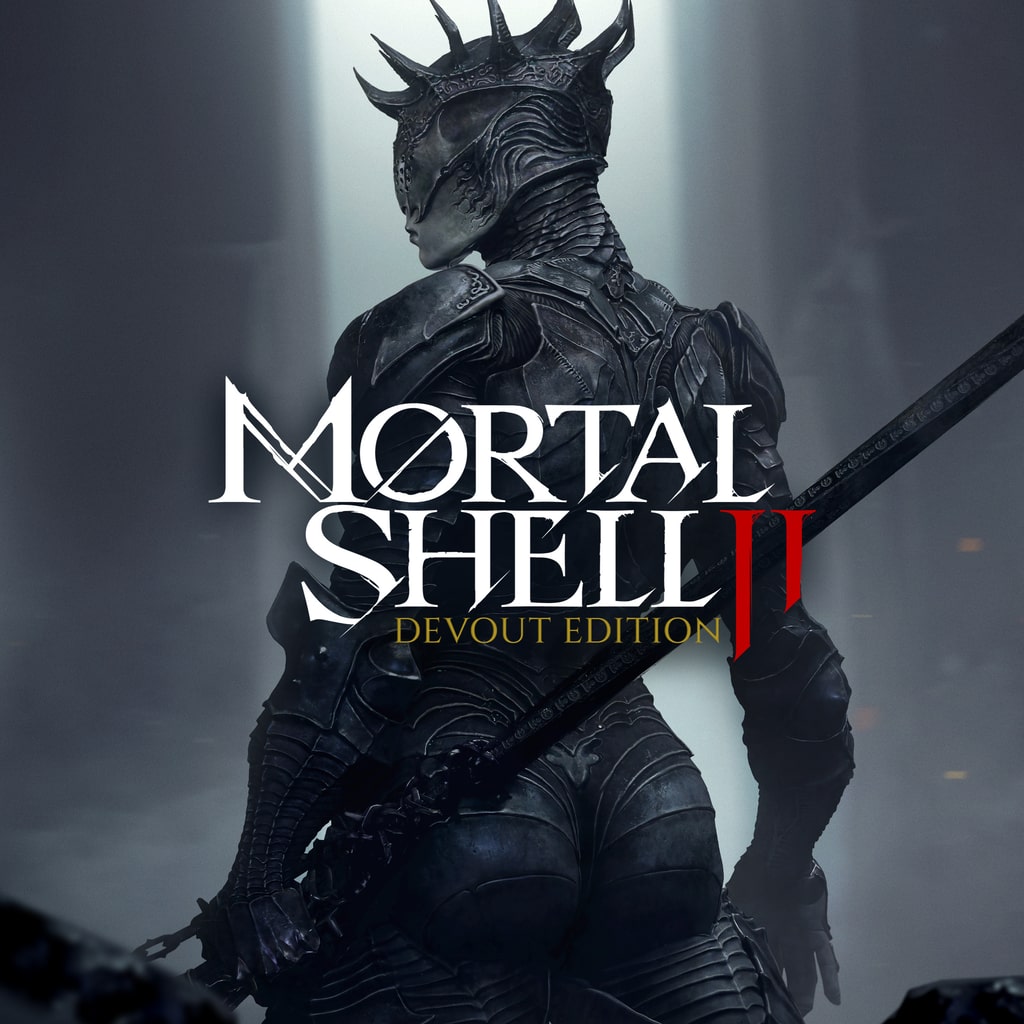
The Devout Edition is aimed primarily at players who want the complete package, with the base game accompanied by its exclusive Obsidian skin set for all eight playable Shells. The cosmetic additions are a nice extra for anyone who enjoys giving their character a distinctive look, although they obviously do not fundamentally alter the underlying experience.
That means the real attraction remains the game itself. The additional edition content is unlikely to persuade somebody who dislikes Soulslikes to suddenly become a convert, but for players already interested in stepping into this bleak world, having the bonus skins included makes the package feel suitably complete.
A Sequel That Understands Its Strengths
What impresses me most about Mortal Shell II is that it does not seem interested in making the experience easier simply for the sake of accessibility. It understands that satisfaction comes from overcoming something that initially seems beyond you. The faster combat and broader exploration give the sequel more room to breathe, while the Shell and weapon systems provide enough flexibility to make experimentation worthwhile.
There are moments when the unforgiving nature of the experience can become exhausting, particularly when you encounter an enemy that seems determined to punish every tiny mistake. That is part of the bargain, though, and players who approach the game expecting a relaxed action RPG may quickly discover that this is not the adventure for them. Mortal Shell II expects attention, patience and a willingness to fail.
For everyone else, something deeply rewarding lies beneath the misery. It is a game about becoming more capable, not merely more powerful, and that distinction matters. When you finally defeat an enemy that has been destroying you for the past hour, the victory feels personal because you know it was your understanding of the game that changed.
Verdict
Mortal Shell II: Devout Edition is a confident Soulslike sequel that builds on the original’s distinctive Hardening mechanic, surrounding it with faster combat, greater exploration and more opportunities for character customisation. Its oppressive world, gruesome enemies and demanding encounters create exactly the sort of dark fantasy atmosphere that fans of the genre crave, while the Shell system gives experimentation a welcome sense of freedom.
It is not interested in holding your hand, and frankly, it is better for it. There is satisfaction in being thrown into an ugly, hostile world and working out how to survive on your own terms. Mortal Shell II may bruise your ego, test your patience and occasionally make you question why you are doing this to yourself, but when everything finally falls into place, it delivers that wonderful Soulslike feeling of having earned every inch of progress.