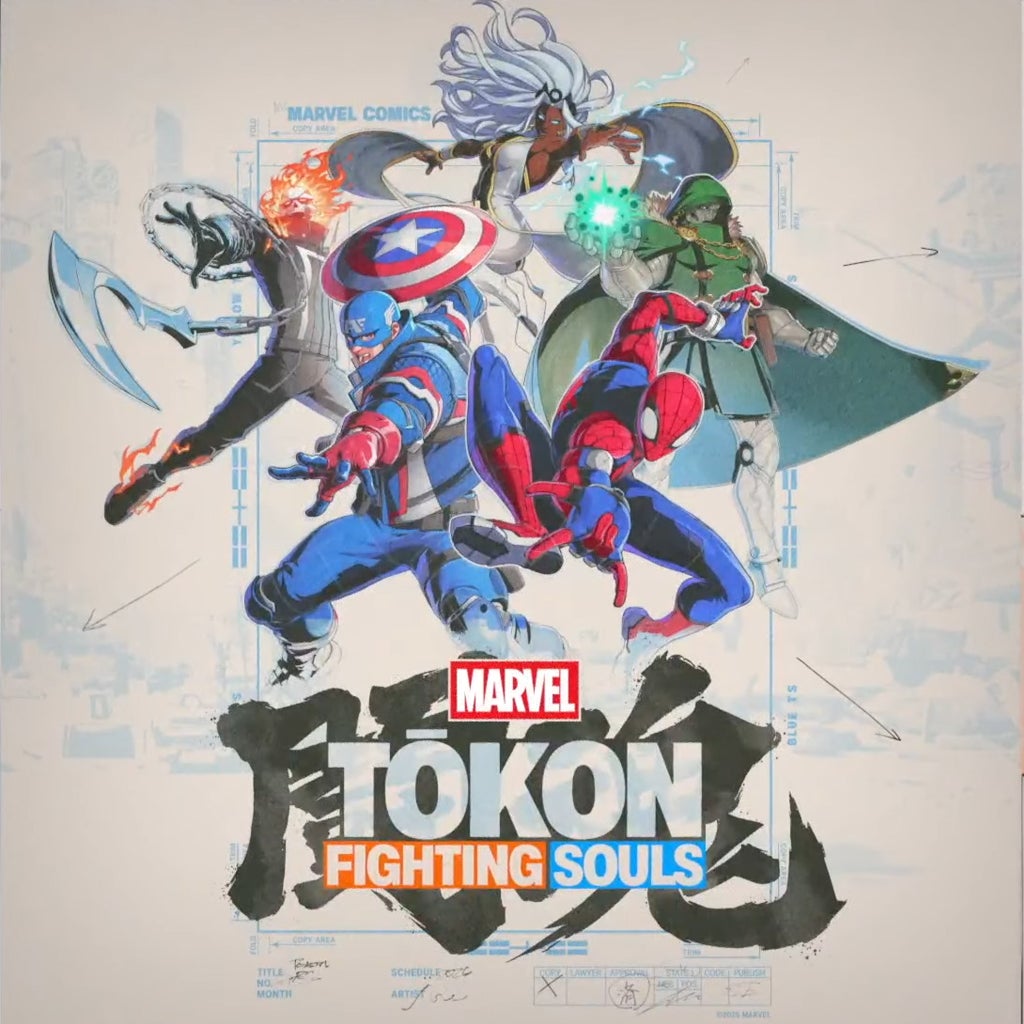
There is a particular kind of pressure that comes with making a Marvel fighting game. The characters are already larger than life, their abilities instantly recognisable, and the audience arrives with expectations shaped by decades of comics, films and games. Get it wrong and you have a collection of famous faces awkwardly throwing punches at one another. Get it right, however, and you have something magical, a fighting game where each character’s personality can shine through the mechanics. MARVEL Tōkon: Fighting Souls gets remarkably close to that second outcome, delivering an energetic, beautifully animated tag fighter that understands both the spectacle of Marvel and the competitive depth of Arc System Works.
Developed by Arc System Works and published by Sony Interactive Entertainment, MARVEL Tōkon: Fighting Souls takes the familiar superhero fighting game formula and gives it a distinctly anime-inspired identity. Rather than attempting to reproduce the visual style of the Marvel Cinematic Universe, it embraces exaggerated animation, striking effects and expressive character designs that feel immediately at home alongside Arc System Works’ previous fighting games. The result is a game that looks spectacular without sacrificing the clarity needed to understand what is happening during a frantic match. More importantly, beneath all that colour and spectacle lies a surprisingly thoughtful 4v4 system that rewards players for understanding their team rather than simply learning one character.
Assemble Your Team
The first thing that stands out about MARVEL Tōkon: Fighting Souls is how important team composition feels. This is not simply a traditional fighting game with three characters waiting on the sidelines, because the four members of your squad are part of a shared system that constantly shapes how you approach an encounter. Each character brings different strengths, attacks and assists to the table, and finding combinations that complement one another becomes one of the game’s most enjoyable challenges.
That makes choosing a team feel more personal than simply selecting the four strongest characters. You might build around a character with powerful close-range attacks and use another fighter to control space, while a third provides assists that create opportunities to extend combos. The fourth member can then fill whatever weakness remains. The more time you spend experimenting, the more you begin to appreciate that your team is effectively another character in itself.
It is a clever approach because it gives Marvel’s enormous roster an additional layer of personality. Spider Man does not simply need to be good at fighting because Spider Man is popular. His value comes from what he can contribute to the wider team. The same applies to every hero and villain, and that creates a lovely sense of discovery as you work out which combinations feel right for you.
Four Fighters, One Health Bar
The shared health system is one of the game’s most interesting ideas because it changes how you think about damage. Rather than treating each character as an entirely separate life, your four-member team operates from a unified health pool. That means losing a particular fighter does not necessarily mean you have lost that character in the traditional sense, and the match can evolve considerably as more members of your team become active.
There is a nice strategic tension to this system. You can throw a character into an aggressive situation because you know they are not carrying an isolated life bar, but taking unnecessary damage still brings your entire team closer to defeat. Every decision therefore has consequences beyond the character currently on screen. You are constantly thinking about how much punishment your overall team can absorb and when it is worth bringing another member into the fight.
The result is a system that encourages more active thinking about the whole match. You are not simply trying to defeat the opponent standing in front of you. You are managing a four-character unit, watching your health and looking for opportunities to bring different abilities into play. It makes the battles feel more fluid and gives the tag mechanics a genuine purpose.
Tag Fighting With Personality
Tag mechanics are nothing new in fighting games, but Fighting Souls treats them as a defining feature rather than an optional gimmick. Characters can enter the battle, provide assistance and create combinations that would not be possible if you were controlling a single fighter. This adds another layer of timing to an already fast combat system, especially as you learn how one character’s attacks can set up another’s abilities.
The assists are particularly important because they allow you to influence the battle even when your favourite character is not on screen. A well-timed assist can interrupt an opponent’s momentum, extend your own offensive sequence or create the space you need to escape a dangerous situation. Once you understand those interactions, matches become less about individual attacks and more about controlling the rhythm of the entire fight.
This is also where the game reveals its competitive depth. A beginner can call an assist because it looks cool and occasionally get spectacular results. A more experienced player will understand why that assist was chosen at that moment and how it fits into the team’s broader strategy. That gap between simply using a mechanic and truly understanding it is where Fighting Souls has plenty of room to grow.
Easy to Pick Up, Difficult to Master
One of Arc System Works’ greatest strengths has always been creating fighting games that can look spectacular in the hands of experienced players while remaining approachable to newcomers. Fighting Souls continues that tradition with adjustable controls, traditional inputs and simpler options designed to let players get into the action without spending hours memorising complicated command sequences.
The accessible controls are particularly welcome here, as the four-character structure could easily have made the game overwhelming. Instead, you can start experimenting with combinations and assists relatively quickly. Easy chain combos give newcomers an opportunity to perform satisfying sequences without first mastering every technical aspect of the combat system. That initial accessibility makes the game much easier to recommend to Marvel fans who may not normally spend their evenings playing competitive fighters.
Importantly, accessibility does not appear to remove the deeper systems. Once the basics become comfortable, there is plenty more to learn about timing, positioning, assists, team synergy and advanced combinations. The game therefore offers a sensible path from casual Marvel fan to someone who wants to take the fighting seriously.
When Marvel Meets Anime
Visually, MARVEL Tōkon: Fighting Souls is one of the game’s biggest successes. The anime-inspired presentation gives familiar Marvel characters a fresh identity without stripping away what makes them recognisable. Costumes, silhouettes and abilities remain clear, but the exaggerated animation allows characters to perform attacks with a level of expression and theatricality that traditional superhero adaptations sometimes struggle to capture.
The presentation becomes particularly impressive during special attacks. Screens fill with colour, characters explode into motion, and attacks carry a sense of impact that makes even a familiar ability feel exciting. These moments could easily become excessive and confusing, but the visual design generally keeps the action readable. That balance is crucial in a fighting game, where players need to understand what is happening rather than simply admire it.
The stages benefit from the same philosophy. Iconic Marvel locations provide colourful backdrops for battles, while interactive transitions can turn a seemingly ordinary fight into something much more dramatic. Wall Breaks are particularly effective because they make the arenas feel like actual spaces rather than flat backgrounds. Breaking through one section and continuing the fight elsewhere gives matches a cinematic quality without completely removing player control.
The Joy of a Good Wall Break
There is something deeply satisfying about a well-timed Wall Break. You have been trading blows; your opponent is finally vulnerable, and suddenly your attack sends them crashing through the environment. The transition that follows offers a brief moment of spectacle before the fight resumes, making the battle feel like a miniature Marvel action sequence.
More importantly, the environmental transitions are not merely decorative. They contribute to the sense that the stages are connected spaces rather than static arenas. A fight can move through the environment, creating a sense of momentum that complements the game’s fast combat.
It is one of those features that may sound relatively minor on a feature list but becomes much more exciting once you experience it. The first time you trigger a dramatic transition, it is difficult not to smile.
Episode Mode Gives the Heroes More Time
For players primarily interested in the Marvel side of the experience, Episode Mode offers a compelling reason to step away from competitive matches. The mode focuses on individual teams and their relationships, while providing a story-driven campaign that gives the characters more room to interact.
This is particularly useful in a game with such a large cast, as fighting games can sometimes reduce famous characters to little more than movesets. Episode Mode gives them an opportunity to exist as personalities rather than simply combatants. The campaign also provides a natural introduction to different team combinations, allowing players to learn how characters work together while progressing through a structured story.
The reported 10-plus-hour campaign gives Fighting Souls considerably more single-player substance than many fighting games offer. That additional content helps make the package feel more complete, especially for players who are not interested in immediately jumping into ranked matches.
More Than Just the Main Campaign
There is also a healthy selection of additional modes for those who want something different. All Star Arena offers a series of intense battles, while Training Mode provides the tools needed to properly understand the game’s mechanics. The ability to create custom bots is particularly useful, as it allows players to practise specific situations rather than simply repeating generic matches.
Battle Arcadia takes a more playful approach, placing players in a theme park environment with additional activities and mini-games. Arcadia Rumble builds on that idea, turning the area into a competitive space where players collect souls and battle one another for points. These modes help give the game a lighter personality outside its main competitive structure.
That variety matters because fighting games can become repetitive if every mode ultimately boils down to the same match format. Fighting Souls at least attempts to give players reasons to step outside the standard versus experience, and that makes the overall package feel more substantial.
Fighting With Friends
Local multiplayer remains one of the great pleasures of a fighting game, and Fighting Souls is naturally suited to couch competition. There is something wonderfully immediate about handing a controller to another person, choosing your teams, and settling an argument with a spectacular super attack. The Marvel licence makes these moments even more accessible, as most players will already have an emotional connection to at least some of the characters.
Online play expands that audience considerably, with ranked and casual options for players who want to test themselves against others. The large online lobby structure also gives the game a sense of community, allowing players to spend time around other fighters rather than simply entering one isolated match after another. Cross-platform play between PlayStation 5 and PC further expands the potential player base.
For a fighting game built around team composition and competitive experimentation, maintaining a healthy online community will be extremely important. The mechanics are strong enough to support that, provided the player population remains active and the online infrastructure continues to perform reliably.
The Sound of Superheroes
The audio presentation deserves attention because it significantly enhances the game’s atmosphere. Explosions, impacts and character abilities are given ample weight, while dynamic music helps matches feel like important confrontations rather than routine training exercises. With 3D Audio on PlayStation 5, the soundscape can also create a stronger sense of spatial awareness amid the chaos.
The music is particularly important in a Marvel fighting game because the action is deliberately exaggerated. A great soundtrack can make a familiar attack feel enormous, and the game recognises that spectacle is not purely visual. When the animation, sound and impact of an attack coincide, the result can be wonderfully theatrical.
It is another area where the anime-inspired presentation works in the game’s favour. Everything feels slightly larger than life, which is exactly what a superhero fighting game should be.
A Few Cracks Beneath the Surface
For all the enthusiasm Fighting Souls inspires, it is not without problems. The sheer number of systems can occasionally make the opening hours feel busier than they need to be, particularly for players unfamiliar with tag fighters. There is a lot to learn about teams, assists, health management and character interactions, and while the accessible controls help, understanding the strategic layer still requires patience.
The PC version can also offer a less consistent experience than the PlayStation 5 release, with performance concerns and the requirement for a PlayStation Network account potentially frustrating some players. Those issues do not necessarily reflect the quality of the core fighting system, but they can affect the overall experience depending on where you choose to play.
There is also the inevitable question of roster size and longevity. Twenty characters provide plenty of variety, but fighting game communities can be demanding when it comes to additional fighters and post-launch support. The quality of the existing roster is more important than simply having a huge number of characters, but the future of the game will inevitably depend on how well Arc System Works continues to support its competitive ecosystem.
A Marvel Fighter With Its Own Identity
The biggest achievement of MARVEL Tōkon: Fighting Souls is that it does not feel like a generic Marvel product wearing an Arc System Works costume. It has its own identity, drawn from anime-inspired visuals, fast combat and a genuinely interesting 4v4 system.
The shared health pool gives team-building real importance, while assists and tag mechanics make the roster feel interconnected. The result is a game where your choice of team can completely change how you approach a match. That is exactly the kind of depth a fighting game needs to survive beyond the initial excitement surrounding its licence.
It also helps that the game looks so confident. Marvel’s characters have been interpreted in countless ways over the years, but the bold anime presentation gives Fighting Souls a visual identity that belongs to the game itself. It is vibrant, expressive and occasionally spectacular enough to make you forget that you are supposed to be concentrating on your opponent.
Final Verdict
MARVEL Tōkon: Fighting Souls is an impressive marriage of two very different worlds. Marvel provides the characters, locations and larger-than-life personalities, while Arc System Works brings the mechanical expertise needed to turn those ingredients into a fighting game with genuine depth. The result is accessible enough for someone who simply wants to pick Spider-Man and start swinging, yet deep enough to reward players who want to spend hours understanding team composition and advanced combat.
The 4v4 system is the real star. Sharing a health pool, managing assists and gradually bringing additional members of your squad into the action give matches a rhythm that feels different from more conventional tag fighters. It creates strategic decisions without sacrificing the immediate satisfaction of spectacular attacks, and that balance is difficult to achieve.
The presentation is equally strong, with an anime-inspired art style that gives Marvel’s familiar characters a fresh personality. Dynamic stages, Wall Break transitions, powerful special attacks and a lively soundtrack all contribute to the sense that every match is a small superhero spectacle. Add in Episode Mode, Training Mode, All-Star Arena, Battle Arcadia, Arcadia Rumble and online competition, and there is plenty here for both casual and dedicated players.
It is not perfect. Some of the systems take time to understand, the PC experience has its frustrations, and the long-term success of any fighting game ultimately depends on continued support and an active community. Yet those concerns do little to diminish the strength of the foundation Arc System Works has built.
What matters most is that MARVEL Tōkon: Fighting Souls feels like it has something to prove. It is not content to simply borrow Marvel’s popularity and hope that the characters carry the experience. It wants to build a fighting game around them, one where team composition matters, where assists can change the course of a battle and where a perfectly timed Wall Break can make you feel like you have just stepped into the pages of a comic book.
That combination of accessibility, spectacle and competitive potential makes Fighting Souls an easy game to get excited about. It may take time to master, but there is much joy in learning how these heroes and villains fit together. When the right four characters click, the combat becomes fast, expressive and wonderfully chaotic in the best possible way.
For Marvel fans, fighting game enthusiasts and anyone who appreciates Arc System Works’ distinctive style, MARVEL Tōkon: Fighting Souls has plenty to offer. It is colourful without becoming unreadable, accessible without being shallow and spectacular without losing sight of the fact that a fighting game ultimately lives or dies by the quality of its combat.