Roguelite action games live and die by one sacred principle: the joy of the build. Combat can be flashy, art can be gorgeous, but if the systems don’t let players feel clever, powerful, and slightly broken, the magic fades fast. Magic Rune Stone, published by BD Games, understands this better than most. It’s a dungeon-crawling, room-clearing battler built almost entirely around experimentation — stacking Blessings, equipment, treasures, and skills until your hero becomes a walking storm of numbers.
The result is a game that doesn’t always innovate, but consistently entertains. Beneath its familiar structure beats a surprisingly deep heart.
Rooms, Runes, and Relentless Combat
At its core, Magic Rune Stone follows a classic loop. You move through sequential rooms packed with enemies, defeat everything that breathes, choose new upgrades, and repeat until either victory or glorious failure. The pace is brisk, the controls responsive, and the combat satisfyingly crunchy in that modern action-RPG way where damage numbers pop like celebratory confetti.
What sets it apart is the density of customization layered on top of this simple framework. Each hero arrives with a dedicated Signature Skill Slot — a unique ability that defines their identity. Unlike many games where characters feel like cosmetic skins, these signature skills genuinely change how you play. One hero might specialize in explosive area control, another in agile single-target bursts. More importantly, each signature skill has its own upgrade path, allowing multiple viable archetypes per character.
From the first run, the game pushes you to experiment rather than settle into a single routine. It’s less about memorizing optimal routes and more about improvising with the tools fate hands you.
Blessings, Stones, and the Art of the Build
The backbone of progression lies in Blessings and Skill Stones. Every character has four Universal Skill Slots that can be filled during a run with abilities discovered in the dungeon. These skills range from elemental projectiles to defensive auras and bizarre utility effects. Through Blessings, those same skills can transform dramatically — gaining new mechanics, chaining effects, or scaling in unexpected ways.
This is where Magic Rune Stone finds its addictive groove. A simple fireball might evolve into a homing meteor swarm; a modest shield could become a retaliatory damage engine. The game constantly whispers, “What if you tried this instead?” and it’s hard not to listen.
Equipment adds another layer. Heroes can carry up to nine pieces of gear, spread across four rarity tiers. Higher-tier items don’t just inflate stats; they often include unique effects or additional Blessings that synergize with your skills. The system encourages playful theory-crafting: maybe a critical-hit sword pairs beautifully with a lightning skill that triggers on crits, or a defensive relic turns a fragile mage into an immortal brawler.
Treasures, the rarest finds, feel like exclamation points at the end of a build. These artifacts can radically enhance damage or survivability, sometimes enabling strategies that would be impossible otherwise. Discovering a treasure that perfectly complements your current setup delivers the kind of dopamine hit roguelite fans live for.
Survivor Mode: The Real Test
Alongside the main progression sits a built-in Survivor Mode, a wave-based gauntlet that distills the game to its purest form. Here, there are no rooms to explore — only escalating hordes and the desperate hope that your build holds together under pressure.
Survivor Mode highlights both the strengths and weaknesses of the design. When a build clicks, it’s electrifying: enemies melt, effects cascade, and you feel like a genius architect of destruction. When it doesn’t, the mode can feel brutally unforgiving, exposing any imbalance or unlucky choices.
Still, it’s an excellent addition that extends replayability and provides a laboratory for wild experimentation.
Presentation: Functional, Not Flashy
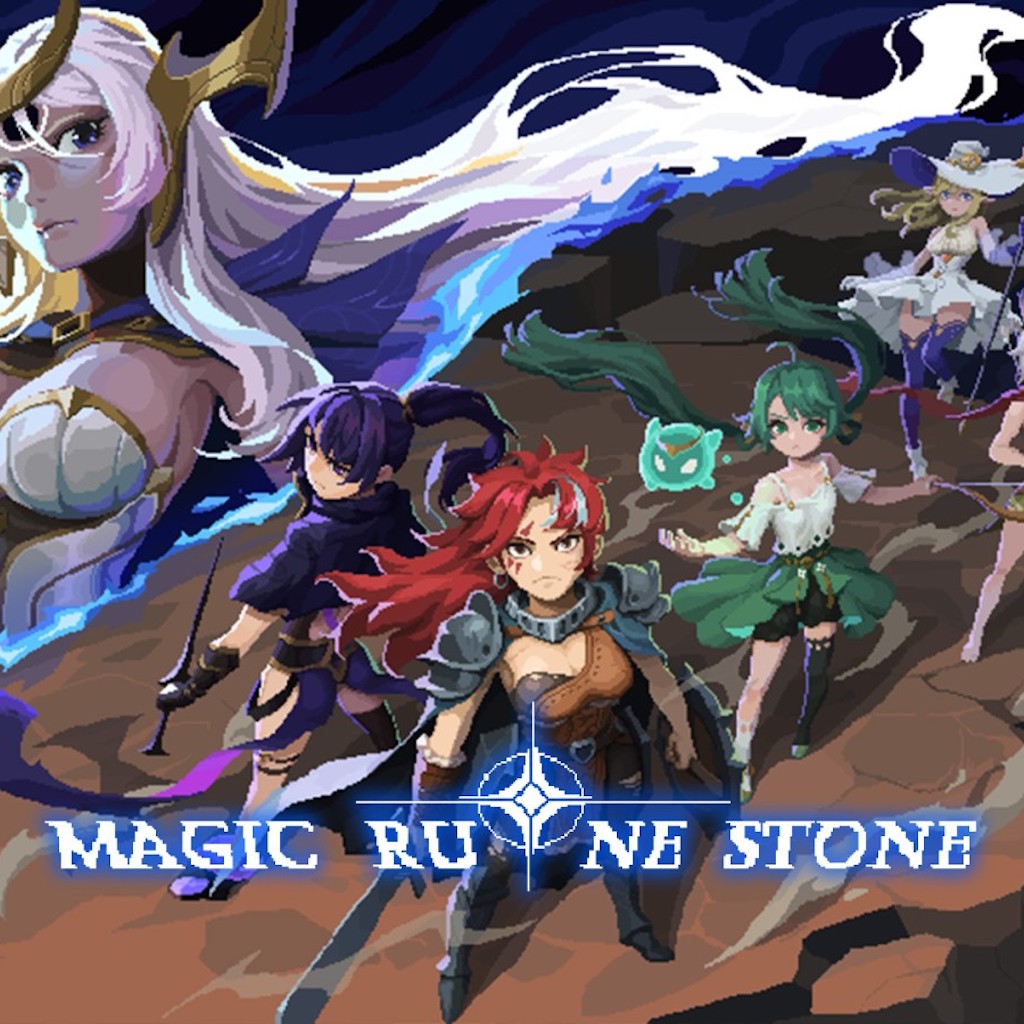
Visually, Magic Rune Stone is competent rather than spectacular. The art style leans toward familiar fantasy territory — glowing runes, armored heroes, shadowy dungeons — without establishing a particularly strong identity. Enemy designs are readable and varied, though few will linger in memory.
Animations get the job done, especially once builds start filling the screen with beams, explosions, and status effects. There’s a certain chaotic beauty to high-level play, even if the underlying assets are modest.
The soundtrack follows a similar path: energetic, appropriate, rarely distracting. It supports the action without elevating it. This is a game defined more by systems than spectacle.
Where the Spell Falters
Despite its strengths, Magic Rune Stone occasionally struggles with balance and clarity. The sheer number of interacting mechanics can overwhelm new players, and tooltips don’t always explain synergies as well as they should. Some Blessings feel dramatically stronger than others, leading to runs that hinge more on luck than strategy.
Enemy variety, while decent, can’t always keep pace with the escalating power of the player. Late-game encounters sometimes devolve into screen-wide chaos where positioning matters less than raw numerical supremacy. For some this power fantasy will be the main attraction; others may crave more tactical nuance.
There’s also a lingering sense of familiarity. Veterans of titles like Hades, Vampire Survivors, or Dead Cells will recognize many structural beats. Magic Rune Stone refines rather than reinvents.
A Laboratory of Destruction
Yet it’s hard to stay critical when the game is this compulsively playable. The constant drip of new skills, gear, and treasures keeps the next run eternally tempting. Even failed attempts contribute knowledge, nudging you toward the next outrageous combination.
BD Games has crafted a robust playground for build-crafters — a place where half-baked ideas can evolve into unstoppable monstrosities. It respects the player’s creativity, which is ultimately what any great roguelite should do.
Final Score
Magic Rune Stone may not rewrite the genre’s spellbook, but it casts its familiar magic with confidence and depth. For players who live to theory-craft devastating builds and watch numbers explode, this is a dungeon well worth diving into again and again.