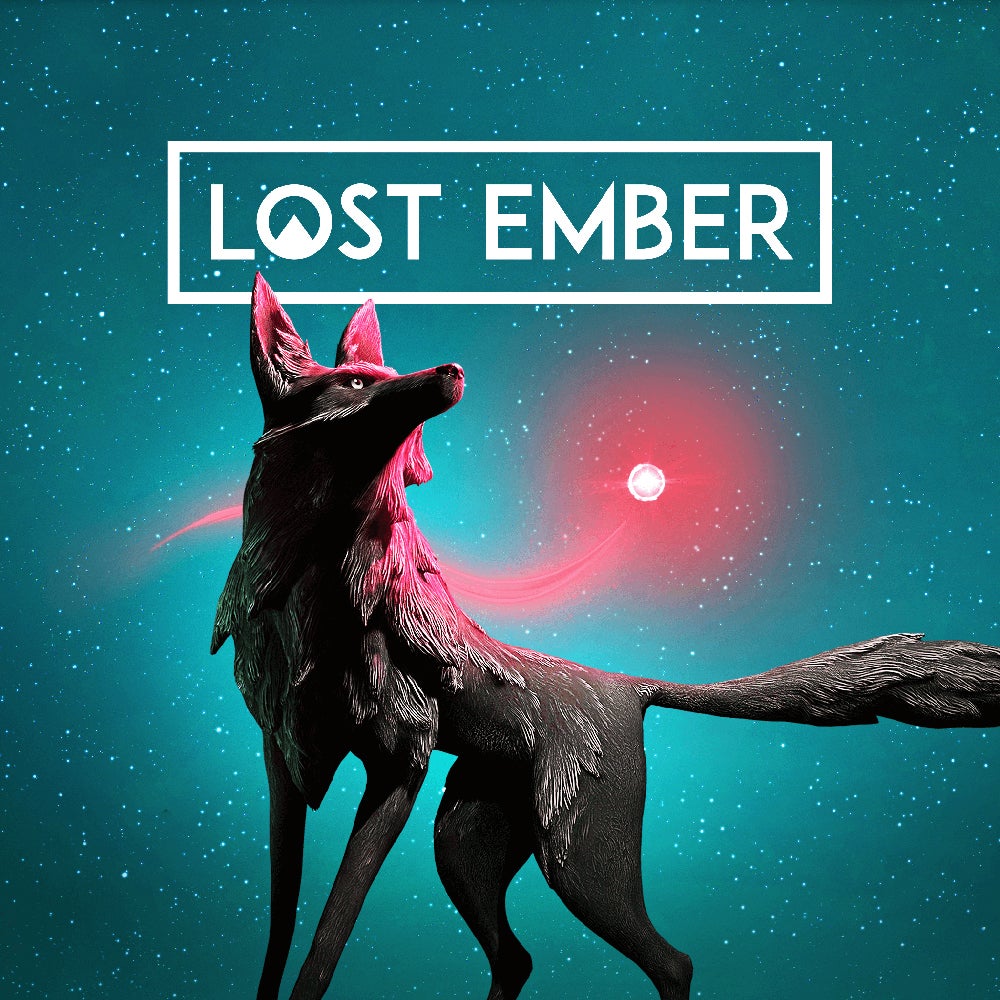
It’s easy to overlook games like Lost Ember in a market dominated by sprawling open worlds, endless combat systems and constant objective markers. Yet every so often, a game comes along that strips away the noise and asks something much simpler of its audience. Slow down. Look around. Listen. Developed by Mooneye Studios and released on PlayStation 5 and Xbox Series in a new retail package by Microids, Lost Ember: Wolf Pack Edition offers players the chance to experience one of the most quietly beautiful adventure games of recent years in its definitive form.
This edition bundles the original game with the Legendary Souls DLC, a digital soundtrack, a handsome artbook and a handful of collector’s extras. While the physical bonuses are a welcome addition for fans, the real attraction remains the game itself. Even several years after its original release, Lost Ember still feels refreshingly unique because it doesn’t try to compete with louder adventures. Instead, it carves out its own space through atmosphere, emotion and a wonderfully original mechanic.
From the opening moments, it’s clear this is not a story about saving the world through violence. It is about understanding the world that came before and discovering why it disappeared.
Walking in Another Creature’s Paws
You begin your journey as a lone wolf, wandering through a landscape reclaimed by nature. Ancient ruins peek through dense forests, forgotten temples lie beneath thick vines, and wildlife roams freely, with no sign of humanity. Alongside you floats a mysterious spirit companion whose conversations slowly unravel the mystery surrounding the long-lost Yanrana civilisation.
The wolf is your primary form, but it quickly becomes clear that this is only the beginning of your adventure. Lost Ember’s defining feature is its ability to let you possess almost any animal you encounter. Rather than treating this as a novelty, the game builds its entire progression around seeing the world through different eyes.
One moment you’re sprinting through the woodland as a wolf, then diving into a nearby lake to become a fish. Later you’re soaring above enormous canyon walls as a parrot, then transforming into a mountain goat to climb cliffs that would otherwise be impossible to reach. Eventually you’ll burrow beneath ancient structures as a mole, squeeze through narrow tunnels as a smaller creature, and discover entirely new paths hidden from your previous perspective.
Every transformation feels natural, as each animal moves exactly as you would hope. The wolf feels agile and powerful. Birds glide gracefully across vast landscapes. Fish drift effortlessly through crystal-clear rivers. Even the humble wombat brings its own playful charm, rolling through long grass with an infectious sense of freedom.
Few games make movement itself feel rewarding, but Lost Ember succeeds because every new creature offers another way to experience its remarkably varied world.
Nature Takes Centre Stage
The environments deserve as much praise as the transformation mechanic. Lost Ember presents a world where nature has reclaimed every trace of civilisation, creating landscapes that feel peaceful rather than desolate. Ancient architecture blends seamlessly into forests, deserts and mountains, suggesting that enough time has passed for the world to heal from whatever tragedy befell humanity.
The variety across each region keeps exploration engaging throughout the adventure. Dense rainforests give way to open plains, which in turn lead to towering cliffs, underground caverns and forgotten temples. Every location feels handcrafted with care, encouraging curiosity rather than rushing players towards the next objective.
There is a genuine sense of tranquillity throughout the experience. Birds circle overhead as rivers gently flow beneath wooden bridges. Sunlight filters through dense canopies, casting warm shadows across ruined stonework. It creates an atmosphere in which stopping simply to admire the scenery never feels like wasted time.
On current-generation consoles, the presentation remains impressive. Sharper image quality, smoother frame rates and quicker loading times all help maintain immersion, allowing the world to unfold naturally without technical interruptions.
A Story Built on Memory
Lost Ember tells its story differently from most adventure games. Rather than lengthy cutscenes or endless dialogue, much of the narrative unfolds through environmental storytelling and magical memory fragments scattered throughout the landscape.
As you uncover echoes from the past, the rise and eventual downfall of the Yanrana civilisation slowly take shape. Themes of loyalty, betrayal, sacrifice and regret emerge gradually, trusting players to connect the pieces rather than spelling everything out.
This restrained storytelling works remarkably well because it mirrors the process of archaeology. You’re not simply following a plot. You’re uncovering history, one forgotten memory at a time. Every ruined temple and abandoned settlement becomes another clue to understanding what happened to those who once called this place home.
Your spirit companion adds another emotional layer to the journey. Their conversations begin uncertainly and mysteriously, then grow increasingly personal as hidden truths emerge. Without giving too much away, the relationship between the two central characters becomes the emotional anchor that gives the final chapters their weight.
The included Legendary Souls DLC further expands this mythology by encouraging players to seek out hidden spirits scattered across the world. While not essential to understanding the main story, it offers additional lore for those eager to explore every corner of the map.
Peaceful, Perhaps Too Peaceful
As much as Lost Ember excels at atmosphere, that is also where some players may struggle to connect with it. There is almost no traditional challenge throughout the adventure. There are no enemies to defeat, no demanding platforming sections, and virtually no risk of failure.
Puzzle-solving remains intentionally straightforward. Most obstacles are solved by recognising which animal ability is needed to progress, making progression feel intuitive rather than intellectually demanding. This keeps the experience accessible but occasionally removes any real sense of accomplishment.
Players expecting deeper gameplay systems may find themselves wishing for more meaningful interactions with the world. Exploration remains consistently enjoyable, yet the mechanics rarely evolve beyond movement and basic environmental navigation. There are also a handful of minor visual quirks, including occasional clipping when smaller animals move through particularly tight spaces. None of these issues significantly impact the experience, but they do remind you that this remains a smaller independent production.
Still, criticising Lost Ember for lacking combat misses the point. The game isn’t interested in testing your skills. It’s interested in creating a feeling, and that feeling lingers long after the credits roll.
A Journey Worth Taking
Lost Ember: Wolf Pack Edition is both a celebration and a reminder of what independent developers can achieve when they commit wholeheartedly to a singular creative vision. It doesn’t overwhelm players with sprawling systems or endless checklists. Instead, it offers a carefully crafted world that invites quiet reflection, rewarding patience with breathtaking scenery and genuine emotional resonance.
The animal possession mechanic remains one of the most imaginative traversal systems in modern adventure games, transforming simple exploration into something magical. Combined with beautiful environmental design, a moving orchestral soundtrack and understated storytelling, it creates an experience that feels timeless rather than trendy.
Not every player will embrace its deliberately gentle pace. Those seeking demanding puzzles or adrenaline-fuelled action will almost certainly leave wanting more. However, anyone willing to surrender to its rhythm will find an adventure that lingers long after the journey ends.
Lost Ember reminds us that games don’t always need to be loud to be memorable. Sometimes the quietest stories echo the longest.