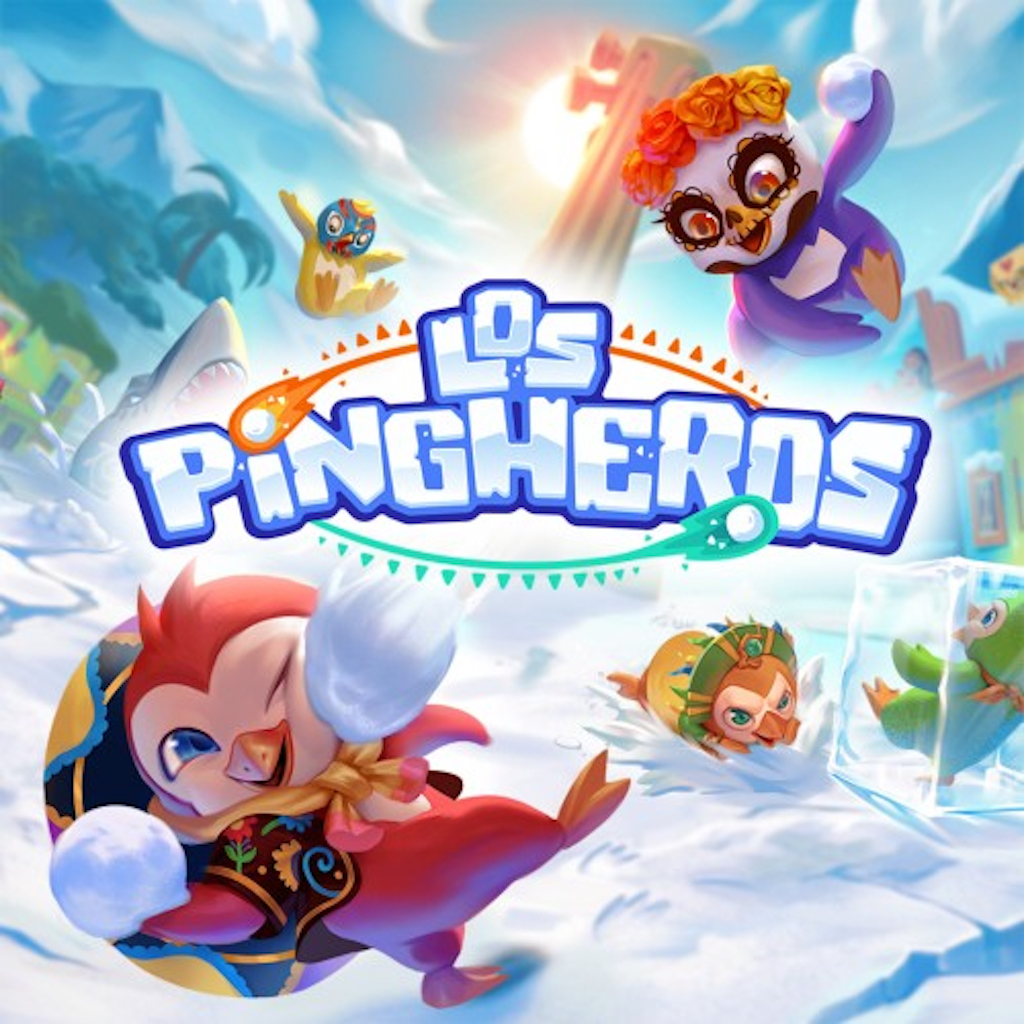
Los Pingheros is a game that thrives on immediacy. Loud, frantic, and unapologetically silly, it positions itself firmly within the party brawler space, where accessibility and energy matter more than precision or polish. Built around physics-driven combat, colourful characters, and shared-screen chaos, Los Pingheros delivers an experience that is easy to grasp and often genuinely funny — particularly when enjoyed with others. However, beneath its energetic surface lies a game whose depth and longevity struggle to match its initial impact.
A Concept Fueled by Absurdity
From its name to its presentation, Los Pingheros makes no attempt to take itself seriously. Players control cartoonish penguin-like characters battling across icy arenas using improvised weapons, exaggerated physics, and slapstick movement. The game’s humour is broad and visual, relying on pratfalls, unexpected collisions, and over-the-top reactions rather than dialogue or narrative.
There is little in the way of story or world-building, and that is clearly intentional. Los Pingheros is not about context; it is about action. The premise exists purely to justify chaos, and in that respect, it succeeds. Players understand the objective instantly: knock opponents out, survive the madness, and embrace the nonsense.
Core Gameplay and Physics-Based Combat
At its core, Los Pingheros is a physics-driven arena brawler. Movement is loose and deliberately imprecise, encouraging unpredictable outcomes rather than skill-based mastery. Characters slide, stumble, and collide with exaggerated momentum, turning even simple actions into potential disasters.
Combat revolves around basic attacks, grabs, throws, and environmental interaction. Weapons and hazards are scattered throughout arenas, providing momentary advantages that often backfire as easily as they succeed. Victory rarely comes from calculated play; it comes from opportunism, timing, and a willingness to embrace chaos.
This design philosophy makes Los Pingheros instantly accessible. New players can jump in without tutorials or mechanical understanding and still have fun within minutes. However, it also limits the skill ceiling. Once players understand the basic controls and physics behaviour, there is little room for meaningful improvement beyond familiarity.
Multiplayer as the Core Experience
Los Pingheros is clearly designed with multiplayer at its heart. Local co-op and competitive play are where the game shines brightest, turning every match into a shared spectacle of laughter and frustration. The unpredictable physics ensure that no two matches play out exactly the same, particularly with multiple players colliding in confined spaces.
Moments of accidental brilliance — an unintended knock-out, a perfectly timed slip, or a chain reaction of falls — are frequent and memorable. These unscripted events are the game’s greatest strength, delivering genuine fun that cannot be manufactured through traditional design.
However, the experience is heavily dependent on player chemistry. With the right group, Los Pingheros is chaotic fun. With the wrong group — or played solo — its limitations become far more apparent. Solo modes exist, but they feel like afterthoughts, lacking the energy and unpredictability that multiplayer provides.
Arena Design and Variety
Arenas in Los Pingheros are compact, colourful, and hazard-filled. Ice patches, moving platforms, traps, and environmental weapons ensure constant movement and danger. Visual clarity is generally good, with bold colours and clear silhouettes helping players track action even during chaotic moments.
That said, arena variety is limited. While layouts differ, they rely on similar gimmicks and mechanics. Over time, players will begin to recognise patterns, reducing the novelty of encounters. The lack of meaningful environmental progression means that arenas feel interchangeable rather than distinct.
Matches are short and fast-paced, which suits the game’s party-friendly design. However, the absence of alternative rule sets or modifiers limits replayability once the initial excitement fades.
Visual Style and Presentation
Visually, Los Pingheros is vibrant and expressive. Character animations are exaggerated, movement is intentionally floppy, and visual feedback reinforces the game’s slapstick tone. The art style is cohesive and playful, appealing to a wide audience without becoming visually cluttered.
Performance is generally stable, even with multiple players on screen. Animations prioritise clarity over detail, which is appropriate for the game’s fast-paced nature. However, the visual style does little to evolve over time, and extended sessions reveal repetition in assets and effects.
Menus and interface elements are straightforward and functional, though somewhat barebones. The game prioritises getting players into matches quickly rather than offering extensive customisation or configuration options.
Audio Design and Comedic Timing
Audio design plays a significant role in reinforcing Los Pingheros’ humour. Sound effects are punchy and exaggerated, with collisions, slips, and knock-outs accompanied by satisfying audio cues. These effects enhance the physicality of combat and contribute to the game’s comedic rhythm.
Music is upbeat and energetic, providing a lively backdrop without overpowering gameplay. However, tracks repeat frequently, and the lack of musical variety becomes noticeable during longer sessions.
Character vocalisations and reactions are minimal but effective, adding personality without distracting from action. Like much of the game, audio design is functional rather than ambitious.
Progression, Longevity, and Replay Value
Progression in Los Pingheros is limited. There are cosmetic unlocks and minor rewards for continued play, but they do little to alter gameplay or strategy. This reinforces the game’s party-focused nature but offers little incentive for long-term engagement.
Replay value depends almost entirely on social context. With friends, Los Pingheros can remain entertaining through sheer unpredictability. Without that social element, its shallow systems and limited modes quickly become apparent.
There are no deep progression systems, competitive rankings, or evolving mechanics to sustain interest over time. Los Pingheros is designed to be picked up, enjoyed, and put down — not mastered or invested in long-term.
Accessibility and Audience Fit
Los Pingheros excels in accessibility. Controls are simple, failure carries little consequence, and the game accommodates players of varying skill levels. This makes it well-suited for casual gatherings, family play, or party settings.
However, players seeking depth, competitive balance, or solo content will likely find the experience lacking. The game does not attempt to cater to those audiences, and its narrow focus is both a strength and a limitation.
Final Verdict
Los Pingheros is a lively, chaotic party brawler that succeeds by embracing absurdity and shared laughter. Its physics-driven combat, colourful presentation, and immediate accessibility make it an excellent choice for local multiplayer sessions. When enjoyed as intended — with friends and low expectations for structure — it delivers memorable moments of slapstick fun.
However, its shallow mechanics, limited variety, and reliance on social play prevent it from achieving lasting appeal beyond short bursts. Los Pingheros knows exactly what it wants to be, and while it does that well, it rarely offers more.
A chaotic and entertaining party game that delivers genuine fun in multiplayer settings, but whose limited depth and variety hold it back from long-term distinction.