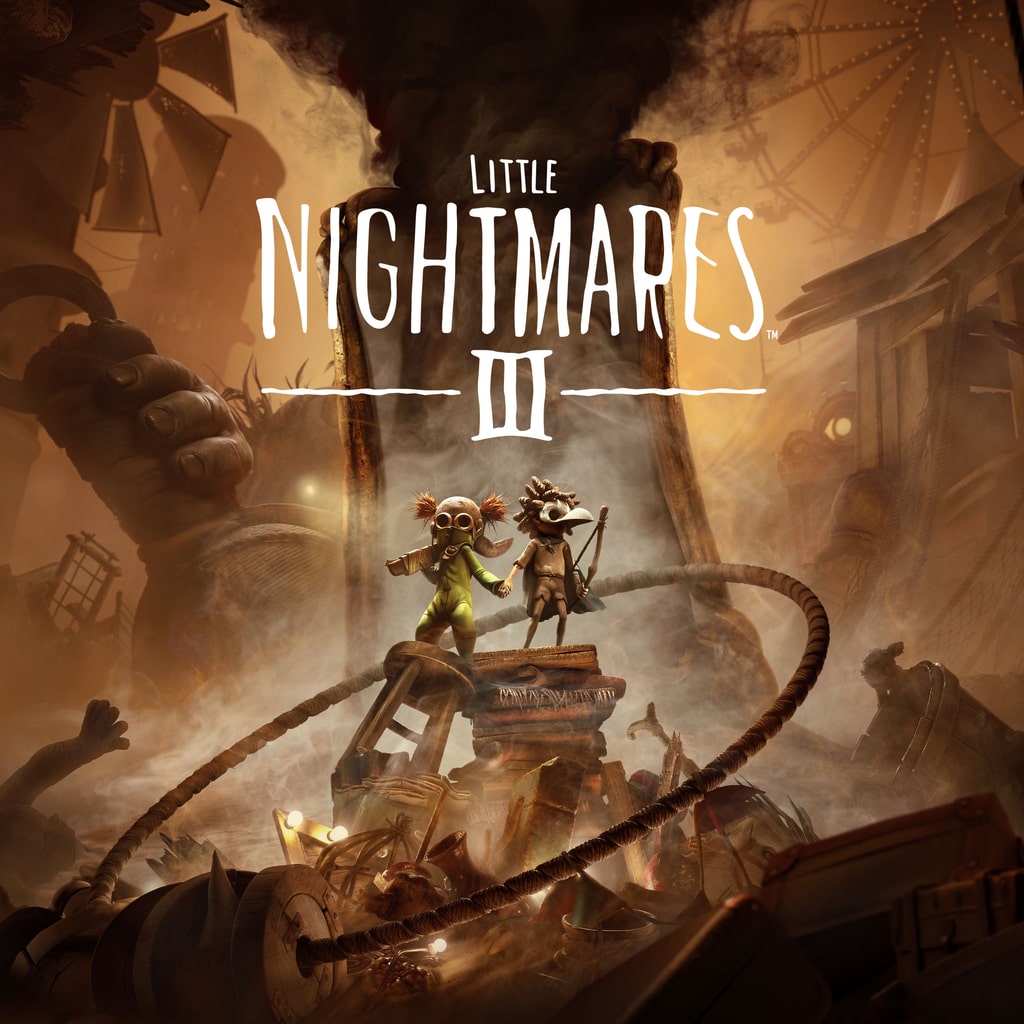
Little Nightmares III – Mirror Edition on Nintendo Switch 2 continues the series’ signature blend of eerie atmosphere, clever puzzles, and unsettling storytelling, though it strikes a more cautious tone compared to its predecessors. Developed by Supermassive Games, this entry introduces a new cooperative gameplay dimension centered on two characters, Low and Alone, who must navigate haunting landscapes filled with grotesque enemies and intricate environmental puzzles. While the game stays true to its dark roots, it faces technical and design challenges that somewhat dampen its impact on the Switch 2.
Players control Low, a boy wielding a bow and wearing a plague doctor’s mask, alongside Alone, a wrench-wielding girl with an aviator helmet. Each character has unique abilities integral to progression: Low shoots arrows to manipulate distant objects and activate mechanisms, while Alone’s wrench helps clear obstacles and solve physical puzzles. The game’s puzzles rely heavily on cooperative interaction, and while local co-op is supported, the AI companion mode for solo players can feel overly simplistic or occasionally unresponsive, occasionally leading to frustration when the companion fails to perform necessary actions. This design choice highlights a missed opportunity to include a character-switching mechanic for single-player, which could have preserved the cooperative feel more accurately.
The narrative unfolds across four atmospheric chapters, transporting players through diverse nightmare-inspired locales—from surreal desert landscapes with eerie updrafts to an abandoned island asylum and a nightmarish carnival. The environments are beautifully crafted with meticulous attention to detail, contributing heavily to the game’s oppressive, unnerving mood. Sound design enhances this ambiance with a chilling soundtrack and unsettling environmental audio that keeps tension high throughout the gameplay. The game’s storytelling, however, feels somewhat fragmented and incomplete, seemingly relying on future DLC to fill narrative gaps and fully reveal its mysteries.
On the technical front, Little Nightmares III on the Switch 2 struggles with performance issues. The game runs at a target of 30fps but frequently encounters frame rate drops and micro-stutters during intense sequences, both in handheld and docked modes. Visual fidelity takes a hit with grainy textures and occasional rendering glitches, particularly noticeable during boss fights, where animations sometimes appear jittery or “stop-motion” like. These graphical and performance drawbacks detract from the immersion, especially given the series’ prior reputation for polished presentation.
Despite these flaws, gameplay remains satisfying for fans. The suspenseful stealth segments and horror elements keep players on edge, while the co-op puzzles offer quirky, rewarding variety. The addition of a Friend’s Pass allows buddies without a copy of the game to join seamlessly, though each requires their own console, and cross-platform multiplayer is absent. The relatively short length—around four to five hours—keeps the experience tight but may leave players craving more depth and explanation by the end.
Overall, Little Nightmares III – Mirror Edition preserves much of what made the franchise compelling: its moody environments, clever interplay of light and shadow, and a creeping sense of dread. However, the game’s conservative design choices, underwhelming single-player AI, and technical limitations on Switch 2 make it less impactful than previous titles. It feels more like a transitional installment than a reinvention, suggesting that future DLC content and patches may be necessary to realize its full potential.
Fans of horror puzzle-platformers who own a Switch 2 will find a visually atmospheric and eerie adventure here but should prepare for a few rough patches in performance and pacing. For those sensitive to frame drops or who prefer a more seamless single-player experience, other platforms might currently offer a smoother playthrough.