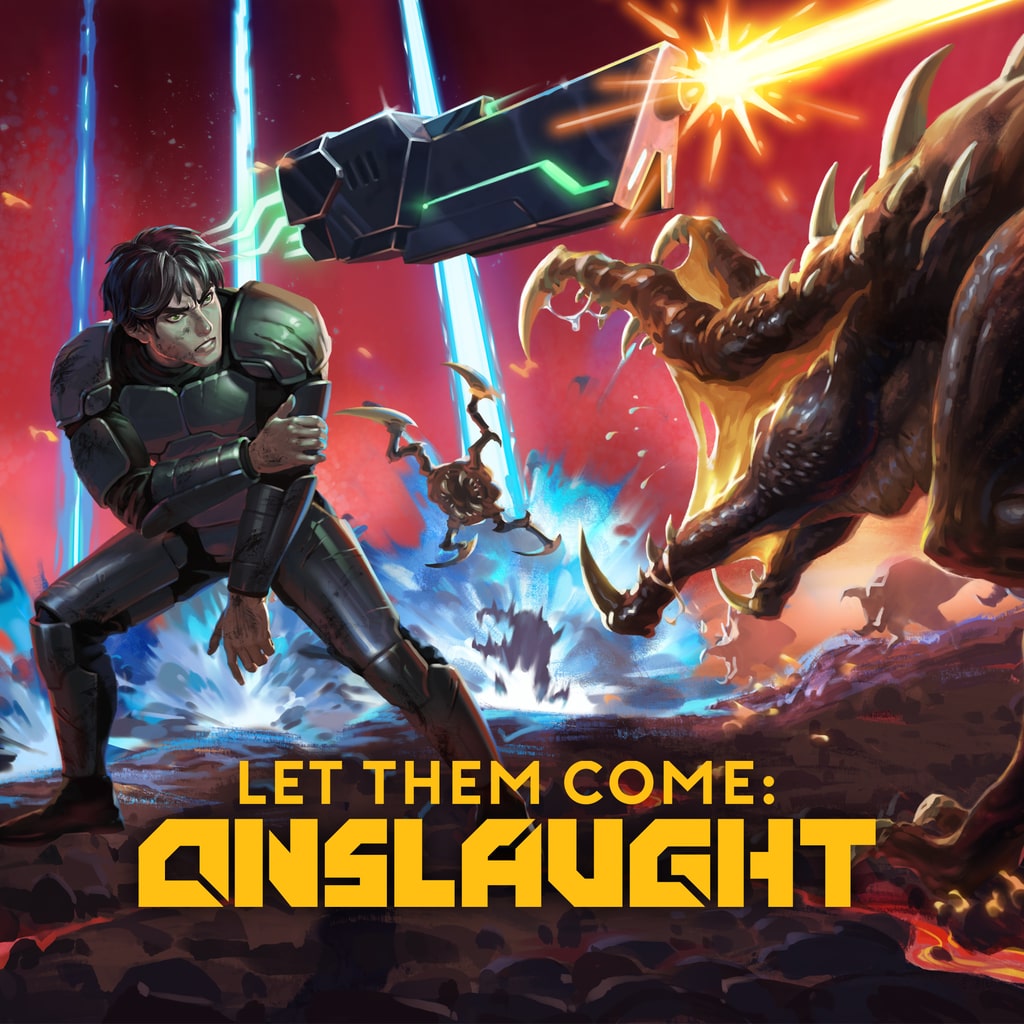
The original Let Them Come carved a niche as a no-nonsense, seat-of-your-pants horde defense shooter—a game where survival meant managing weapons, rhythm, and panic in equal measure. Let Them Come: Onslaught takes that core identity and scales it up dramatically. Bigger arenas. Bigger monsters. Bigger systems. Bigger stakes. Yet at its heart, it remains a proudly chaotic arcade experience that thrives on overwhelming odds and the joy of mowing down an endless tide of alien horrors.
Onslaught is not trying to be a tactical shooter, a complex roguelike, or a deep sci-fi epic. Instead, it doubles down on the primal fun of hold the line, hold your breath, and don’t let anything through. And that purity—wrapped in polished progression systems, improved visuals, and smart mechanical refinements—makes it one of the most satisfying horde shooters of its scale.
A Bigger Story Wrapped in Bigger Guns
The narrative picks up after the events of the first game, with humanity still engaged in brutal conflict against an adaptable alien swarm known as the Kryon. This time, mercenary hero Rock Gant is not confined to a single stationary position—he’s part of a mobile strike force deployed to Kryon-infested planets to push back the invasion at its source.
The story is simple, pulpy, and self-aware. Through brief cutscenes and mission briefings, we learn about:
- Kryon evolution and mutations
- Failed colony defenses
- Corporate backers who clearly don’t value human lives
- Rock’s dry sense of humour and questionable pay grade
While the narrative never tries to be profound, it adds flavour and motivation, giving Onslaught more worldbuilding than its predecessor without bogging down the gameplay.
Gameplay: Controlled Chaos at Its Absolute Best
Onslaught retains the core DNA of Let Them Come—fast-paced horde shooting, high lethality, and reactive weapon switching—but expands nearly every system.
Movement and Positioning
The most significant change: Rock can now move across multi-lane arenas instead of being locked to a single turret or wall. This transforms encounters dramatically:
- You’re not just firing—you’re dodging, repositioning, and adapting on the fly.
- Enemies flank, swarm, climb terrain, jump from ceilings, and emerge from vents.
- Vertical play and elevation differences force situational awareness.
This newfound mobility adds a layer of strategy that wasn’t possible before.
Weapons: Loud, Brutal, and Deeply Varied
Onslaught includes an expanded arsenal of:
- SMGs, shotguns, and assault rifles
- Heavy turrets and deployable drones
- Specialist weapons like cryo-lances, incendiary saws, and arc-blasters
- Throwable explosives ranging from cluster grenades to shock mines
Every weapon feels distinct thanks to strong recoil, punchy sound design, and an upgrade system that encourages experimentation.
Skills and Upgrades
Rock now has a full skill progression system:
- passive boosts (reload, crit, stamina)
- active abilities (overdrive, swarm repulsion fields)
- class-style modifiers that push different builds
This allows players to tailor their style—aggressive, defensive, or utility-focused.
Enemy Design: The Swarm Evolves
The Kryon are more formidable than ever. They’re faster, smarter, and more visually threatening. Onslaught introduces several new enemy classes:
- Burrowers that erupt from beneath your feet
- Shriekers whose sonic blasts disrupt aim
- Juggernauts with armour plating that requires weak-point targeting
- Sporecasters that blanket arenas in toxic clouds
- Hivebrutes—mini-bosses that can destroy cover and terrain
The game excels in variety. Every wave feels like a new problem to solve rather than repeating the same patterns endlessly.
Mission Structure: More Than Endless Waves
While wave-based arenas remain the core experience, Onslaught spreads its content across a robust campaign featuring:
- Holdout missions in collapsing colonies
- Escort runs with vulnerable convoy vehicles
- Hive penetration missions that require clearing interconnected rooms
- Boss battles with screen-filling alien monstrosities
These variations keep pacing fresh and prevent fatigue. Optional challenges, score modifiers, and weekly rotating arenas add even more longevity.
Presentation: Loud, Slick, and Gloriously Violent
Visuals
Onslaught delivers a vibrant, stylish aesthetic:
- Particle effects and gore sprays are plentiful and satisfyingly chunky
- Lighting shifts as waves intensify, amplifying tension
- Alien designs are grotesque and creative, full of writhing textures and glowing organs
- Environmental destruction adds weight and spectacle
It’s a huge leap over the original’s tighter 2D framing.
Sound Design
Everything from bullet casings to alien screeches to turret overheat warnings sounds crisp and explosive. The soundtrack leans into:
- industrial metal
- electronic distortion
- pulse-pumping battle tracks
It never overwhelms the action but always reinforces the game’s momentum.
Performance and Controls
Onslaught plays beautifully on modern platforms:
- smooth frame rates during massive swarm encounters
- responsive controls with no input lag
- excellent sound mixing even during chaotic fights
The UI remains clean and intuitive, despite the increased complexity of progression systems.
Where Onslaught Falls Short
Despite its strengths, a few weaknesses do surface:
- Difficulty spikes can be sudden and punishing, especially during early boss fights.
- Escort missions occasionally feel more frustrating than fun.
- Visual clutter in late waves can make tracking enemies difficult.
- Narrative depth remains limited—the story works, but it’s surface level.
None of these issues ruin the experience, but they do prevent Onslaught from reaching the same refined balance as top-tier action shooters.
Verdict: A Bigger, Better, Brutal Evolution of the Original
Let Them Come: Onslaught is exactly what a sequel should be: more ambitious, more polished, more explosive, and more confident in its identity. It expands the original’s core strengths while introducing depth and variety that make every encounter feel dynamic and satisfying.
For fans of horde shooters, score-attack games, or high-intensity action experiences, this is one of the most exhilarating titles of the year.