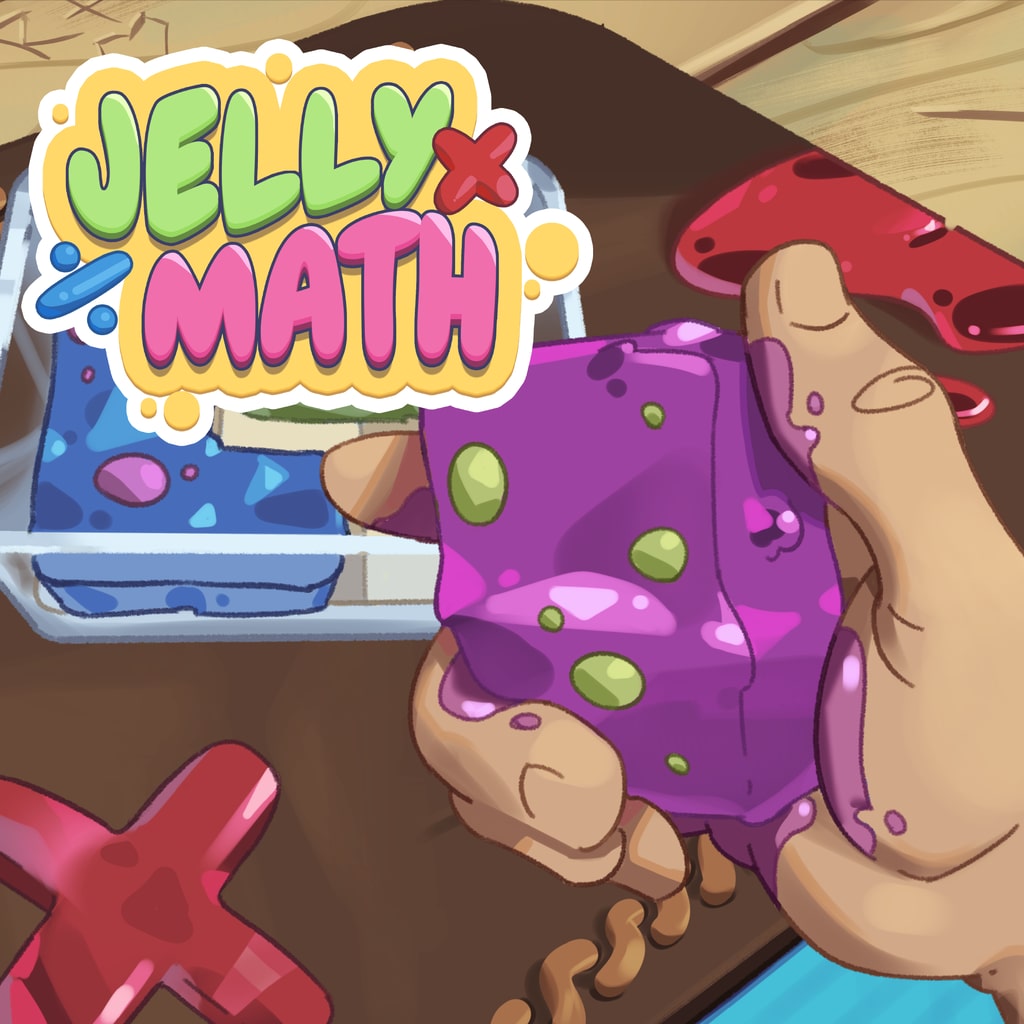
Puzzle games often walk a delicate line. Lean too heavily into complexity and they risk alienating casual players. Simplify too much and they lose the sense of satisfaction that keeps people engaged. Jelly Math finds a comfortable middle ground between those extremes, delivering a charming little brain teaser that feels approachable from the moment you start playing while still offering enough clever ideas to keep your mind engaged.
Developed and published by Afil Games, Jelly Math takes the intimidating reputation of mathematics and wraps it in a colourful, welcoming package. Instead of textbooks, formulas, and endless calculations, players are presented with cheerful picnic-themed environments populated by wobbly jelly pieces, each with its own value and shape. The goal sounds simple enough: place the pieces correctly to create equations that reach the required result. Naturally, things become far more interesting once the game introduces modifiers, obstacles, and increasingly creative puzzle layouts.
The result is a game that knows exactly what it wants to be. It is not trying to become the next great puzzle epic, nor is it attempting to reinvent mathematical games entirely. Instead, Jelly Math focuses on delivering a concise, enjoyable experience built around accessible ideas and satisfying problem-solving.
A Puzzle Built on Numbers and Creativity
At first glance, Jelly Math appears almost deceptively straightforward. Players are given a collection of jelly pieces, each with a specific numerical value, and must arrange them in a puzzle grid to satisfy a target equation. Early levels serve as a gentle introduction, teaching the core mechanics without overwhelming players with unnecessary complexity.
What makes the gameplay engaging is how quickly small decisions begin to matter. Rotating a single piece or placing a jelly in a slightly different position can completely alter the outcome of an equation. Solutions that initially seem obvious often reveal unexpected complications, encouraging experimentation rather than brute-force guessing.
The game deserves credit for how naturally it introduces new mechanics. Additional modifiers, multiplication spaces, and restricted grid locations arrive gradually, allowing players to grasp each new concept before combining it with others. This steady progression keeps the puzzles feeling fresh without ever becoming intimidating. There is a pleasant rhythm to the experience that makes it easy to settle into a comfortable cycle of observation, experimentation, and eventual success.
Perhaps the most satisfying aspect of Jelly Math is the moment when a seemingly impossible puzzle suddenly clicks into place. That instant of clarity, when every number aligns perfectly and the solution reveals itself, delivers the kind of small but rewarding dopamine hit that all great puzzle games strive to achieve.
Presentation with Plenty of Charm
Mathematics is not always associated with warmth or personality, yet Jelly Math goes out of its way to create an inviting atmosphere. The picnic-inspired presentation gives the entire experience a cosy feel, transforming what could have been a sterile educational exercise into something far more approachable.
The jelly pieces themselves are colourful and expressive, with soft visuals that make the board pleasant to look at during extended play sessions. Bright colours help distinguish the pieces while maintaining a cohesive aesthetic that never feels overwhelming. Every element feels carefully designed to support the game’s relaxed identity.
The backgrounds deserve praise as well. While they remain relatively simple, the picnic environments create a sense of comfort that complements the gameplay perfectly. Rather than distracting players with excessive visual effects, the environments quietly enhance the mood and allow the puzzles to remain the centre of attention.
Audio follows a similarly understated philosophy. The soundtrack remains light and unobtrusive throughout, creating a relaxing backdrop that encourages concentration without demanding attention. It is the kind of music that supports the experience rather than defining it, which feels entirely appropriate for a puzzle game built around thoughtful problem-solving.
Accessibility Without Sacrificing Satisfaction
One of Jelly Math’s greatest strengths is its accessibility. Puzzle games can sometimes become so focused on challenging veteran players that newcomers feel excluded. Here, the learning curve is remarkably welcoming.
The game communicates its rules clearly. Objectives are easy to understand, visual feedback is immediate, and mechanics are introduced at a comfortable pace. Players rarely feel lost because the game consistently provides enough information to encourage logical thinking without simply handing over the solution.
This accessibility extends beyond the mechanics themselves. The cheerful presentation, intuitive controls, and relatively short puzzles make Jelly Math easy to pick up for brief sessions. Whether playing on a console, handheld device, or PC, the game feels perfectly suited to quick bursts of gameplay when you have a few spare minutes.
At the same time, the puzzles still provide enough engagement to prevent the experience from feeling mindless. While the difficulty never reaches truly demanding heights, there is a genuine sense of accomplishment in solving each challenge. The game respects the player’s intelligence without demanding advanced mathematical knowledge.
That balance makes Jelly Math particularly appealing to a broad audience. Younger players, casual puzzle fans, and experienced genre veterans can all find something enjoyable within its colourful grids.
The Limits of Simplicity
As enjoyable as Jelly Math can be, its greatest strength also becomes its biggest limitation. The same accessibility that makes the game welcoming also prevents it from reaching greater depth.
Experienced puzzle enthusiasts may find themselves progressing through the campaign at a rapid pace. Once the core mechanics are understood, many solutions become immediately apparent, reducing the need for experimentation. The challenge curve remains gentle throughout, which helps maintain the game’s relaxing atmosphere but limits its long-term staying power.
The overall length of the experience is another area where some players may feel disappointed. Most puzzles can be completed relatively quickly, and the entire catalogue of levels can be exhausted within a single sitting. While the low price point helps offset concerns about value, there is little reason to revisit completed stages once every solution has been discovered.
The achievement and trophy structure reflects this brevity. Completionists will likely have little trouble unlocking everything the game has to offer, which may appeal to some players but highlights just how compact the overall experience really is.
None of these criticisms fundamentally damage the game, but they do place a ceiling on its ambitions. Jelly Math succeeds as a casual puzzle experience, yet it never quite develops into something that lingers in the memory long after completion.
Final Verdict
Jelly Math values simplicity. Rather than chasing complexity for its own sake, it focuses on delivering a clean, approachable puzzle experience centred on satisfying moments of discovery. The colourful presentation, intuitive mechanics, and welcoming difficulty curve combine to create a game that is easy to recommend to players seeking a relaxing mental workout.
While its limited challenge and relatively short campaign prevent it from reaching the heights of the genre’s finest examples, it never outstays its welcome. Every puzzle feels thoughtfully designed, every mechanic serves a clear purpose, and the entire experience maintains a cheerful charm from beginning to end. There is something refreshing about a game that knows exactly what it wants to achieve and executes that vision without unnecessary complications.
For players seeking an accessible puzzle game that can be enjoyed in short sessions, Jelly Math delivers exactly what it promises. It may not stretch your brain to its absolute limits, but it provides plenty of satisfying moments along the way. Sometimes that is more than enough.
Jelly Math transforms simple arithmetic into a cosy, colourful puzzle experience packed with charm. Its challenge ceiling is modest and its campaign brief, but its clever design and welcoming presentation make it a sweet little brain teaser worth savouring.