Strategy games require a unique type of patience, one that encourages you to contemplate your choices rather than hurriedly move on. This patience is driven equally by curiosity and strategic thinking. Questions like ‘What if I take this mine first?’ or ‘Should I delay the enemy here and attack there instead?’ are central to the experience. Heroes of Might and Magic: Olden Era instinctively captures this rhythm. It doesn’t attempt to overhaul the series but rather gently revitalises it, like discovering an old map that still feels vibrant beneath the dust.
Developed by Unfrozen and set on the long-teased continent of Jadame, this Early Access return to the legendary series feels like a conversation with its past. It is not just nostalgia, though that certainly plays a role. It is more like recognition. You remember why this structure worked so well in the first place, and you start to realise how little it needed to change.
Presentation and World Design
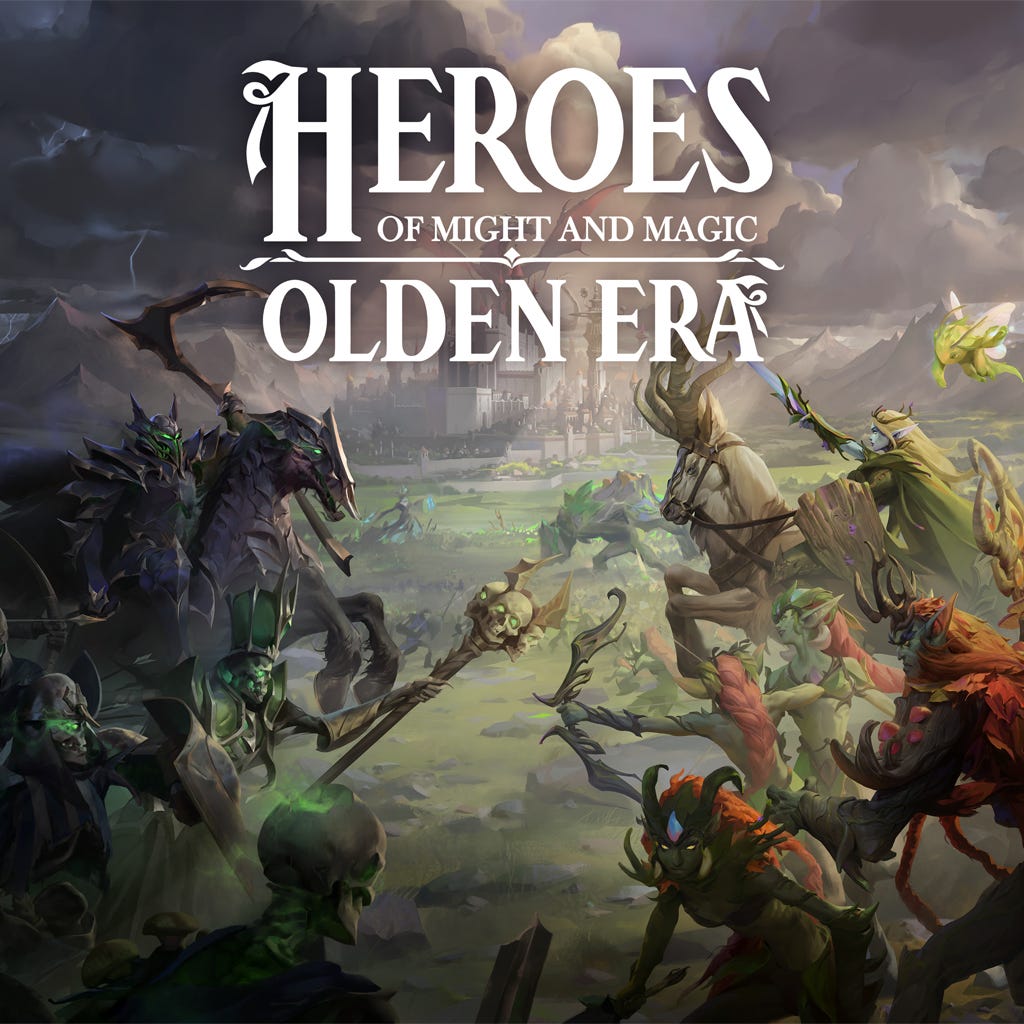
Olden Era leans into a classic fantasy aesthetic, but there is a warmth to its presentation that makes it feel less like imitation and more like preservation. The world of Jadame is colourful without being chaotic, detailed without becoming noisy. Each faction’s territory carries a distinct personality, from the candlelit stonework of the Temple to the creeping, bone-laced architecture of the Necropolis.
The adventure map is where much of the game’s personality quietly lives. Mines sit tucked into mountain passes, creature dwellings rest in forgotten corners of forests, and roaming enemies feel placed rather than random. There is a deliberate sense of geography here that rewards memory. You start to recognise the shape of a region not just by its terrain, but by the stories it quietly tells through placement.
Cities also remain a visual anchor. Watching a settlement grow from a small cluster of buildings into a fortified stronghold still carries that same satisfying progression loop the series has always excelled at. There is something deeply grounding about seeing your economic choices physically stack into walls, towers and recruitment halls.
Core Gameplay
At its heart, Olden Era is still about three intertwined layers: exploration, city building, and tactical combat. The structure is familiar, but the refinements make it feel more deliberate than dated.
Exploration on the overworld map is where the game’s pacing truly breathes. Heroes move across hex-based terrain collecting resources, capturing mines, and uncovering neutral encounters. The return of multiple hero roles per faction gives you more flexibility in how you approach expansion. One hero might focus entirely on resource gathering while another pushes forward aggressively, probing enemy territory and securing key objectives.
City management remains the backbone of your long-term strategy. Each faction offers distinct building paths, and the decision of what to prioritise often defines the tone of your entire campaign. Do you rush military strength, or invest in economic stability first? The game rarely answers for you, and that ambiguity is where much of its appeal lies.
Combat, meanwhile, is still turn-based and grid-focused, but Olden Era adds just enough nuance to keep familiar systems feeling fresh. Unit abilities tied to Focus Points introduce a small but meaningful layer of timing and resource management within battles. A well-timed ability can turn a losing engagement into a decisive victory, but misusing them leaves your army exposed in ways that feel fair rather than punitive.
Factions and Strategy
One of the strongest elements in Olden Era is the diversity of its factions. The return of classic archetypes like the Temple and Necropolis sits comfortably alongside newer interpretations such as the Hive and Schism, each offering very different strategic identities.
The Necropolis in particular remains as hauntingly effective as ever. Watching a defeated enemy army turn into additional units under your control is still one of the most satisfying mechanics in the genre. Meanwhile, the Temple faction rewards disciplined play, with strong defensive units and reliable tactical options that encourage careful positioning.
The Hive introduces something more aggressive and relentless. It pushes forward with swarm-like momentum, favouring pressure over patience. On the other end of the spectrum, the Schism feels unpredictable and spell-heavy, leaning into disruption and battlefield control.
What makes these factions work is not just their unit variety, but how they shape your decisions outside of combat. Each one subtly alters how you value map control, resource acquisition, and even hero development.
Heroes and Progression
Heroes remain the connective tissue of the entire experience. With over a hundred available, each bringing unique starting conditions and passive bonuses, the system encourages experimentation rather than rigid optimisation.
Some heroes are built around movement efficiency, letting your armies traverse the map faster and secure objectives before opponents can react. Others lean into economy, generating resources that slowly shift the balance of power over time. A few specialise in specific unit types, creating clear thematic armies that reward commitment to a single strategy.
The progression system feels more cohesive than overwhelming. Heroes grow in power in ways that are noticeable without becoming unbalanced, and their development ties directly into how you approach both exploration and combat.
Magic and Systems
Magic has been reworked into a constellation system that gives spellcasting a more structured identity. Instead of feeling like a random assortment of effects, spells are grouped into thematic progressions that reward investment and planning. It is a subtle change, but one that makes magic feel less like a toolbox and more like a chosen philosophy.
The new Faction Law system adds another layer of long-term decision-making. Think of it as a kingdom-wide identity system that shapes your strategic direction over time. It gently pushes you toward specialisation without forcing your hand, which keeps each playthrough distinct without overwhelming complexity.
Final Thoughts
Heroes of Might and Magic: Olden Era does not try to modernise the series in a dramatic way. Instead, it refines, polishes and quietly expands on what already worked. That restraint is its greatest strength.
There are moments where its Early Access nature shows, particularly in pacing and balance across larger maps. Some systems still feel like they are settling into place. But even in this state, the foundation is remarkably solid.
More importantly, it understands why people fell in love with this formula in the first place. It is not just about building armies or capturing towns. It is about the slow accumulation of advantage, the tension of a border you are not sure you can hold, and the satisfaction of watching a long plan finally come together.
For series veterans, this feels like a return home. For newcomers, it is one of the more approachable entry points the franchise has seen in years. It may not reinvent the wheel, but it reminds you why the wheel kept turning in the first place.