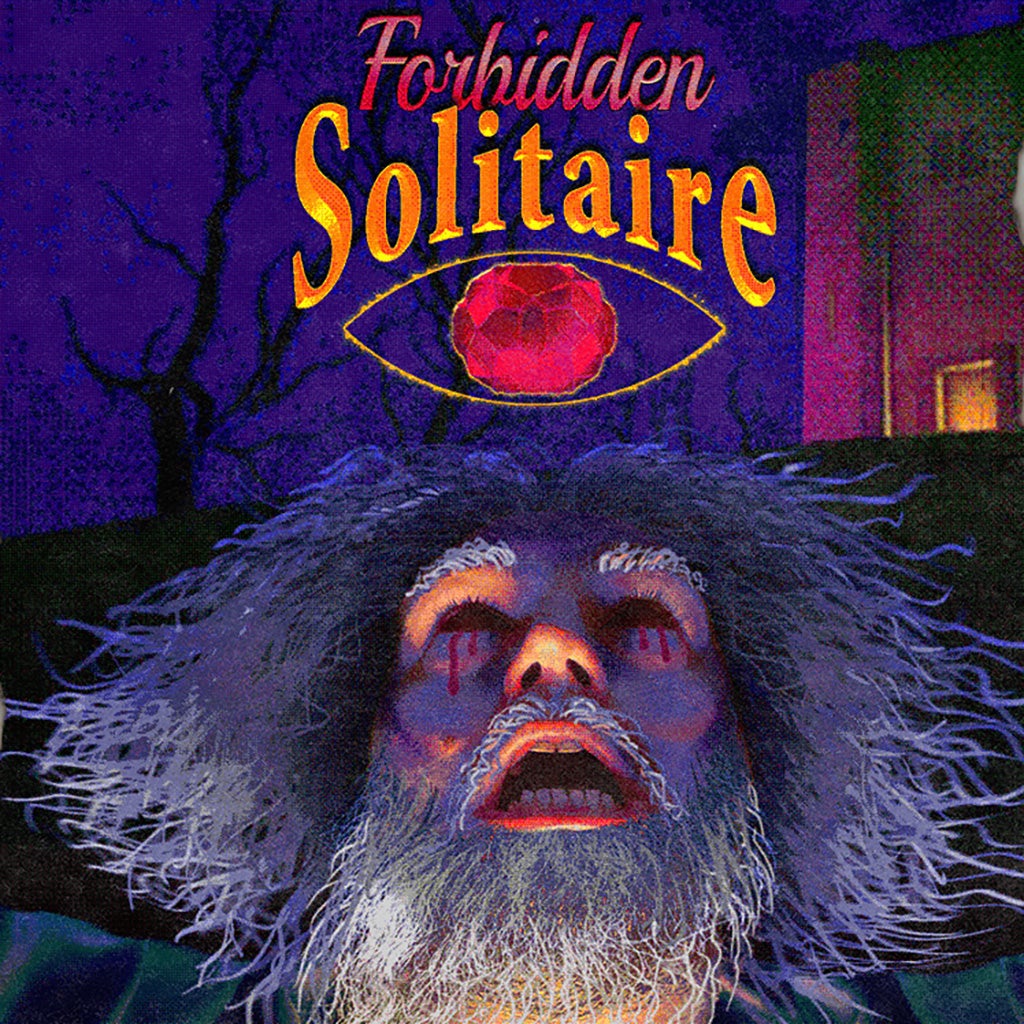
There is a particular, static-filled tension many of us remember from the early days of home computing. The heavy hum of a CRT monitor. The mechanical grind of a CD-ROM drive spinning to life in a dark bedroom long after everyone else had gone to sleep. Back then, games often felt mysterious in ways modern releases rarely do. You never quite knew what lay behind a menu screen or was hidden inside a badly compressed video file. Forbidden Solitaire understands that feeling better than almost any horror game released this year.
Developed by Grey Alien Games alongside Night Signal Entertainment, this strange fusion of solitaire mechanics and psychological horror disguises itself as a forgotten relic from 1995. What begins as a simple card game gradually mutates into something far more unsettling, layering lo-fi horror, faux lost-media storytelling and addictive dungeon-crawling systems into one of the most memorable indie experiments of 2026. It sounds ridiculous on paper. A horror solitaire game should not work nearly this well. And yet somehow, against all odds, it absolutely does.
Presentation
The first thing Forbidden Solitaire gets right is atmosphere. Not “modern horror game” atmosphere with cinematic jump scares and orchestral stings, but the uncomfortable, grainy unease of forgotten technology.
Everything about the game feels deliberately degraded. Menus flicker awkwardly. Audio crackles through compressed speakers. Pre-rendered backgrounds look as if they have been dragged directly from an old bargain-bin CD-ROM compilation. Even the typography feels slightly off, immediately transporting you back to the mid-90s.
The dithered visual style is particularly effective. Shadows break apart into noisy patterns, faces blur unnaturally, and low-resolution textures leave just enough detail hidden to let your imagination fill the gaps. Horror often works best when it withholds clarity, and Forbidden Solitaire constantly weaponises ambiguity.
The FMV sequences are equally impressive for their restraint. Rather than overplaying the horror, they lean into discomfort. Characters pause too long before speaking. Their expressions feel oddly detached. The game quietly builds paranoia through tiny details rather than obvious scares.
Most importantly, the world feels believable. Not necessarily realistic, but authentic to the era it is emulating. If someone told me this disc had genuinely been discovered in the back corner of a forgotten rental store, I might almost believe them.
Gameplay
At its core, Forbidden Solitaire is built around a variation of TriPeaks solitaire. Cards are cleared by selecting values one higher or lower than the current active card, creating chains and combos that gradually open pathways forward.
That simple structure becomes surprisingly tense once monsters and exploration are introduced.
Each dungeon corridor is represented by card layouts that serve as both combat encounters and progression puzzles. Clearing specific combinations might unlock a door, disable a trap or weaken an enemy further down the hallway. Certain cards contain weapons, upgrades or strange narrative fragments that slowly reveal the disturbing history of the fictional Heartblade Interactive studio.
The brilliance lies in how naturally the systems blend together. You are never pulled out of the card game to “do the horror section.” The horror emerges directly from the mechanics themselves. A hand that suddenly becomes impossible to clear creates genuine panic. A cursed modifier that changes card values mid-combo can completely destroy your carefully planned route. It turns solitaire into something hostile.
Combat adds another layer through collectible gemstone upgrades embedded in your hand. Some increase combo potential, while others trigger special attacks or defensive effects. Over time, the game evolves from simple card-clearing into a careful balancing act between risk and preservation.
While the mechanics never become overwhelmingly deep, they remain consistently engaging throughout the campaign’s four-to-five-hour runtime.
Story and Horror
It is in its narrative framing that Forbidden Solitaire separates itself from novelty and becomes genuinely memorable. Set in 2019, the game follows a protagonist who uncovers a supposedly banned 1995 CD-ROM linked to a tragedy involving its developers. As you continue playing, conversations with your sister unfold in messenger windows outside the game itself, creating the illusion that the software is slowly bleeding into reality.
Night Signal Entertainment clearly learned valuable lessons from Home Safety Hotline. Much like that game, Forbidden Solitaire understands that implication is often scarier than explanation.
The game never rushes to reveal its hand. Instead, it drip-feeds disturbing details through corrupted files, fake advertisements, fragmented manuals and subtle visual inconsistencies. You begin to question whether certain glitches are scripted or accidental. Sometimes menus behave differently from how you remember. Occasionally, a sound effect lingers just a little too long.
One sequence involving a corrupted save file genuinely unnerved me in a way few modern horror games manage. The game also wisely avoids relying on cheap jump scares. The fear here is psychological and cumulative. It builds slowly until even simple menu navigation starts to feel uncomfortable.
Sound Design
Audio plays a major role in maintaining immersion. The soundtrack blends eerie ambient drones with synthetic, MIDI-inspired melodies that feel ripped from a forgotten Windows 95 fantasy game.
Silence is used just as effectively. Certain areas become unnervingly quiet, leaving only the sound of mouse clicks and distant static. When the music finally returns, it often arrives distorted or incomplete, like a corrupted file struggling to play.
Voice acting during FMV scenes deliberately walks the line between awkward and uncanny. Characters sound emotionally detached in ways that feel deeply unnatural without becoming cartoonish. All of this contributes to the sensation that something inside the software is fundamentally broken.
Replayability and Issues
The recent New Game+ update significantly extends the experience by letting players customise challenge modifiers and level parameters. It adds welcome longevity to a campaign that might otherwise feel slightly brief.
That said, the experience loses momentum in places. The difficulty curve remains fairly gentle for much of the runtime before suddenly escalating near the finale. Some players may find the early sections too forgiving, especially if they are already familiar with solitaire variants.
The pacing of narrative reveals can also feel uneven at times. Certain mysteries land beautifully, while others remain frustratingly vague and under-resolved. Still, these are relatively minor complaints in a game so committed to its identity.
Final Verdict
Forbidden Solitaire is one of the most assured indie horror games released this year. It takes a genre blend that sounds almost laughable at first glance and transforms it into something deeply atmospheric, strangely hypnotic and consistently unsettling.
What makes it special is not simply the novelty of “horror solitaire.” It is the sincerity behind the presentation. Every grainy texture, corrupted sound file and awkward FMV clip feels crafted by people who genuinely understand the strange magic of early PC gaming.
It captures something many retro-inspired horror games miss entirely: not just how old games looked, but how they felt. The uncertainty. The isolation. The creeping suspicion that technology itself was unknowable. By the time the credits rolled, I realised I had spent hours hunched over my monitor with the same nervous curiosity I used to feel as a child, loading mysterious shareware discs late at night. That is a rare kind of horror. And Forbidden Solitaire plays it beautifully.