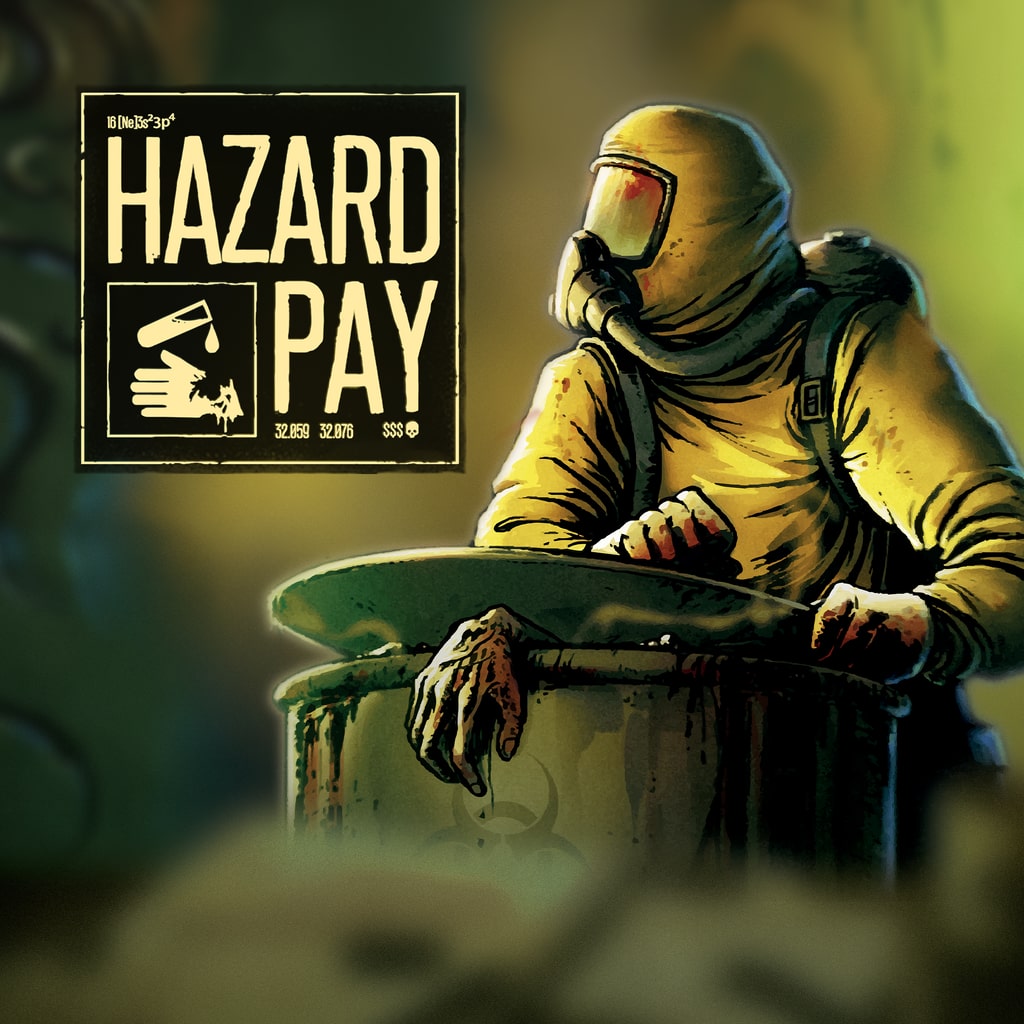
There are plenty of games that put you in the shoes of a hero. You save the world, rescue the innocent, defeat the bad guys, and generally come away feeling rather good about yourself. Hazard Pay takes a very different approach. Here, you are not the person sent in to stop the disaster. You are the poor soul who arrives afterwards with a mop, a checklist, and a very specific set of instructions on what needs to disappear.
Developed by Smitner Studio, Hazard Pay is a pixel-art puzzle game built on the classic foundations of Sokoban, but there is considerably more going on here than simply pushing boxes around a grid. Your employer, the mysterious IPT, sends you into contaminated and abandoned facilities where something has clearly gone horribly wrong. Your job is to clean up the evidence, dispose of anything incriminating, and leave absolutely nothing behind. It is a wonderfully grim premise, and one that immediately gives even the most mundane puzzle objective a rather sinister edge.
Welcome to the Cleanup Crew
The basic concept is brilliantly simple. You arrive at a location, receive your instructions, and start working your way through a compact environment filled with hazards, obstacles and suspiciously convenient chemical barrels. Documents need collecting, evidence needs destroying, and bloody messes need cleaning up. There is no heroic soundtrack telling you that you are saving lives. There is simply the unsettling knowledge that somebody somewhere has decided this whole mess needs to disappear.
That setup gives Hazard Pay an identity of its own. The familiar Sokoban formula becomes much more interesting when the blocks you are pushing represent something that probably should not be left lying around. Every room feels like a little mechanical puzzle box, with the environment itself becoming part of the solution. You need to think several moves ahead because pushing something into the wrong position can leave you with nowhere to go, forcing you to reconsider the entire sequence.
The game understands that good puzzle design is often about making the player realise they have made a mistake several moves before they discover the consequences. A barrel might need to be positioned precisely so that another object can be pushed into it. A passage may need to remain clear for your return journey. Even something as simple as cleaning a floor can become part of the puzzle when your movements and actions have to be carefully planned. Hazard Pay constantly encourages you to stop, look and think rather than simply charging ahead.
A World Where Everything Looks Wrong
The atmosphere is perhaps the game’s greatest achievement. Hazard Pay uses detailed pixel art to create a world that feels dirty, industrial and deeply unpleasant without relying on expensive graphical effects. Dark corridors, battered machinery, contaminated rooms and flickering technology give the facilities a sense of history. These are places where something happened, and the game deliberately leaves you wondering exactly what.
The limited colour palette works particularly well, allowing small details to stand out. Blood on the floor becomes impossible to ignore. Warning signs feel more ominous than they probably should. Pipes, machinery and computer terminals fill the background without distracting from the puzzles, while the overall presentation creates the impression of wandering through somewhere that should have been abandoned a very long time ago.
The sound design does plenty of heavy lifting, too. Instead of filling every moment with music, Hazard Pay allows industrial hums, machinery and distant noises to create an uncomfortable sense of isolation. There is something wonderfully unsettling about quietly working through a puzzle while hearing something moving somewhere beyond the room. It gives the impression that your little cleanup operation might not be quite as safe as the paperwork suggests.
Sokoban With a Darker Twist
Anyone familiar with Sokoban will grasp the basic principles almost immediately, but Hazard Pay does not simply recycle the formula and call it a day. The environmental hazards and additional objectives add enough variety to keep the familiar mechanics feeling fresh. The challenge lies in understanding how everything in a room interacts, rather than simply working out where each box needs to finish.
This makes the game surprisingly demanding. Early levels give you room to learn how everything works, but later puzzles become increasingly intricate. One badly judged push can completely ruin a solution, and there is a certain satisfaction in recognising the mistake before wasting too much time trying to rescue an impossible situation.
There is also something strangely satisfying about completing a particularly nasty little puzzle. Hazard Pay does not bombard you with rewards or throw constant achievements in your face. Instead, the reward is that lovely feeling of finally understanding how all the pieces fit together. You stare at the room, work through the possibilities in your head, and eventually see the solution. Then you execute it perfectly and move on to the next unpleasant little assignment.
Every Step Counts
The game’s step tracking adds another layer for players who enjoy mastering puzzles rather than merely completing them. Hazard Pay records your movements and lets you compare your performance on global and friends’ leaderboards. Suddenly, finishing a level is only part of the challenge. The real question becomes whether you can complete it more efficiently.
This is where the game develops a surprising amount of replay value. A solution that works is not necessarily the best. Once you know how to finish a level, you can return and look for unnecessary movements, wasted steps or inefficient routes. It turns each compact stage into something resembling a little optimisation challenge.
That competitive element works particularly well because the levels are small enough that improvement feels achievable. You are not being asked to replay a six-hour campaign just to shave a few seconds off your completion time. Instead, you can return to a familiar room, rethink your approach and attempt to produce a cleaner result. For puzzle fans, that can become dangerously addictive.
Something Rotten Beneath the Surface
Although Hazard Pay works perfectly well as a puzzle game, there is a bigger story lurking beneath all that cleaning. The mysterious IPT communicates with you via the radio, issuing instructions without ever revealing much about the people actually giving the orders. It is immediately apparent that you are not being told everything.
Environmental storytelling plays an important role here. Computer terminals, abandoned facilities and the evidence you are instructed to remove gradually paint a picture of something far more disturbing than an unfortunate industrial accident. The game’s world encourages curiosity, as every room feels like it contains another small piece of information.
That balance between puzzle-solving and storytelling is one of the game’s smartest decisions. It does not constantly interrupt you with lengthy cutscenes explaining everything. Instead, it lets the environment do the talking. You are left to piece together what happened, why IPT wants everything erased and whether blindly following orders is really such a good idea.
A Game With Plenty of Bite
Hazard Pay is not a huge game, and that is one of its strengths. The individual levels are compact, focused and carefully constructed, so the experience rarely feels padded out simply to add hours. Every puzzle has a purpose, every room presents a problem, and every mistake teaches you something.
There are moments when the difficulty can feel unforgiving, particularly when a mistake forces you to rethink an entire solution. Yet that harshness suits the game’s personality. This is a world where mistakes have consequences, and the cold corporate attitude of your employer makes the whole thing deliberately uncomfortable. You are expected to do your job properly, and nobody particularly cares whether you enjoy doing it.
The result is a puzzle game with an unusual amount of character. It may be built on mechanics that have been around for decades, but the presentation and setting give those mechanics a completely different flavour. Pushing an object across a grid has never felt quite so morally questionable.
Final Verdict
Hazard Pay is a clever little puzzle game with a wonderfully bleak sense of humour and a surprisingly effective atmosphere. Smitner Studio has taken a familiar formula and given it a dark new identity, blending Sokoban-style spatial reasoning with environmental storytelling, unsettling locations and the constant sense that your employer is hiding something from you.
The pixel art looks fantastic, the compact level design encourages experimentation, and the leaderboard system gives experienced players a reason to chase perfection. More importantly, the game understands that atmosphere does not require enormous environments or photorealistic graphics. A bloodstained floor, a humming piece of machinery and a voice on the radio can be enough to make you wonder whether you should really be there.
There is a lovely sense of personality running through Hazard Pay, and that matters. It knows exactly what sort of game it wants to be and sticks to that idea without drowning the experience in unnecessary mechanics. It is grim, strange, occasionally darkly funny and, most importantly, genuinely satisfying to play.
If you enjoy thoughtful puzzle games and fancy something a little more sinister than the usual cheerful block-pushing affair, Hazard Pay is well worth investigating. Just remember to follow your employer’s instructions, clean up after yourself and, whatever you do, don’t start asking too many questions.