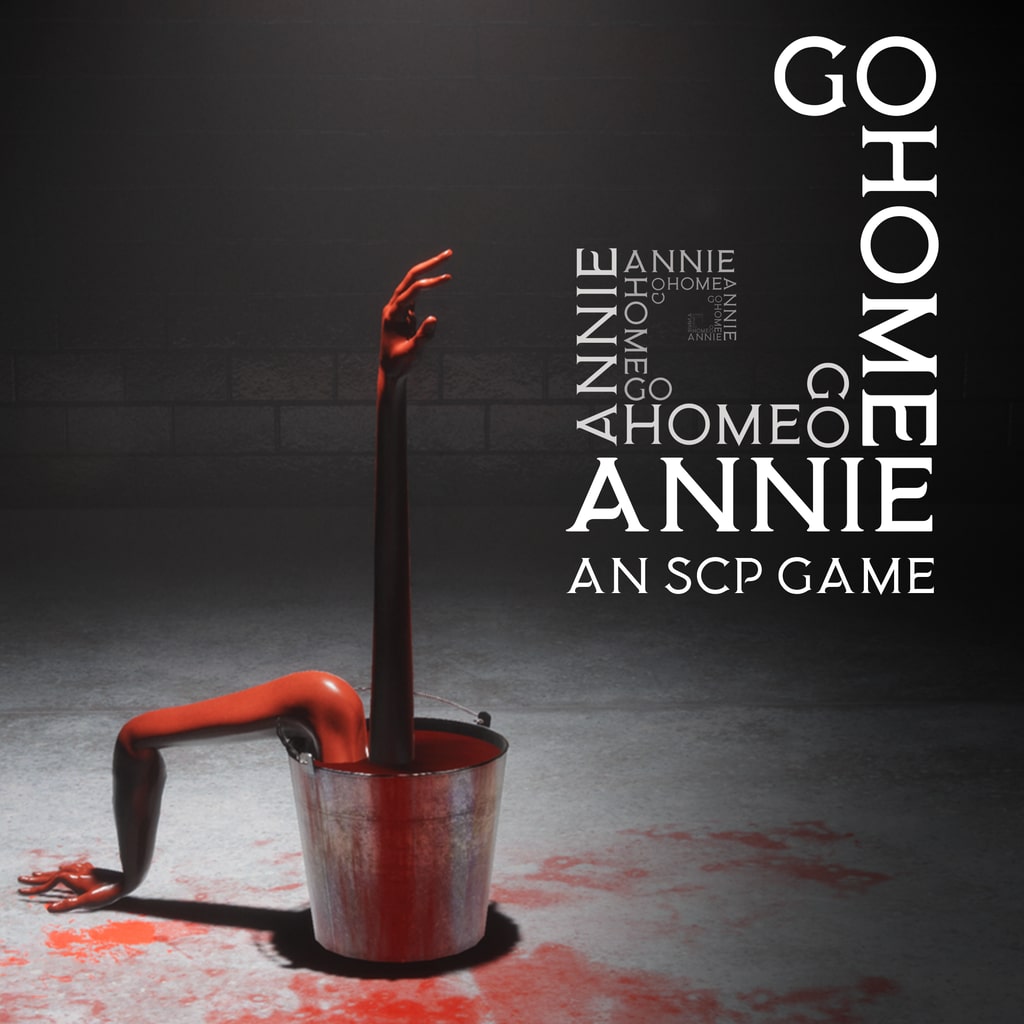
Few modern horror settings captivate quite like the SCP Foundation—a fictional universe crafted by a passionate community that centers on cataloging and containing the unexplainable. Within this universe, Misfit Village and Nordcurrent Labs have embarked on a project that takes a different path with Go Home Annie: An SCP Game. Instead of focusing on containment, the game explores the theme of replication.
You step into the shoes of Annie, a low-ranking employee whose job is to test recreated anomalies in a secretive division of the Foundation. The premise immediately draws you in. It shifts away from traditional horror that relies on escalation and chaos, and instead delves into something more measured and psychological. Instead of being overwhelmed by monsters or mayhem, you’re handed a clipboard and asked to repeat the same task over and over. Again and again.
It’s within this relentless repetition that Go Home Annie truly finds its voice. There’s a quiet, unsettling beauty to this approach, inviting players to reflect on monotony, obsession, and the nature of containment itself.
The Horror of Routine
Instead of relying on jump scares or endless chases, Go Home Annie leans into a slow-burning sense of procedural dread. At first, each task appears simple—spot an anomaly, interact with it, record what happens—but gradually, subtle oddities start to stand out. An object behaves just a little differently. A corridor seems a bit longer than it did before. A sound echoes unexpectedly where silence once reigned. These small contradictions weave a quiet unease, inviting you to look closer and feel the unseen tension building.
The brilliance of the game lies in how it cleverly uses familiarity to its advantage. It draws players into repeating similar scenarios, establishing a certain expectation. Then, quietly and unexpectedly, it breaks that expectation, catching the player off guard. This design approach is reminiscent of games like P.T. or The Stanley Parable, but it adds a unique SCP twist that makes it stand out. You’re not just solving puzzles here; you’re engaging with the very rules of the space itself, questioning what you think you know about this universe.
Puzzles with a Paranormal Twist
Gameplay in Go Home Annie revolves around exploration and solving puzzles, each one presenting its own unique challenge. Some puzzles demand logical thinking, requiring careful observation and deduction. Others venture into the surreal, forcing you to think in ways that break from traditional game logic. One moment you’re aligning objects to match a pattern; the next, you’re deliberately triggering supernatural events to move forward.
This diversity keeps the experience engaging, even though it’s not without its flaws. Some puzzles can feel overly obscure, relying more on trial-and-error than on intuition. When it all clicks, it’s incredibly satisfying. But when it doesn’t, it can threaten to break the immersive atmosphere that the game has carefully built.
Despite these quirks, the way SCP lore is woven into the mechanics is truly impressive. Fans of the universe will recognize familiar anomalies, and newcomers will find plenty to fascinate and unsettle them, drawing them deeper into this mysterious world.
A Facility That Watches Back
The setting, a labyrinthine research facility, feels almost like a character itself. Every corridor, observation room, and containment chamber exudes a sense of oppressive control. Cameras cast watchful eyes from above. Doors lock behind you as if sealing you in. The environment seems crafted not to comfort but to monitor, to scrutinize.
What truly unsettles about the facility is its unpredictability. Its layouts subtly shift between visits, deepening the feeling that something is fundamentally wrong beneath the surface. The reasons remain never explicitly explained, and perhaps they don’t need to be. You sense it just the same, and that sense is enough to fill you with unease.
Narrative Through Fragmentation
Go Home Annie unfolds its story in pieces—through logs, environmental cues, and brief interactions rather than traditional cutscenes. At its heart, the narrative delves into themes of autonomy, purpose, and control. It questions why the Replication Division exists, why the tests seem never-ending, and most poignantly, why Annie.
The game doesn’t rush to provide answers. Instead, it allows these questions to hang in the air, creating a slowly growing sense of unease. As you progress, the boundary between experiment and reality begins to blur, and Annie’s role becomes more and more ambiguous. This storytelling approach demands patience. Players looking for straightforward answers might feel frustrated, but those willing to embrace the ambiguity will discover a story that’s both haunting and deeply thought-provoking.
Atmosphere Over Spectacle
Visually, Go Home Annie feels understated yet powerful. The settings are rooted in a stark realism—white walls, industrial lighting, practical design—but are broken up by moments of surreal distortion. Subtle, sometimes unsettling anomalies quietly, yet intentionally, disrupt the world’s normal rules.
Lighting is crucial in building the tension. Shadows stretch in unnatural ways, and rooms can felt either overly dark or strangely illuminated. It’s not about perfect visual accuracy; it’s about creating a compelling atmosphere that draws you in.
The sound design only deepens this sense of unease. The low hum of machinery, distant echoes, and occasional unidentifiable noises keep an unsettling feeling alive. Silence is used carefully and sparingly, but when it appears, it resonates loudly, amplifying the sense of discomfort.
Performance and Console Release
With its release on PlayStation 5 and Xbox Series X/S, Go Home Annie arrives in a solidly optimized state. The game runs smoothly, keeping steady frame rates and very few bugs, providing a reliably polished experience. Load times are quick, and the controls feel natural and responsive on a controller. Thanks to a free content update from the PC version, players on consoles get to enjoy the most complete experience possible.
There are a few minor flaws, such as small visual glitches and slightly stiff animations, but these do not detract significantly from the overall enjoyment of the game.
Where It Stumbles
Despite its many strengths, Go Home Annie has certain flaws that prevent it from being perfect. The pacing can feel uneven, particularly in the middle sections where repeated elements risk becoming monotonous rather than building tension. The very mechanic that sets the game apart can sometimes work against it, creating unintended obstacles.
Additionally, the absence of clear guidance in some puzzles may frustrate players who prefer a more straightforward sense of progression. While the game’s mysterious atmosphere is a core part of its charm, there’s a delicate balance between intrigue and confusion, and at times the game tips too far into the latter. Finally, the abstract nature of its narrative might not resonate with everyone. Players expecting a traditional horror story could find themselves feeling a bit let down by the payoff.
Final Verdict
Go Home Annie: An SCP Game offers a bold and thoughtful take on psychological horror. It emphasizes repetition, subtlety, and atmosphere to create a uniquely unsettling experience that lingers long after the credits roll. This isn’t a game that tries to scare you in the usual ways. Instead, it unsettles you quietly, persistently, and often without explanation.
For fans of the SCP universe, it provides a captivating expansion of the lore. For newcomers, it offers an intriguing and sometimes opaque introduction to a world where nothing behaves quite as expected. While it may not always strike the perfect balance between mystery and clarity, when it does, it becomes genuinely compelling.