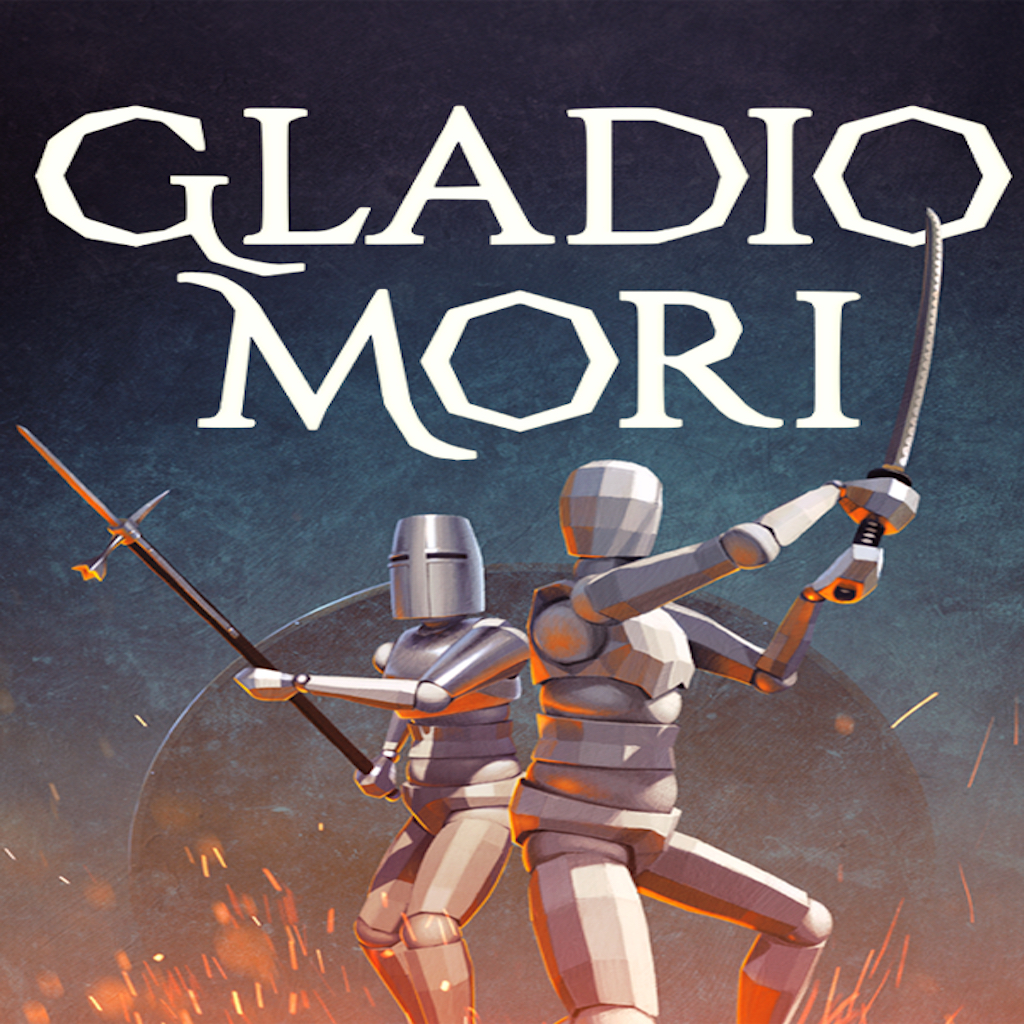
There is something wonderfully honest about a game that looks you in the eye and tells you that a health bar is no longer necessary because it would rather explain exactly which part of your body has just been ruined. Gladio Mori is not interested in pretending that a sword strike simply removes a chunk from an invisible life meter. Here, muscles can be damaged, arteries can be severed and vital organs can be pierced, with every injury potentially changing the course of a fight. It is brutal, occasionally ridiculous and surprisingly clever, turning the gladiator arena into a playground where physics, precision and a healthy willingness to experiment all come together.
Developed by Finnish solo developer Plebeian Studio and published by Bonus Stage Publishing, Gladio Mori has stepped out of Early Access with an idea that feels genuinely different from the usual arena fighter. There are no magical weapons, no enormous combo lists that require you to memorise twenty button combinations, and no convenient health bar that tells you exactly how close your opponent is to defeat. Instead, success comes from understanding where to strike, how your weapons behave and what happens when several hundred kilos of armour, steel and angry gladiators collide.
Welcome To The Arena
At first glance, Gladio Mori might look like a fairly straightforward gladiator fighting game. You enter an arena, pick your equipment and attempt to turn the person standing opposite you into a cautionary tale. Once the fighting begins, however, it quickly becomes clear this is not simply another button brawler where whoever swings fastest wins.
Everything has weight. Every movement matters, and every attack can have consequences that go far beyond knocking a few points off an opponent’s health. A poorly positioned swing can leave you vulnerable, while a perfectly placed strike can disable an arm, cause catastrophic bleeding or finish the fight immediately. There is something incredibly satisfying about watching an opponent change the way they fight because you have already damaged part of their body.
That creates a fascinating rhythm to combat. You are not simply looking for opportunities to attack. You are constantly assessing distance, armour, positioning and the physical state of both gladiators, working out where the next strike should land. Sometimes the smartest move is to wait, watch and let your opponent make the mistake for you.
Forget The Health Bar
The organ-based damage system is easily the game’s biggest selling point, and thankfully it is more than just a gruesome gimmick. Damage is distributed across different parts of the body, and each type of injury can meaningfully affect the battle. Damage a muscle and your opponent’s attacks can weaken; sever an artery and you can start a countdown towards death; while a well-placed strike against a vital organ can end everything instantly.
It sounds complicated when written down, but the concept becomes surprisingly intuitive once you start fighting. You quickly realise that hitting someone anywhere is not necessarily enough. You need to think about where the armour is protecting them, where the vulnerable areas are, and how your chosen weapon can exploit those openings.
This turns every duel into a little tactical puzzle. You might spend several seconds trying to break through an opponent’s defence before spotting an exposed joint. One carefully timed attack later, and suddenly their entire approach changes. There is a real sense of achievement in winning a fight because you understood your opponent’s anatomy and equipment rather than simply throwing more attacks at them.
Steel Meets Plate
The weapon and armour systems add another welcome layer of authenticity. Gladio Mori features a sizeable selection of realistic weapons, with each tool behaving according to its physical characteristics rather than simply existing as differently shaped damage numbers. From gladii to halberds and numerous other weapons, there is plenty of room to experiment with different approaches to combat.
Armour is equally important. Heavy plate can stop an incoming edge from doing much of anything, but it does not make its wearer invincible. Gaps around joints and other exposed areas become potential targets, forcing you to think about where you are striking rather than simply swinging towards the nearest piece of metal.
That relationship between weapon and armour gives combat a wonderfully tactile quality. A sword bouncing harmlessly off a breastplate feels completely different from finding an opening and driving the blade somewhere it can actually do damage. It also means that equipment selection is not merely about choosing the biggest or most powerful option. Different weapons can encourage completely different fighting styles.
Physics, Glorious Physics
Of course, we cannot talk about Gladio Mori without discussing its physics. This is a game where combat can look beautifully controlled one moment and descend into complete nonsense the next, often within a few seconds. The physics are an essential part of the experience rather than something happening in the background, and that unpredictability gives every battle its own personality.
There is a particular satisfaction in a fight where everything goes according to plan. You position yourself correctly, wait for the right opening, make the swing, and watch the attack connect exactly where you intended. Then there are the moments when two weapons collide, somebody stumbles, an arm goes somewhere it probably should not, and the entire battle turns into a frantic scramble.
That unpredictability is part of the charm. Gladio Mori understands that physics-driven combat should not always look perfectly choreographed. Sometimes the best moments are the ones that make you laugh because something completely unexpected has happened. Beneath that chaos, though, there is a surprisingly deep combat system waiting for players who want to take it seriously.
Make Your Own Moves
If the damage system is the brain of Gladio Mori, the move editor might just be its wonderfully eccentric heart. The game gives players an impressive amount of freedom to create their own attacks by manipulating character positions frame by frame. You can adjust joints, timing, wind-up speeds and recovery movements to produce attacks that range from practical and efficient to utterly ridiculous.
This is the sort of feature that could easily have been included as a novelty and then forgotten. Instead, it has the potential to become one of the game’s most important long-term features. Players can build moves that suit their preferred style, experiment with strange combinations and create attacks that simply would not exist in a more conventional fighting game.
The community aspect makes the whole thing even more interesting. You can browse movesets created by other players, try them for yourself and mix individual attacks into your own creations. That means the game can continue evolving as players become more inventive, and some of the things people come up with are likely to be considerably more entertaining than anything the developers could have designed themselves.
Four Players, Four Times The Trouble
While the solo experience is enjoyable, multiplayer is where Gladio Mori has the potential to become an absolute riot. Online battles support up to four players, while local split-screen allows friends to settle their differences in the same room. With physics-based combat and a system in which a single well-placed strike can dramatically change the situation, having several gladiators in the same arena sounds like a recipe for glorious chaos.
Four-player battles also demand a different approach to combat. You cannot simply focus on one opponent without considering what everyone else is doing, and getting distracted can have immediate consequences. One moment you might be lining up the perfect attack against somebody’s exposed leg, only to discover that another player has quietly wandered behind you with considerably less friendly intentions.
Cross-play and the community moveset system should also help keep the multiplayer side feeling fresh. The more players experiment with the tools available, the more variety there should be in the arenas. It is the sort of game where watching somebody else’s bizarre fighting style can be almost as entertaining as winning yourself.
A Clean Style With Plenty Of Impact
Visually, Gladio Mori does not need to cover the screen with unnecessary detail to make its combat work. The relatively clean presentation helps you read movements, weapons and attacks, which is particularly important when several fighters are swinging sharp objects around at once. The clarity of the arenas allows the physics and animations to take centre stage rather than being drowned in visual clutter.
The sound design does much of the heavy lifting when it comes to making combat feel impactful. Metal striking armour has the expected weight, while weapon impacts and more gruesome hits provide a very different audio response. When a fight reaches its conclusion with a particularly nasty blow, the audio can make sure you know exactly what just happened.
There is also something pleasingly old-fashioned about the presentation. Gladio Mori is not trying to be a cinematic blockbuster. It is more interested in giving players the tools and letting them create their own memorable moments, which feels entirely appropriate for a game built around experimentation.
The Arena Belongs To You
What I particularly like about Gladio Mori is that it trusts the player. It gives you a complex damage system, realistic weapons, armour, physics and an animation editor, then largely gets out of the way. You are encouraged to experiment, fail, laugh at yourself and eventually work out what kind of gladiator you want to be.
That makes the game feel much more like a sandbox than a conventional fighting title. You can approach battles tactically and carefully, or embrace the madness and see what happens when your lovingly constructed moveset meets somebody else’s equally questionable creation. Neither approach feels entirely wrong, because the game has been designed to accommodate both.
It is also the kind of experience that should become more interesting over time. Community content gives it room to grow, while the depth of the move editor means there is plenty of scope for players to keep discovering new ways to fight. The best physics-driven games are often the ones where the developers provide the rules and the players provide the stories, and Gladio Mori fits that description rather nicely.
Final Verdict
Gladio Mori is a wonderfully inventive gladiator fighter that succeeds because it is prepared to do things differently. Its organ-based damage system gives every strike genuine significance, while the realistic weapons and armour make positioning and precision far more important than simply attacking as quickly as possible. Add in the wonderfully unpredictable physics, and you have a fighting game where no two battles quite feel the same.
The move editor takes that idea even further, giving the community an opportunity to shape the game in ways that could keep it interesting for a very long time. Whether you want to recreate famous fighting moves, build something genuinely useful, or create an attack that looks like your gladiator has briefly forgotten how human anatomy works, the freedom is there.
There are moments when the physics can make things feel a little messy, and the experience will naturally appeal more to players who enjoy experimentation than to those looking for a traditional competitive fighter. For me, though, that slightly rough and unpredictable personality is part of what makes Gladio Mori so much fun. It is brutal, clever, occasionally hilarious, and packed with enough unusual ideas to stand out from the arena crowd.