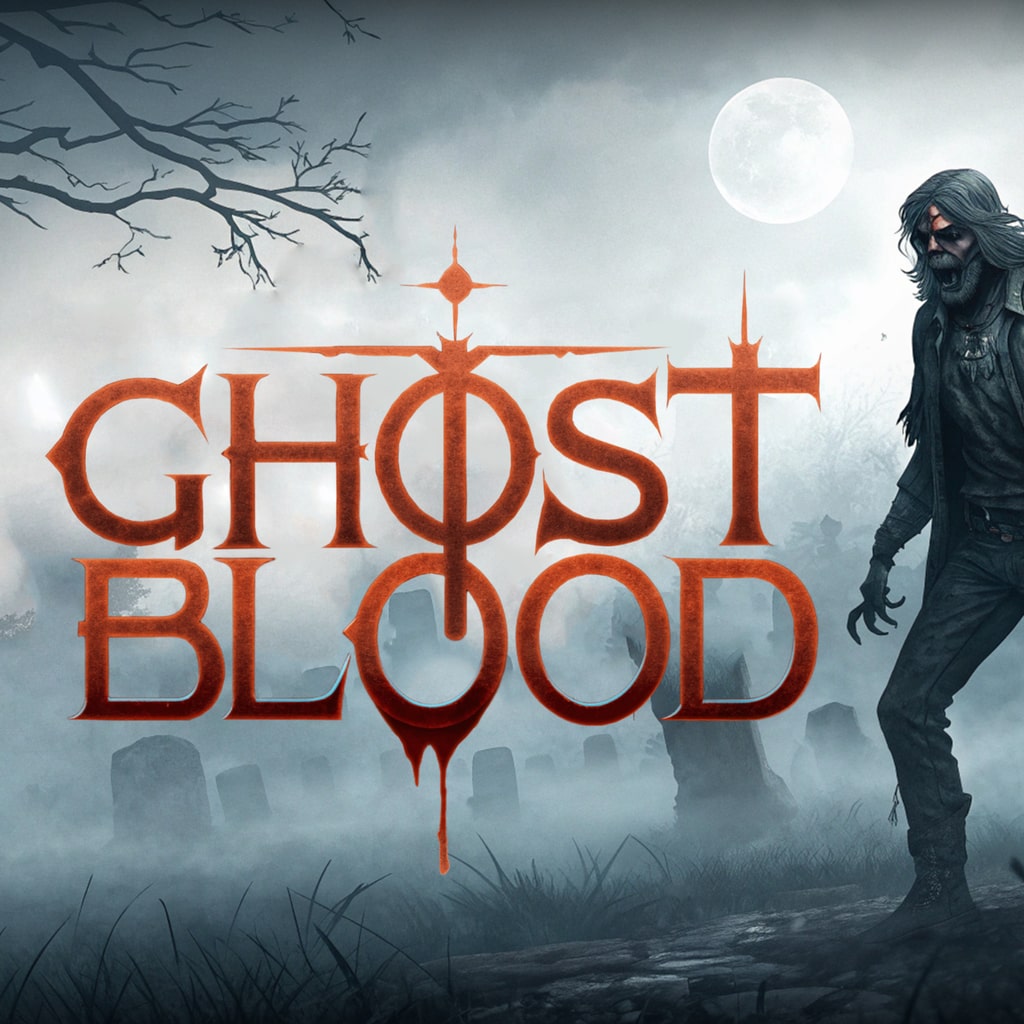
Ghost Blood from ASI GAMES TECHNOLOGIES opens with a premise that immediately sets a grim, oppressive tone. You are the Drifter — a man whose very name has been erased by an ancient affliction known as the Ghost Plague. Your blood is tainted, your connection to the living world fading, and the only hope of maintaining control lies in a forbidden legend: the Ghost Blood Elixir.
From the outset, the game frames itself as more than a simple action experience. This is a descent into a necropolis where the boundaries between life, death and memory have all but dissolved. The massive cemetery known as Eternal Repose is not merely a backdrop — it reacts to you. Your cursed presence disturbs graves, awakens horrors and draws the attention of entities that seem to know you far better than you know yourself.
It’s an evocative setup, dripping with gothic atmosphere and psychological undertones that shape everything that follows.
A Necropolis That Feels Alive
Eternal Repose is one of the game’s greatest strengths. The environment is dense with detail, from crumbling mausoleums to rusted gates swallowed by fog. There’s a sense that this place has existed long before you arrived and will remain long after you’re gone.
What elevates it beyond a static setting is how it responds to the Drifter’s cursed blood. Graves rupture as you pass. Skeletal guardians known as the Wandering Remains rise in twisted, metal-laced forms, clad in the decayed uniforms of an ancient guard. They don’t behave like mindless zombies — they move with purpose, as if recognising you as something unnatural that must be destroyed.
This reactive world creates constant tension. You never feel like you’re simply exploring. You feel like an intrusion.
Combat Tied to Corruption
Combat in Ghost Blood is closely tied to the progression of the curse. As the Drifter performs ritual sacrifices to break the Seals of Oblivion, his powers grow more dangerous and volatile. These sacrifices — a drop of blood, a fragment of memory, a moment of terror — are not just narrative devices. They fuel mechanical changes in how you fight.
New abilities emerge that feel powerful but unstable, reflecting the idea that you’re gaining control while losing humanity. Attacks become more aggressive, more supernatural, and often more risky to use. There’s a constant sense that your strength comes at a cost.
This creates an engaging push-and-pull dynamic. You want the power because survival demands it, but every upgrade feels like stepping closer to becoming the very thing you fear.
Enemies That Haunt More Than Attack
The Whispering Shades are among the most memorable adversaries in the game. These ghosts don’t simply rush you. They manifest as fragments of the Drifter’s past — victims, memories and regrets given spectral form.
They whisper accusations, temptations and fragments of dialogue that blur the line between combat encounter and psychological torment. Fighting them feels less like defeating enemies and more like confronting pieces of yourself.
This design adds emotional weight to encounters. You’re not just battling monsters; you’re wrestling with guilt, memory and identity.
The Seals of Oblivion as Puzzles and Sacrifice
Progression through the necropolis is blocked by magical barriers known as the Seals of Oblivion. Breaking them requires ritualistic sacrifices that feed both the narrative and gameplay systems.
These sequences often function as environmental puzzles, requiring exploration and interaction with altars and relics scattered throughout the cemetery. But the real cost is what the Drifter gives up. Memories fade, abilities shift and the tone of the game darkens as you push forward.
This structure keeps exploration meaningful. You’re not simply unlocking doors — you’re altering the character in irreversible ways.
Atmosphere Over Speed
Ghost Blood is deliberately paced. Movement is measured, combat is weighty and exploration is slow and deliberate. This is not a fast action game. It’s a creeping, oppressive experience where tension builds through atmosphere rather than constant motion.
The sound design plays a huge role here. Distant whispers, the scrape of bone on stone and the low hum of an unseen presence create a near-constant sense of unease. Music is sparse, allowing environmental sounds to dominate and pull you deeper into the world.
Visually, the game leans into muted tones, heavy fog and stark lighting contrasts. It’s bleak, but purposefully so.
Where the Experience Falters
While the atmosphere and narrative themes are strong, the gameplay can occasionally feel repetitive. Combat encounters, while intense, don’t evolve dramatically over time, and enemy variety is more thematic than mechanical.
The slow pacing, while fitting the tone, may test the patience of players looking for more dynamic action. Movement and combat animations can feel deliberately heavy, but at times this crosses into sluggishness.
Additionally, the game’s reliance on atmosphere means that long play sessions can begin to feel draining rather than engaging.
A Story That Embraces Its Darkness
The narrative arc builds toward the horrifying final choice: consuming the Core of the Curse to create the elixir. This climax reinforces the game’s central theme — survival at the cost of identity.
By the end, the Drifter does not find salvation. He finds control, but at the price of becoming something no longer fully human. It’s a bleak but fitting conclusion that ties the mechanics and story together in a memorable way.
Final Verdict
Ghost Blood is a moody, atmospheric experience that blends psychological horror, deliberate combat and environmental storytelling into a cohesive descent into the macabre. Its strengths lie in its setting, themes and the way its mechanics reinforce the narrative of corruption and transformation.
While repetitive combat and slow pacing may not appeal to everyone, those willing to immerse themselves in its oppressive world will find a haunting, memorable journey through the boundary between life and death.